








Third-party liability car insurance is government-required coverage that protects you when you’re at fault in a car accident. It provides coverage when you’re legally responsible for injuring someone or damaging their property.
Despite it being mandatory, not many drivers fully understand it. If you’re applying for auto insurance in Canada, knowing how third-party liability car insurance works can be helpful in a collision.
In this guide, you’ll learn what third-party liability auto insurance covers, how much you need and how it can help you in tricky situations.
What Is Third-Party Liability Auto Insurance?
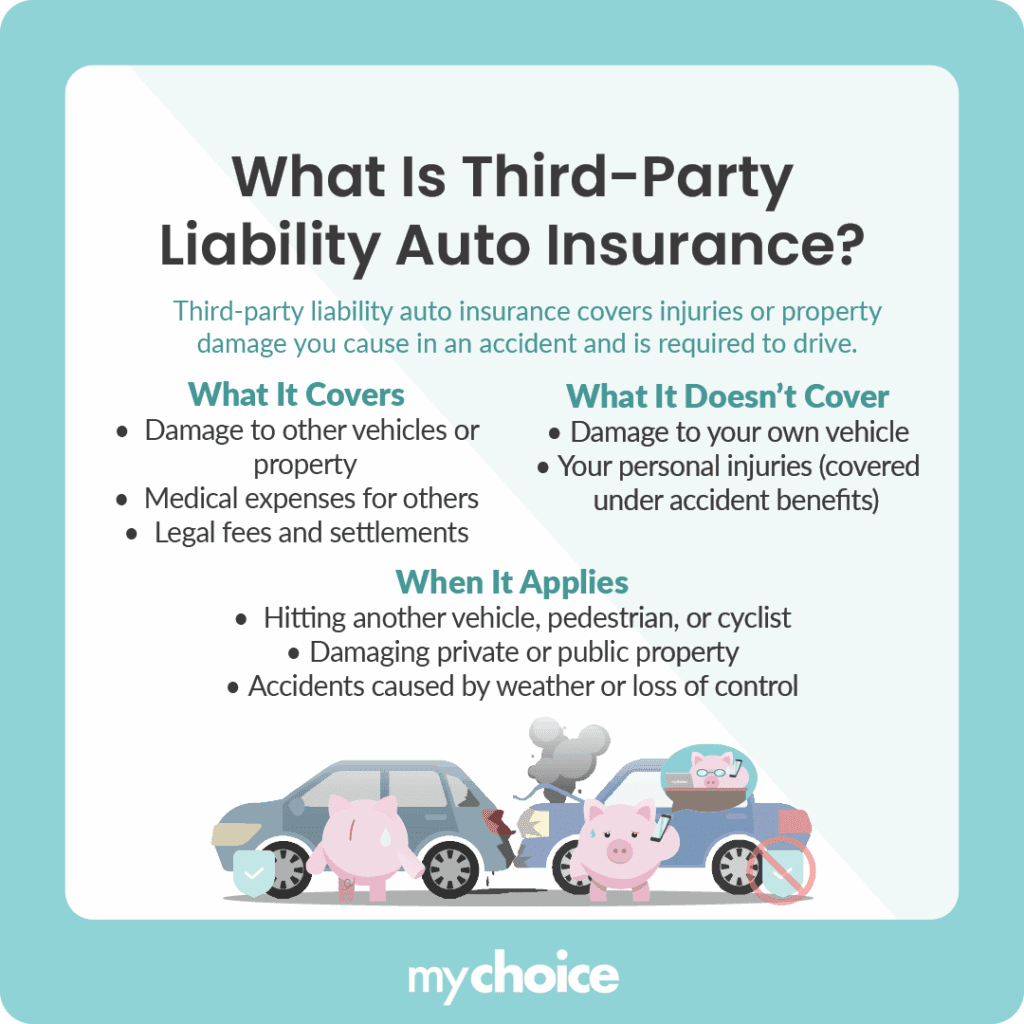
Third-party liability auto insurance provides financial coverage if you cause an automobile accident.
It works with other elements of your car insurance policy, including:
- Accident benefits: Provides benefits if you are injured in a collision.
- Uninsured automobile coverage: Protects you in certain accidents involving an uninsured or unidentified driver.
- Collision coverage: May cover damage to your own vehicle following a collision.
- Direct Compensation Property Damage: May cover damage to your vehicle when another identified and insured driver is at fault.
Read More: How Direct Compensation Property Damage Works in Ontario
What Third-Party Car Insurance Covers
Third-party liability insurance may cover:
- Damage caused to another person’s property
- Injuries or death caused to another person
- Legal defence costs
- Covered settlements or court awards
Some instances where third-party liability insurance may apply include backing into private property, hitting a pedestrian or cyclist or causing an accident that seriously injures another person.
When someone makes a third-party liability claim against you, your policy may cover the claim up to the applicable limit.
What Doesn’t Third-Party Car Insurance Cover?
Third-party liability insurance doesn’t cover damage to your own vehicle after an at-fault accident. You would generally need Collision or All Perils coverage for that damage.
It also doesn’t replace accident benefits. Accident benefits provide eligible benefits if you are injured in a collision, subject to the rules in your province and the terms of your policy.
How Does Third-Party Liability Insurance Work?
Third-party liability insurance may respond under circumstances such as:
- Backing into someone’s property
- Hitting a pedestrian or cyclist
- Losing control of your vehicle and damaging another car
- Causing an accident that results in serious injury or death
Your insurer will investigate the accident and determine whether the claim is covered. If it is, the insurer may pay covered damages and legal costs up to the policy limit.
Do You Need Third-Party Liability Insurance to Rent a Vehicle?
Rental vehicles come with the liability insurance required where they are registered. However, the included limit may be lower than the amount of coverage you normally carry.
Your existing policy may extend some coverage to a rented vehicle. In Ontario, this may be provided through OPCF 27.
Keep in mind that liability coverage is different from coverage for collision, theft or other damage to the rental vehicle.
Read More: Do You Need Insurance to Rent a Car?
What If You Live in a No-Fault Province?
No-fault insurance doesn’t mean nobody is found at fault.
It generally means you deal with your own insurance company for certain benefits or vehicle damage. Insurers can still determine who caused the accident, and an at-fault accident may affect your insurance rates.
Your ability to make a claim or sue another driver depends on the province and the type of loss.
Read More: How No-Fault Insurance Works in Ontario
How to Get Third-Party Liability Insurance
Third-party liability coverage is included in a standard automobile insurance policy. You can contact an insurance company, agent or broker to apply for coverage.
You can also compare insurance quotes online before choosing a company. Rates depend on factors such as your location, driving history, vehicle, listed drivers and coverage.
How Much Third-Party Liability Insurance Does Ontario Require?
In Ontario, the minimum required amount of third-party liability coverage is $200,000.
If you live outside Ontario, the minimum depends on your province or territory:
| Province or territory | Minimum coverage |
|---|---|
| Quebec | $50,000 |
| Alberta | $200,000 |
| British Columbia | $200,000 |
| Manitoba | $200,000 |
| New Brunswick | $200,000 |
| Newfoundland and Labrador | $200,000 |
| Northwest Territories | $200,000 |
| Nunavut | $200,000 |
| Ontario | $200,000 |
| Prince Edward Island | $200,000 |
| Saskatchewan | $200,000 |
| Yukon | $200,000 |
| Nova Scotia | $500,000 |
Minimum requirements can change. Check with your insurer or provincial regulator before purchasing coverage.
Increasing Your Third-Party Liability Limit
You can increase your third-party liability coverage if you want added protection on the road. A serious accident can easily result in costs that exceed the minimum required limit.
Many drivers choose $1 million or $2 million in coverage. Ask for quotes at several limits to see what the difference would be for your policy.
You may want to consider:
- How often and where you drive
- Whether you drive in the United States
- Whether you use your vehicle for business
- Your income, savings and assets
- How much the higher limit would add to your premium.
What Should You Do If Someone Makes a Claim Against You?
If someone makes a liability claim against you after an accident:
- Report the accident to your insurer.
- Provide the other driver’s information.
- Send your insurer any photos, videos or witness details.
- Provide the police or collision-reporting-centre report, if there is one.
- Continue cooperating with your insurer while it investigates.
- Don’t negotiate or pay a settlement without speaking to your insurer first.
Read More: How to Report a Car Accident in Ontario
Tips for Saving Money on Car Insurance
Third-party liability coverage is mandatory, but you can still look for ways to reduce your overall car insurance costs.
Can You Drive Without Third-Party Liability Insurance?
No, you cannot legally drive without the required auto insurance.
If you cause an accident while uninsured, you may be personally responsible for the injuries and property damage. You may also face fines, licence consequences and difficulty finding affordable insurance later.
The Bottom Line
Third-party liability car insurance isn’t just a good way to protect yourself financially after an accident—it’s mandatory.
The minimum amount may not be enough for every driver. Compare the price of higher limits before choosing your coverage.
Looking for insurance rates? Compare car insurance through MyChoice.