













Rideshare Insurance for Uber and Lyft Drivers in Ontario
Ridesharing has become a popular way to earn income, with many people working for apps such as Uber and Lyft on either a part-time or full-time basis. This presents drivers with the problem of finding insurance that covers them while driving for money, remains affordable and handles the unique risks that come with the work.
Why Do Uber or Lyft Drivers Need Extra Insurance?
A standard personal auto insurance policy generally does not cover someone while carrying paying passengers. This means drivers need to make sure the appropriate rideshare coverage applies before they begin working.
Driving for a ridesharing service also presents extra risks, ranging from damage to the interior of the car to an increased risk of an accident. This means drivers should take care to find the correct insurance for ridesharing.
Ridesharing also increases the number of parties involved in the event of an accident. This may include the rideshare company, the driver and the passenger. As a result, settling a claim can be more complicated.
How Personal and Rideshare Insurance Work Together
When the rideshare app is off and the car is being used for personal purposes, the driver’s personal auto insurance applies.
Uber’s Canadian insurance policy is provided by Economical Insurance in Ontario. Lyft’s Ontario policy is provided through Aviva.
Drivers must let their personal insurer know that the vehicle will be used for rideshare work. Failure to disclose rideshare use could affect the personal policy.
When Each Type of Coverage Applies
- App off: The driver’s personal auto insurance applies.
- App on and waiting for a request: Uber or Lyft’s commercial coverage applies. Both currently provide $1 million in liability coverage during this stage.
- Ride accepted until the trip ends: The commercial coverage increases to $2 million in liability coverage.
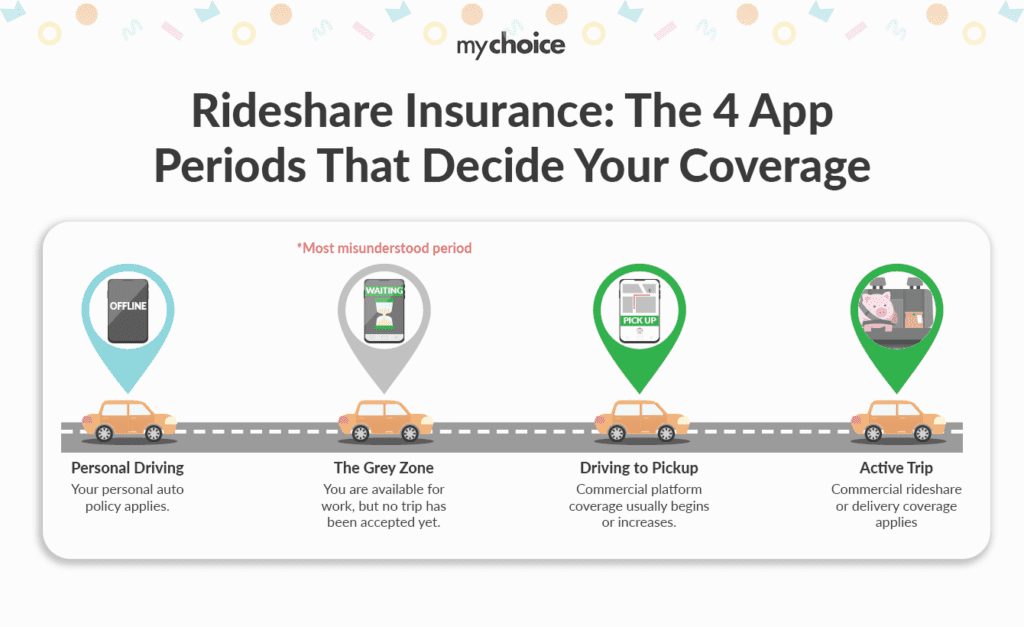
If the driver remains online after completing a trip, coverage returns to the waiting-for-a-request stage. The personal policy applies again when the app is turned off.
Drivers should review the applicable Uber or Lyft policy for complete coverage, limits and exclusions.
What Rideshare Insurance Should Cover
Rideshare insurance needs to cover the increased liabilities that come with working as a driver. It is important to look at the amount of liability coverage provided and when that coverage applies.
Ontario’s Uber and Lyft policies include third-party liability, statutory accident benefits, uninsured automobile coverage, Direct Compensation Property Damage and contingent Collision and Comprehensive coverage.
Contingent Collision and Comprehensive coverage applies only if the driver carries the corresponding coverage on the personal auto policy. Both platform policies currently have a $2,500 deductible for this protection.
How to Shop for Rideshare Insurance
The process of getting a ridesharing insurance quote is relatively simple. The first step involves entering some personal information, such as where you live. Providers may also want to know how much you drive overall, how much you drive for ridesharing services and general details about your driving record.
The insurance provider may also ask for information about the car. This can include its make, model, year, mileage and general condition. Some providers may ask the driver to submit photographs of the car.
The provider can then show you the available insurance options. Look at the specific details, including the deductibles, liability limits and which types of vehicle damage are covered.
It is also important to understand what applies when the app is off, when you are waiting for a request and when you are carrying a passenger.
Once coverage is confirmed, the insurance provider will send documents showing that insurance is in place. Drivers should also keep access to the rideshare company’s current insurance certificate.
What Will Affect My Rideshare Insurance Premiums?
Several factors can affect a driver’s personal insurance premium. These include the usual factors used for personal auto insurance, such as:
- Age
- Driving record
- Type of car
- Location
- Annual kilometres
- Claims and convictions
- Coverage and deductibles
Drivers should tell the insurer how the car will be used and approximately how much rideshare driving they expect to do.
Does Uber or Lyft Insurance Affect Personal Car Insurance?
Drivers are required to tell their personal insurance provider that they are using the vehicle for ridesharing. The process may be as simple as calling the insurer or broker and providing details about how the car will be used.
The rideshare company’s insurer and the personal insurer may both be involved if an accident or claim occurs. This makes it important to confirm that the personal insurer permits the vehicle to be used for rideshare work.
FSRA maintains a list of approved ridesharing insurance products in Ontario.


