









Can I Sue My Car Insurance Company in Ontario?
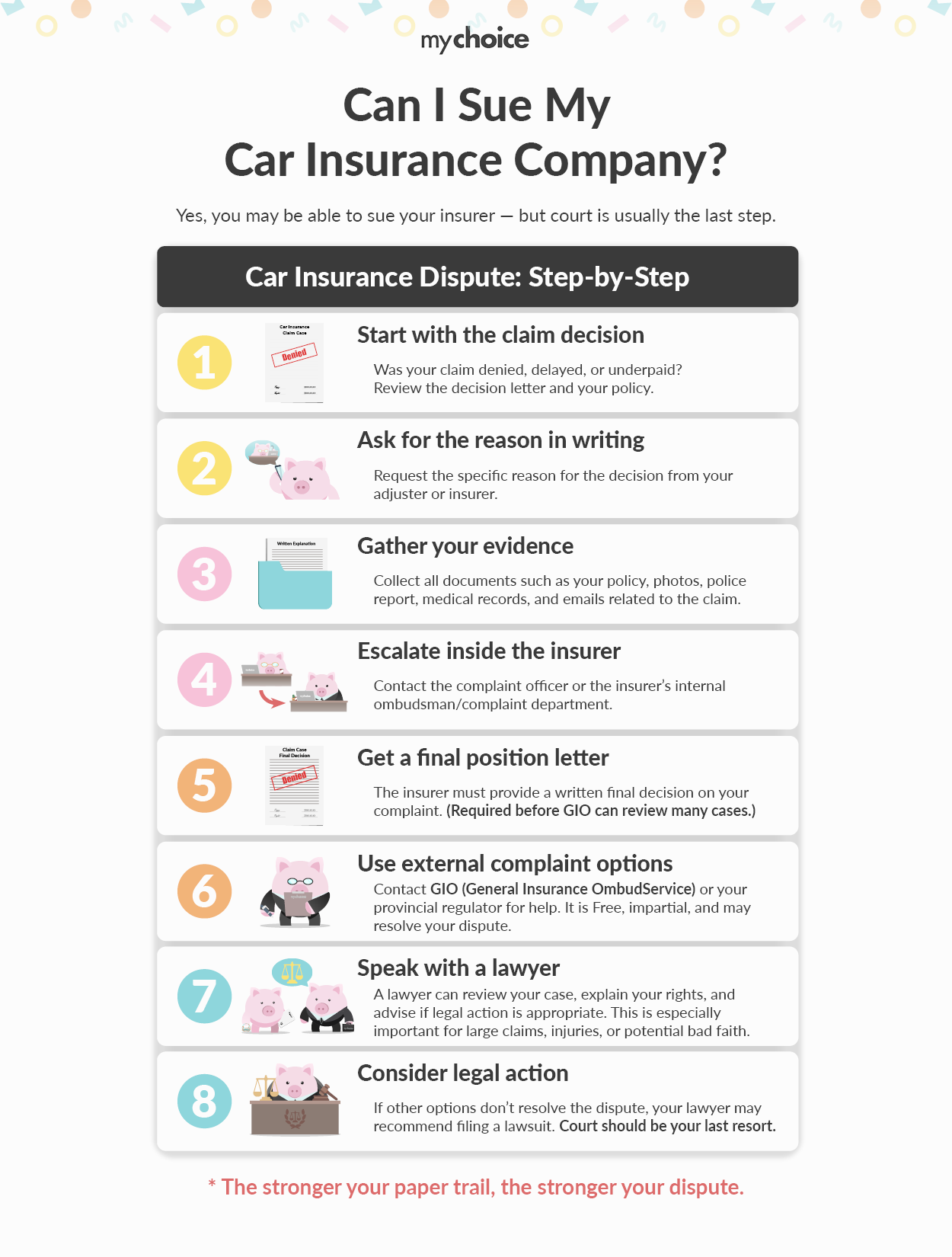
You may be able to sue an insurer in some cases, but the right route depends on the dispute. FSRA suggests contacting the insurance company first and following its internal complaint process before escalating a complaint through FSRA or an ombudservice.
First, identify the decision you want reviewed.
Different problems are dealt with in different ways. If it’s a service or administrative issue, such as delayed handling of a claim, start by expressing your concerns to a representative at the insurance company.
Start With a Clear Written Complaint
Send a written complaint to the insurer asking for the policy provisions relied upon, the factual basis for the decision and the basis for any calculations.
Keep a Complete File
You should keep the following information in your file:
- The certificate of insurance and any endorsements
- Any denial or reservation-of-rights letter
- A chronology of your interactions, including names, dates and summaries of conversations with adjusters or other company representatives
- A short summary of your position and the resolution you’re asking for
- Relevant supporting documents, such as photographs, repair estimates, receipts, medical reports or income information, depending on the subject of your complaint
A clear file makes it easier for the insurer, and any later reviewer, to understand your position.
If the complaint is not resolved, ask to speak to the insurer’s Complaint Officer and request a letter outlining the company’s final position. This may be required if you decide to take your complaint to the General Insurance OmbudService or FSRA.
Remember that the complaint process does not stop legal or tribunal deadlines from running.
Choose the Right Next Step
Different disputes follow different routes:
- Accident-benefit dispute: If you disagree with a decision concerning statutory accident benefits, you may be able to apply to LAT-AABS.
- Property-damage or fault dispute: If you disagree with your insurer’s DCPD fault determination or proposed property-damage settlement, you may be able to bring an action against your insurer.
- Bodily-injury claim: If you’re seeking compensation from an at-fault party for bodily injury, a civil action may be available, subject to Ontario law.
- Service or regulatory complaint: After completing the insurer’s complaint process, you may be able to contact the General Insurance OmbudService or FSRA, depending on the issue.
When DCPD applies, Ontario law generally requires you to claim vehicle damage, damage to contents and loss of use from your own insurer rather than suing the other driver for those losses.
Protect Deadlines While You Escalate
Be careful to preserve your legal rights if you’re dealing with an accident-benefits dispute.
There are deadlines for filing an application with LAT-AABS, as well as notice requirements and limitation periods for court actions and other complaints. Tribunals Ontario generally requires an application to LAT-AABS within two years after you receive the insurer’s denial notice for benefits.
Keep track of:
- The date of loss
- The date of each decision made by the insurer
- The date of any denial notice
- The insurer’s final position on your claim
Seek legal advice promptly if your claim remains unresolved so deadlines aren’t missed.
What a Lawyer May Assess
A lawyer may assess:
- The strength of any potential claim against the insurer for breach of the insurance policy
- Who is the proper party to sue
- Which forum is appropriate, such as a court or LAT-AABS
- What evidence is available
- Whether expert witnesses are needed
- What it may cost to pursue the claim
- Whether pursuing the claim makes financial sense