













Multi-Vehicle Insurance in Canada Explained
A household with multiple vehicles may qualify for a multi-vehicle discount by placing them with the same insurer. Depending on the insurance company’s rules and underwriting requirements, the vehicles may appear on a single policy or on connected policies.
This approach can reduce an insurance bill without requiring changes to coverage, deductibles or driving habits. The article below explains how this works, the circumstances in which it works well and when individual policies may cost less.
How Much Can You Save With a Multi-Vehicle Discount?
Ontario’s FSRA states that a multi-vehicle discount may fall between 5% and 15%. The table below takes an average assumed discount of 10% and applies it to Ontario’s median rate according to MyChoice internal data.
Here’s what it would cost to insure multiple vehicles and what you could potentially save:
| Scenario | Separate Policies | Multi-Vehicle Policy (10% Discount) | Annual Savings |
|---|---|---|---|
| 2 vehicles | $2,345 × 2 = $4,690 | $4,690 × 90% = $4,221 | $469 |
| 3 vehicles | $2,345 × 3 = $7,035 | $7,035 × 90% = $6,331.50 | $703.50 |
Source: MyChoice Quote Database, 2026.
When Multi-Vehicle Insurance Makes Sense
For most households with two or more cars, multi-vehicle insurance is worth considering. It can be particularly helpful in these circumstances:
- Spouses, partners, adult children or other family members each have a vehicle and all live at the same address.
- One person owns multiple vehicles, such as a car for daily use and another for leisure, and may save by placing both on one policy.
- When household drivers have comparable records, the same insurer may offer competitive pricing for all vehicles. The insurer still evaluates each person’s history, and a discount does not eliminate the rating differences between vehicles or drivers.
- Boats, RVs, motorcycles and snowmobiles generally need separate recreational or specialty coverage. Putting those policies with one insurer may generate a different discount, but they do not automatically count toward an auto multi-vehicle discount.
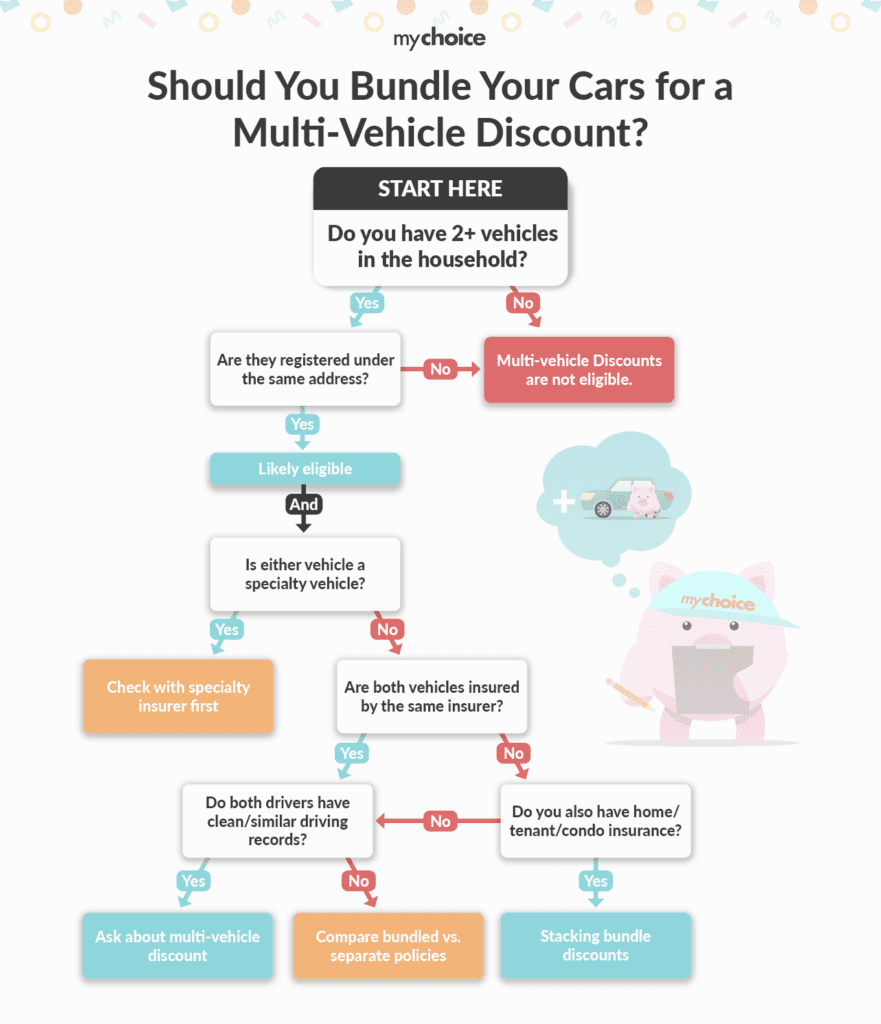
Check out the MyChoice infographic below to help you decide whether the multi-vehicle discount is right for your situation.
When to Avoid Multi-Vehicle Insurance
Having separate policies can save you money in some situations. A multi-vehicle insurance policy is not always the cheapest option available.
Below are a couple of scenarios when a multi-vehicle discount may not make sense:
- At-fault accidents, convictions or a licence suspension for a household member may increase the cost of insuring any vehicle that person drives or is assigned to. Buying a separate policy does not automatically avoid the effect when the driver can access other household vehicles. Confirm every driver’s listing before comparing prices.
- Limited insurance experience means young and newly licensed drivers commonly face higher premiums. When one is added to a household arrangement, the increase can outweigh the multi-vehicle savings, making it important to price both alternatives.
- A 2024 BMW and a 2012 Honda Civic, for example, have sharply different risk profiles and may call for very different insurance. Separate policies from different companies can sometimes price each car more favourably in such a situation.
We recommend requesting both types of quotes to see which will save you the most. MyChoice will show you quotes for multi-car policies and individual policies side by side so you can see which is better.
Can You Adjust Coverage for Each Vehicle?
Yes. A major benefit of multi-vehicle insurance is the ability to tailor coverage separately for each car instead of applying identical options to every vehicle.
For example:
- Owners may protect a newer vehicle with a broader package combining liability, Collision, Comprehensive, accident forgiveness and a waiver of depreciation.
- On an older vehicle, the price of optional Collision or Comprehensive coverage may be too high in relation to its value and the deductible. Before taking either protection off, discuss that trade-off with the insurer or broker.
Benefits include flexible coverage options within the same policy, allowing you to provide more coverage for vehicles that require it and reduce costs on vehicles that don’t.
Can I Add Another Vehicle to My Existing Policy?
Most insurers allow you to add a car to your existing insurance policy. Coverage terms vary by insurer, as do multi-vehicle discount eligibility and effective dates. Never drive a car until you’re certain it’s covered.
Do All Drivers on the Policy Need to Live at the Same Address?
Multi-vehicle insurance is aimed at the household, so most insurers will expect the address for the vehicles and drivers to be the same. There are some exceptions, such as when your child is away at university but their main residence is still your address.
Will a Claim on One Vehicle Raise Rates on All of Them?
Depending on your insurer’s rating rules, it may affect the responsible driver’s insurance rating, which could result in an increase in the total household premium at renewal. Accident forgiveness is an option that may limit the effect a first eligible at-fault accident has on your insurance rates.
Can I Bundle Home and Auto on Top of Multi-Vehicle Insurance?
An insurer may provide a multi-policy discount alongside a multi-vehicle discount. According to FSRA, Ontario multi-policy discounts may range from 5% to 15%. Because reductions can apply to different premiums or be calculated sequentially, compare the final quoted price rather than adding the percentages yourself.


