













How Truck Insurance Works in Canada
Truck insurance is not just a single product. It covers a wide range, from a personal F-150 policy to a full fleet program for 50 tractor-trailers. The coverage you need depends on your truck and how you use it.
Here is a simple guide:
| Truck Type | Insurance You Need | Average Yearly Truck Insurance Premium |
|---|---|---|
| Personal pickup: F-150, Ram 1500, Tacoma, etc. | Standard personal auto insurance | $1,500–$2,800 |
| Pickup used for work: hauling tools/materials, contractor use | Commercial auto, business-use endorsement, or personal policy with approved business use | $2,500–$6,000 |
| Semi truck / tractor-trailer | Specialized commercial trucking insurance | $8,000–$15,000+ |
| Tow truck | Tow truck-specific commercial policy | $7,000–$20,000+ |
| Dump truck | Heavy commercial / specialty truck policy | $6,000–$15,000+ |
| Food truck | Commercial auto + business liability + equipment/property coverage | $1,000–$5,000+ |
| Fleet: multiple trucks | Fleet insurance program | Varies widely; often priced per vehicle and by fleet risk |
How Truck Insurance Works in Alberta
Alberta’s insurance market works differently from Ontario’s. Rates have gone up in recent years, and truck owners, especially in oil and gas, construction, and agriculture, have seen big increases in premiums.
In Alberta, all vehicles must have at least $200,000 in third-party liability coverage, but most trucking companies carry between $1 million and $2 million. If you run trucks in Alberta’s resource sector, your insurer should understand the unique risks, like remote highways, heavy loads, and harsh weather, since these affect your rates.
How Truck Insurance Works in Ontario
Ontario has the most competitive private insurance market in Canada. This gives truck owners more options, but it also leads to some of the highest average premiums.
If you have a personal pickup, the same things that affect all Ontario auto insurance apply. Your age, driving record, postal code, and coverage choices all impact the price. Trucks from brands like Ford, Chevrolet, and Ram usually have mid-range insurance costs in Ontario, but the exact amount depends on the model.
If you run larger trucks or fleets in Ontario, the province requires minimum liability coverage and that you follow CVOR (Commercial Vehicle Operator’s Registration) standards. Your insurer should know Ontario’s rules well, which is why it helps to work with a broker who specializes in trucking.
To see a full breakdown of auto insurance costs in Ontario, including rates by age, city, driving history, and vehicle type, check out our Ontario car insurance guide.
Top 8 Cheapest Trucks to Insure in Ontario
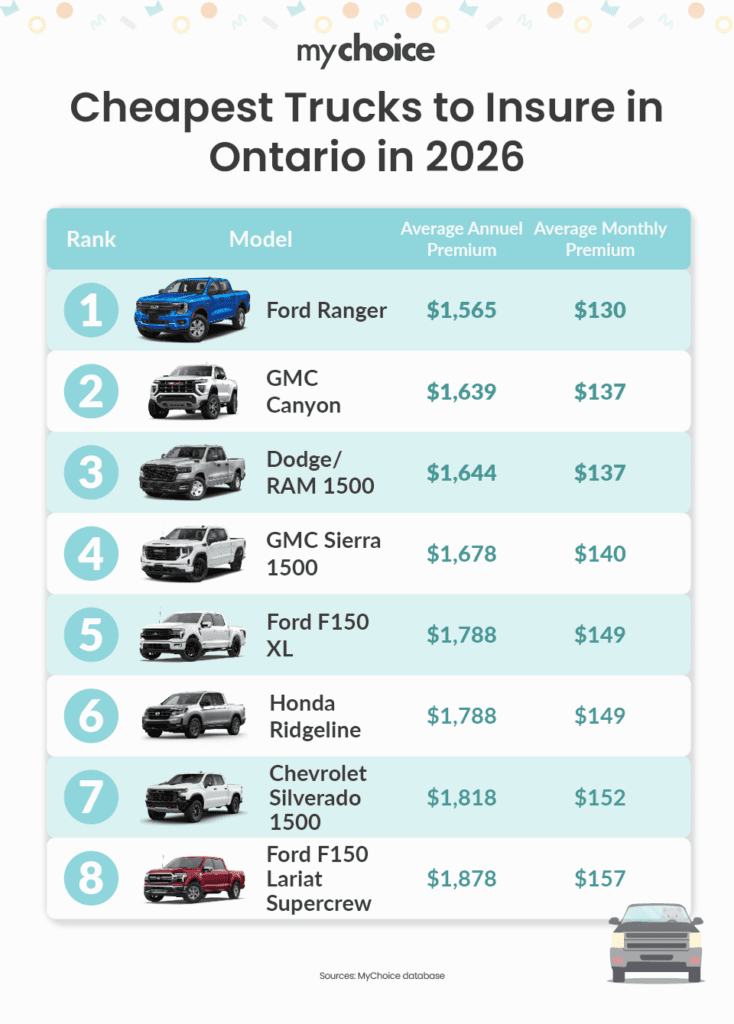
Below, our infographic showcases the cheapest personal truck insurance options in Ontario for drivers, based on MyChoice’s internal quote analysis. See our full methodology and analysis details here.
Personal Pickup Truck Insurance
If you use a pickup like an F-150, Ram 1500, Silverado, or Tacoma for personal driving, you just need regular auto insurance. There is no need for a special policy. The required and suggested coverages are the same as for any car.
| Coverage | What It Does | Required in Ontario? |
|---|---|---|
| Third-Party Liability | Covers injuries or property damage you cause to others | Yes — mandatory |
| Accident Benefits | Covers medical costs and income replacement after an accident, regardless of fault | Yes — mandatory |
| Uninsured Automobile | Protects you if hit by an uninsured or unidentified driver | Yes — mandatory |
| Collision | Covers damage to your truck if you’re at fault | No — but highly recommended |
| Comprehensive | Covers theft, vandalism, weather, fire, and animal strikes | No — but highly recommended |
Is Truck Insurance Different From Car Insurance?
The main difference between pickup truck insurance and car insurance is not the type of coverage, but the price. Some factors unique to trucks can make your premium higher or lower:
What Raises Pickup Insurance Rates:
- Higher repair costs: Truck parts are usually more expensive than sedan parts, especially for full-size pickups.
- Greater property damage potential: Heavier vehicles can cause more damage in a crash, which raises liability risks.
- Theft rates: The Ford F-Series and Ram pickups are often listed among the most-stolen vehicles in Canada.
- Aftermarket modifications: Adding things like lift kits, oversized tires, tonneau covers, or toolboxes can raise your truck’s insurance.
What Lowers Pickup Insurance Rates:
- Occupant safety: Trucks are heavier and sit higher, which usually means better protection for drivers and passengers in a crash.
- Strong safety ratings: Modern pickups do well in crash tests and often come with advanced safety features as standard.
- Durability: Small accidents that might total a compact car are often just repairable damage on a truck.
How Semi Truck and Trailer Insurance Works
Insuring a semi truck, whether it is a day cab, sleeper, or tractor-trailer, is very different from insuring a personal vehicle. The risks are greater, liability limits are higher, and the policies are more complicated.
A standard semi truck and trailer insurance policy usually includes the following:
| Coverage | What It Does |
|---|---|
| Liability insurance | This covers bodily injury and property damage you may cause to others. Minimum requirements depend on the province, but most carriers require $1 million to $2 million in coverage. |
| Cargo insurance (motor truck cargo) | This covers the goods you are hauling if they are damaged, destroyed, or stolen during transport. Most freight contracts require this coverage. |
| Trailer insurance | This covers damage to the trailer itself, whether it’s attached to your truck or parked. It’s especially important if you own the trailer instead of leasing it. |
| Physical damage | This covers your truck (the tractor) for collision and comprehensive damage, similar to personal auto insurance but with much higher limits. |
| Bobtail / deadhead coverage | This covers your truck when it’s running without a trailer, such as when you’re driving to or from a job or repositioning. |
| Bobtail/deadhead coverage | This covers lost income if your truck is off the road because of a covered claim. |
How Tow Truck Insurance Works
Tow truck operators have a unique insurance situation. You need to cover not only your own vehicle, but also the vehicle you are towing, your liability for any damage during hookup and transport, and the physical risks of working on the roadside.
A typical tow truck insurance policy includes the following:
| Coverage | What It Does |
|---|---|
| Liability | It covers injuries or damage you might cause to others while operating your tow truck. |
| On-hook/cargo coverage | It covers damage to vehicles while they are being towed or loaded onto your truck. This type of coverage is unique to tow operators. |
| Garage keepers insurance | It also covers vehicles stored at your lot or yard if they are damaged by fire, theft, or vandalism. |
| Physical damage | Your tow truck itself is covered for collision and other comprehensive events. |
| Roadside liability | It covers incidents that happen while you are working on the side of the road, which is a major risk for tow operators. |
How to Find the Best Truck Insurance Quotes
How you get insurance depends on the type of truck you have.
For Personal Pickups
Using an insurance comparison website like MyChoice is the quickest way to compare truck insurance quotes from different companies. Just enter your truck’s details, such as make, model, year, trim, cab size, and drivetrain, to see rates from top Canadian insurers side by side. This method also helps if you want to compare car and truck insurance costs before choosing a vehicle.
For Semis, Tow Trucks, Dump Trucks, Fleets, and Specialty Vehicles
These policies are too complex for a basic online quote tool. In this case, it’s best to work with a truck insurance broker. Brokers are independent professionals who can connect you with specialty insurers for these vehicles. A good trucking insurance broker will:
- Know which insurers write policies for your specific truck type and use case
- Understand provincial requirements (CVOR in Ontario, NSC compliance, etc.)
- Negotiate on your behalf for better rates and coverage terms
- Handle claims support if something goes wrong
If you’re an owner-operator getting your first semi truck insurance policy or a fleet manager checking your annual renewal, comparing quotes from several insurers, either on your own or with a broker, is the best way to find better rates.