








Car Insurance & Engine Failure: What's Covered

3 minutes can save you hundreds. Enter your postal code below and join thousands of Canadians saving on car insurance.

Secure. No Spam. No Fees.

Why Use MyChoice

MyChoice.ca is an independent platform that helps Canadians find their best insurance options and make informed financial decisions. Our service is free to use. We may earn a commission from some providers when you buy a policy, but it never affects the price you pay or how products are reviewed. To help ensure accuracy, our content is researched and reviewed by licensed insurance professionals before publication.

First published on October 16, 2024

3 minute read

Updated By Vitalii Starov on August 31, 2026

MyChoice follows a strict content review process designed to ensure reliable and unbiased information.

Car insurance generally doesn’t cover an engine that fails because of wear, poor maintenance, or an internal mechanical problem. However, damage caused by a crash, fire, flood or another insured event may be covered, depending on your policy.

For this guide, we reviewed FSRA’s mechanical-breakdown exclusion and the Ontario Automobile Policy, the Financial Consumer Agency of Canada’s overview, and the federal vehicle recall database.

Keep reading to learn when engine damage may be insured, when a warranty or service contract may apply and what records help support a claim.

What Type of Car Insurance Covers Engine Failure?

Standard auto insurance normally does not cover an engine that fails from wear, an internal defect, overheating caused by a component fault or missed maintenance. Engine damage may be insured if it was directly caused by an insured event such as a collision, fire or flood. Otherwise, check the manufacturer warranty, recalls or a separate service contract. The declarations, OAP 1 and endorsements determine which physical-damage coverage applies.

The table below shows which types of coverage may apply to different causes of engine damage. Actual coverage will depend on what caused the damage and the terms of your policy.

Cause of engine damageCoverage that may respondWhat to checkOther route
Internal failure, wear or
missed maintenance
Usually none under a
standard auto policy
Cause of failure and
exclusions
Manufacturer warranty, recall
or a specifically offered
service contract
Collision or rolloverCollision, or eligible DCPD
for qualifying not-at-fault
Ontario damage
Coverage purchased,
causation, deductible and
actual cash value
Manufacturer warranty
usually does not replace
collision coverage
Fire, flood, vandalism or
another non-collision event
Comprehensive or All Perils
only if the event is insured
Listed perils, exclusions,
deductible and resulting
damage
Recall or warranty only if a
defect also applies

What Causes Engine Failure?

Engine failure can happen for several reasons, and understanding these causes can help you prevent costly repairs. Here are some of the most common culprits:

Overheating:

Overheating is often caused by coolant leaks, a malfunctioning thermostat, or a broken water pump. When the engine runs too hot, heat can cause serious engine damage, including warped cylinder heads.

Oil Starvation:

Engines rely on oil for lubrication. Low oil levels, leaks or neglected oil changes can damage internal components and potentially lead to engine failure.

Neglected Maintenance:

Skipping oil changes, filter replacements, or recommended fluid checks can contribute to engine problems over time.

Faulty Spark Plugs:

Old or corroded spark plugs can prevent the engine from starting properly and may lead to misfires that damage engine components over time.

Timing Belt Failure:

A broken timing belt can cause serious engine damage, particularly in interference engines where the pistons and valves occupy the same space.

What Other Options Cover Engine Failure?

First, check the manufacturer’s or powertrain warranty and recall information. If you’re considering a separate breakdown policy or service contract, compare eligibility, obligor, covered parts, exclusions, deductible, claim cap, maintenance proof, waiting period and cancellation rights.

Mechanical breakdown insurance may cover specific unexpected failures, but only under its contract. Wear, neglected maintenance, pre-existing conditions and some engine components may be excluded.

Review who provides the protection, which engine parts are covered, how long the contract lasts and whether there is a kilometre limit. Also check the exclusions, transfer rules and requirements for approving a repair.

What to Do Before Engine Repairs Begin

If a sudden event may have caused the damage, stop driving when safe and report it promptly. Photograph warning messages, leaks and visible damage. Keep towing, diagnostic, maintenance and incident records.

Ask the adjuster before authorizing a teardown or disposing of failed parts. Get the coverage decision and causation basis in writing. A deductible may apply, and the insurer generally will not pay more than the vehicle’s actual cash value.

Choosing Between Mechanical Breakdown Insurance and Warranties

If both options are available, there are a few factors you should consider.

  • Get written prices for the same vehicle and term. Compare total paid cost, financing interest, deductible, claim cap and exclusions against the vehicle’s remaining warranty and a repair reserve.
  • Compare which parts are covered and excluded under each option. Check whether repairs need pre-approval, whether you must use certain repair shops, whether there are limits on labour or replacement parts, and what happens if a claim is denied.
  • Compare the final contract terms, remaining factory warranty, coverage limits and the process for complaints or cancellations. A warranty or service contract may or may not have a deductible.

Maintenance Tips to Prevent Engine Failure
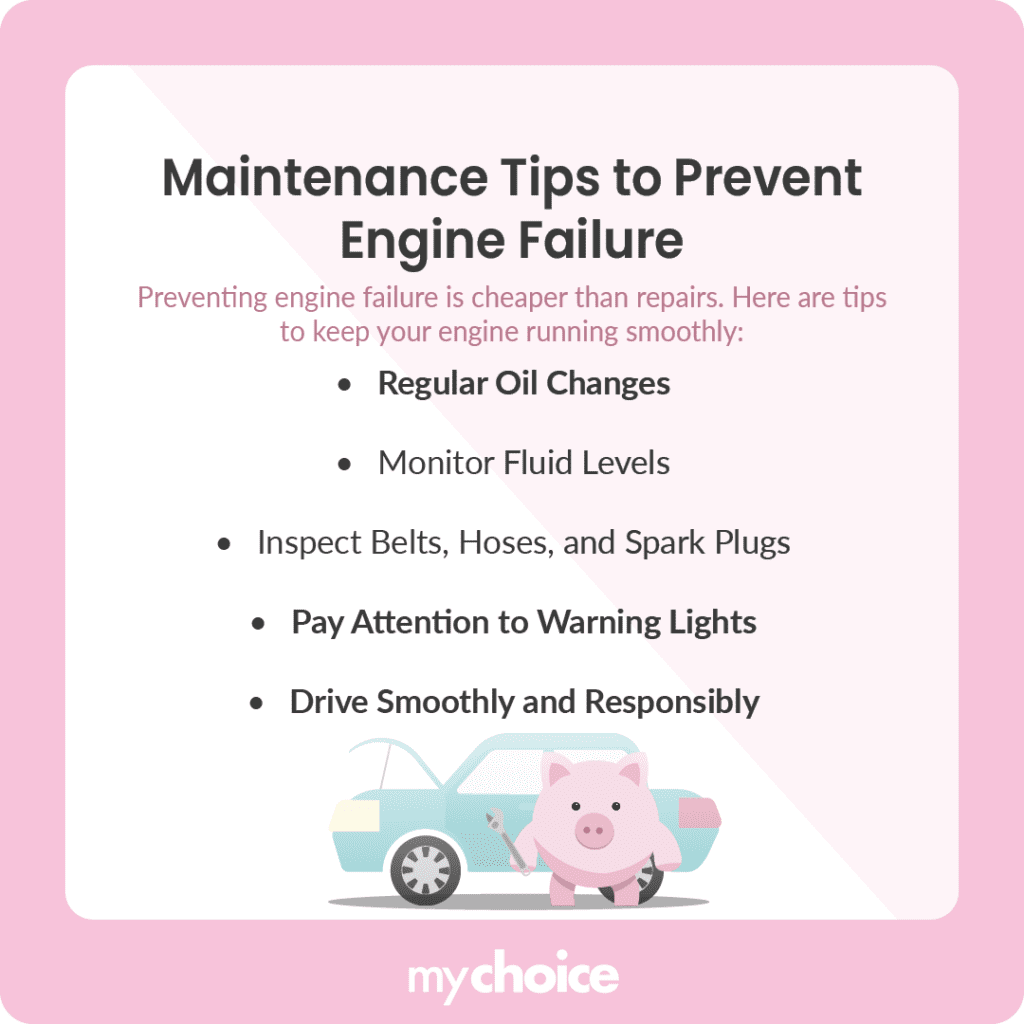
Preventing engine failure is often easier and cheaper than dealing with repairs. Here are some maintenance tips to keep your engine running smoothly:

  • Follow the oil-change and maintenance schedule recommended by the manufacturer, including any separate schedule for severe driving conditions. Keep your maintenance receipts.
  • Use the owner’s manual for safe owner checks and the exact fluid specification. Have leaks, repeated level loss or sealed systems inspected by a qualified technician.
  • Only inspect or service components that the owner’s manual says are safe for you to handle yourself. Have belts, leaks, warning lights, unusual noise or performance changes assessed by a qualified technician.
  • If your check engine light comes on, don’t ignore it. Have your vehicle inspected by a qualified mechanic to catch potential problems early.
  • Stay within the manufacturer’s towing, payload and temperature limits and follow any severe-service schedule. If the engine overheats or a serious warning light appears, avoid continuing to drive unnecessarily and let the technician inspect the problem.
Maintenance Tips to Prevent Engine Failure

With over a decade in Canada’s insurance sector, Aren is a leading voice in the industry, providing thought leadership on auto insurance, underwriting innovation, and how technology is reshaping insurance.

Congratulations! You made it to the end!

Now, here is the easy part: complete your quote in under 2 minutes

Discover More About

September 3, 2026
Learn how vintage and classic car insurance work in Ontario, what coverage you may need, how collector cars are valued, and ways to protect your vehicle.
August 21, 2026
Someone damaged your car? Find out when insurance covers vandalism, whether it’s worth filing a claim, and what you could pay yourself.
August 11, 2026
Learn how adding a teen driver to your Ontario car insurance policy affects your premium, what it costs, and ways to keep insurance affordable.

Even More Ways To Save on Insurance