









ADAS calibration can make a windshield or collision repair more expensive, but that does not mean driver-assistance technology automatically raises insurance premiums. Current insurance research shows both effects: sensors add repair steps when a claim occurs, while crash-avoidance systems reduce the number of claims and can lower total insured losses.
For this article, our team reviewed the Insurance Institute for Highway Safety’s current analysis of claim frequency, severity and overall losses, its research on post-repair calibration problems, and Transport Canada’s back-up camera guidance.
Keep reading to see when calibration is needed, what static and dynamic calibration mean, how the cost can affect a claim and what you should obtain from the repairer before taking the vehicle back.
Read More: Other Factors That Affect Car Insurance in Ontario
What Is ADAS Calibration?
Advanced driver-assistance systems, or ADAS, use cameras, radar and other sensors for features such as automatic emergency braking, lane support, blind-spot alerts and parking assistance. Calibration aligns a sensor and confirms that the system is reading the road as the manufacturer intended.
A vehicle may need calibration after a sensor is removed or replaced, a windshield with a forward camera is replaced, body dimensions change during collision repair, wheel alignment affects a system reference point, or a warning or diagnostic code identifies a problem. The manufacturer’s repair procedure for the exact vehicle determines the required steps.
Why is ADAS Driving Up Collision Repair Costs?
Repairing ADAS after a collision involves more than simply replacing parts. Sensors, cameras, and other components also need to be calibrated to ensure these systems will function properly. Sensor calibration after an accident is a specialized skill in auto shops today, and it’s one that’s in increasingly high demand as these systems become more widespread.
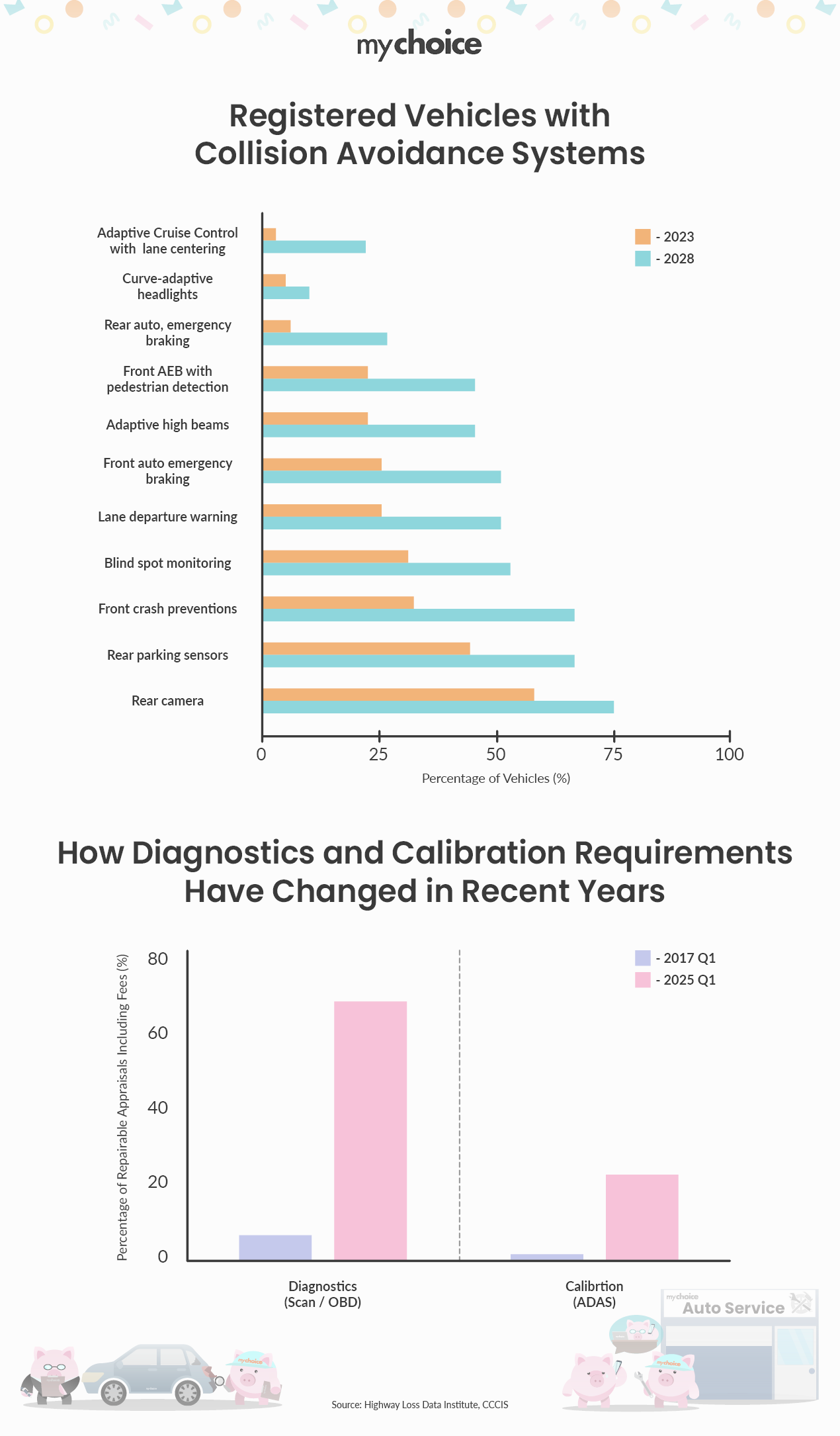
According to data published by CCC Intelligent Solutions, just 0.9% of repairable insurance appraisals included calibration in 2017. That share increased to more than 23% by 2025, and direct repair programs report an even higher rate of 33% of appraisals now including calibration.
As demand for calibration has increased, some repair shops still lack the specialized tools and training required. Many still lack the specialized tools, software, and trained technicians required to execute these repairs. This means ADAS insurance claims that involve calibration often end up being seconded out to automaker dealerships or third-party vendors. As a result, the rates being charged for calibration have nearly doubled over the past five years and now average $500 per repairable vehicle.
On top of that, auto shops don’t always anticipate calibration costs when they prepare estimates for insurers. According to CCCIS data, less than 45% of initial repair estimates include ADAS calibration. This spikes the cost of insurance claims not only due to added and unexpected labour expenses but also because it delays repair completion, which adds to rental car costs as well.
Read More: See Why Car Repair Costs Are Rising in Canada
What Does this Mean for Insurance Premiums?
The hidden repair costs of ADAS are causing insurance claim costs to spike. This is because:
- More cars are equipped with ADAS than ever.
- Many ADAS systems require calibration as part of their repair.
- Auto repair shops are not keeping up with the tools and training required for calibration.
- Cars that require calibration as part of repair are often moved to other shops, which creates delays and drives up labour and car rental costs
- Less than 45% of initial estimates include calibration, which means repair costs are becoming less predictable for insurers.
These higher and less predictable repair costs can put upward pressure on insurance premiums over time.
As MyChoice COO Matt Roberts explains, “ADAS is fundamentally changing the economics of a car insurance claim. What used to be a simple repair is now a highly technical process involving sensors, software, and calibration. The challenge for insurers is that these costs are not only rising, but they’re also becoming less predictable, which ultimately puts upward pressure on premiums for drivers.”
Drivers of vehicles with ADAS may see higher premiums in some cases, particularly where repair costs are higher.
Read More: See What to Do During a Car Accident Claim