









Some people prefer renting or borrowing cars instead of buying one. That’s perfectly reasonable, but what’s important is that you still need to check your insurance coverage.
The owner’s insurance may cover you when you borrow a car with permission. However, OPCF 27 can extend parts of your own policy to eligible vehicles you rent or borrow.
What Is an OPCF 27 Endorsement?
An OPCF 27 endorsement is an insurance add-on that provides coverage when driving eligible cars you don’t own. It’s also known as Legal Liability for Damage to Non-Owned Automobiles. Essentially, it extends parts of your insurance coverage to certain cars you rent or borrow.
OPCF 27 is one of the many Ontario Policy Change Forms. OPCFs are optional add-ons that let you modify your basic car insurance policy.
When should you get OPCF 27? First, check whether you’re insured when driving somebody else’s car.
What OPCF 27 Covers
OPCF 27 may extend the following coverages to rented or borrowed vehicles:
- Third-party liability: This coverage pays for losses, damage, injury or death you’re legally responsible for causing to other people.
- Accident benefits: This coverage provides benefits if you’re injured in an accident, subject to the policy’s terms.
- Uninsured automobile coverage: This may protect you in certain accidents involving an uninsured or unidentified driver.
- Direct Compensation Property Damage: This may apply when its requirements are met.
- Damage to the vehicle: The endorsement may include Collision or Upset, Comprehensive, Specified Perils or All Perils coverage.
The form will show which coverages apply, the deductible and the maximum amount your insurer will pay.
Read More: Collision and Comprehensive Car Insurance
Conditions and Limitations of OPCF 27
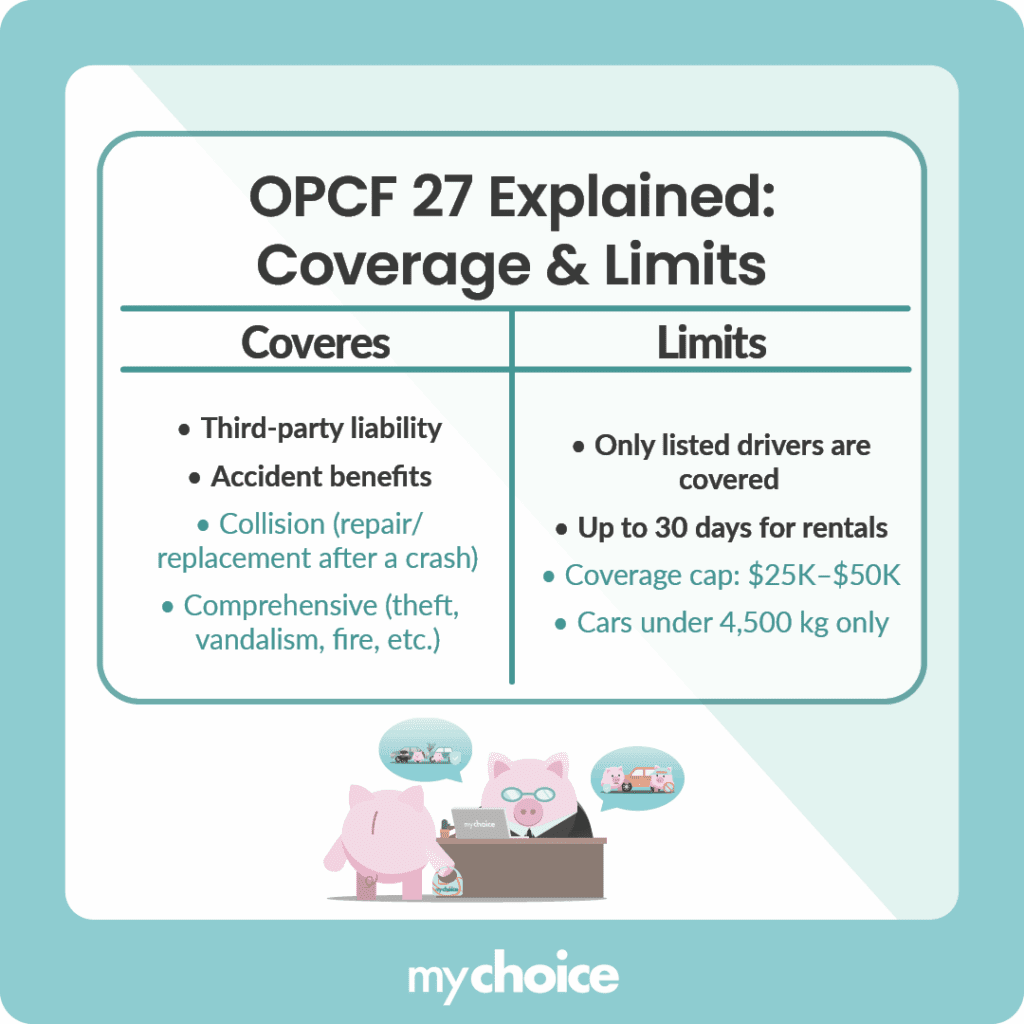
OPCF 27 does have some limits and conditions, so it’s not complete protection for every rental or borrowed vehicle.
- For an individual policy, it generally protects the named insured, their spouse and the drivers listed on the policy.
- The vehicle must be used with the owner’s or lessee’s permission.
- Physical-damage coverage generally applies to vehicles weighing 4,500 kilograms or less.
- It generally does not cover vehicles owned or licensed by you, someone in your household or your employer.
- The coverage amount and deductible are shown on the endorsement.
Other restrictions may apply, so check the form before renting or borrowing a vehicle.
How an OPCF 27 Endorsement Works
An OPCF 27 endorsement works much like other insurance coverage. If you get into an accident, contact your insurance company to make a claim. From there, your insurer will guide you through the claims process.
Your insurer will confirm whether the vehicle and driver qualify, which coverage applies and how much of the loss is covered. You may need to pay the deductible before the claim is paid.
How Much Does OPCF 27 Cost?
OPCF 27 costs vary depending on your insurer and policy.
Based on MyChoice quote data collected in 2026, it costs about $19 per year on average. Ask your insurance company or broker for the price and coverage limit available on your policy.
OPCF 27 and Car Rentals
Even if you only rent cars occasionally, OPCF 27 may be worth considering because rental companies charge separately for their optional protection.
However, OPCF 27 and a rental company’s damage waiver may not provide exactly the same protection. Check the deductible, maximum amount, eligible vehicle types, rental period and any charges that aren’t covered.
Is OPCF 27 Mandatory?
OPCF 27 isn’t mandatory because there’s no legal requirement to purchase it. You can legally borrow a friend’s or family member’s insured car with permission without adding this endorsement.
However, OPCF 27 may be useful if you rent or borrow cars often. Check your existing coverage before deciding whether you need it.
Are There Alternatives to OPCF 27?
Credit-card rental-car insurance may be another option. Many credit cards provide coverage for theft or physical damage to eligible rental vehicles.
However, you should compare your credit card coverage with OPCF 27. Check which drivers and vehicles qualify, how long coverage lasts and whether you must pay for the rental using that card.
Credit-card coverage may not include liability, accident benefits or personal belongings.
Read our guide about rental car insurance to learn more.
Differences Between OPCF 27 and OPCF 27B
OPCF 27 and OPCF 27B sound similar but have different uses. OPCF 27 is intended for eligible individuals driving vehicles they don’t own, while OPCF 27B applies to certain business operations involving non-owned vehicles.
Will OPCF 27 Cover Me in the United States?
OPCF 27 generally follows the territory covered by your Ontario auto policy, which includes Canada and the United States.
Check your policy and rental agreement before travelling because additional restrictions may apply.
Closing Thoughts
Adding OPCF 27 may be a good idea if you rent or borrow cars often. It can extend parts of your auto insurance policy to an eligible rented or borrowed vehicle.
Before adding it or turning down protection from a rental company, compare the coverage limits, deductible and restrictions.