









OPCF 16 temporarily cancels the coverages required by law to operate or use your Ontario-insured vehicle. OPCF 17 reinstates the cancelled coverages before you operate your vehicle again. Together, OPCF 16 and OPCF 17 can reduce the cost of maintaining your vehicle, provided it stays out of service for 45 consecutive days without interruption.
For this guide, our team reviewed FSRA’s official OPCF 16 Suspension of Coverage and OPCF 17 Reinstatement of Coverage forms, along with FSRA’s optional-coverage explanations.
Read More: See How Ontario Policy Change Forms Work
What Do OPCF 16 And OPCF 17 Do?
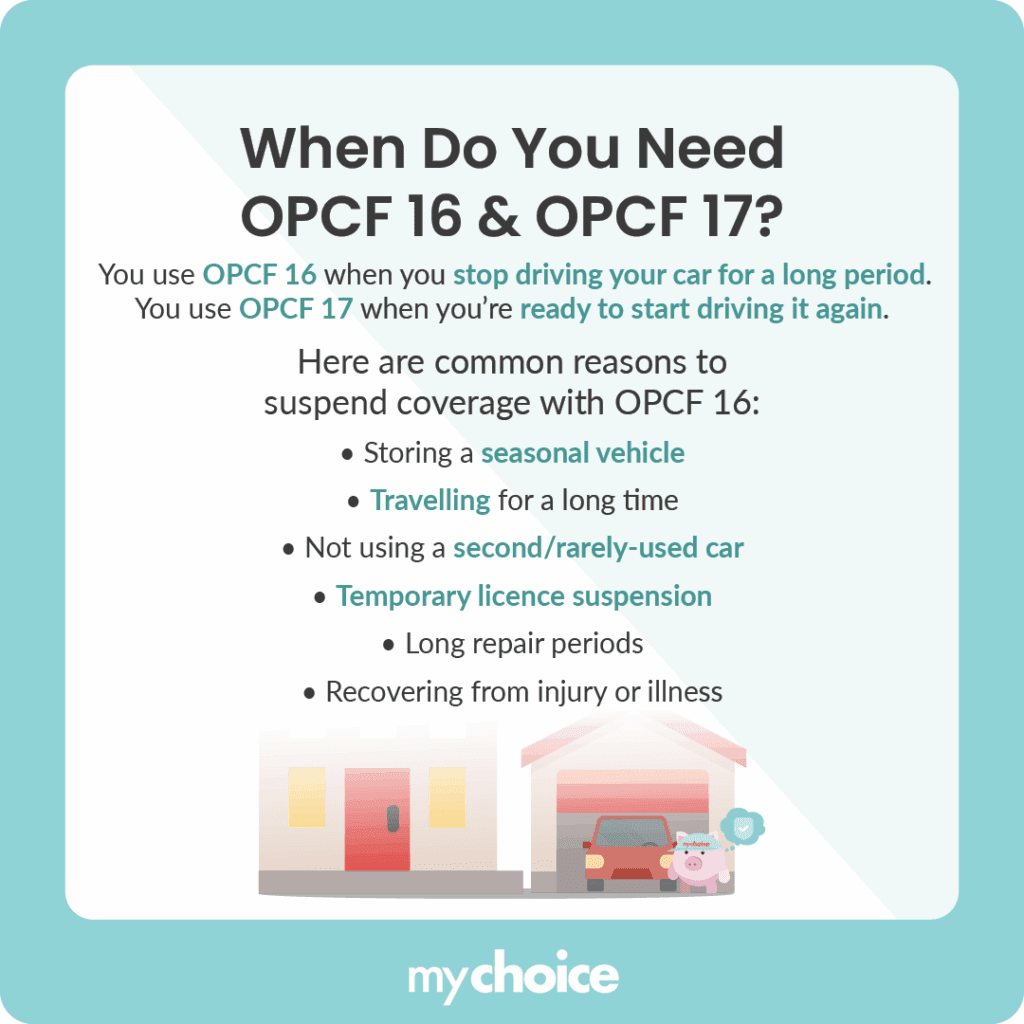
OPCF 16 suspends certain coverages on your auto policy, and OPCF 17 reinstates those coverages when you want to drive the vehicle again. These endorsements are useful if you leave your car for a long time.
It’ll be a waste if you keep paying premiums while your car sits unused, and that’s where these forms come in handy. These forms may allow the insurer to refund part of the premium after a qualifying suspension.
Applying OPCF 16 to your policy means it’ll suspend your coverage for the use and operation of your vehicle. OPCF 16 suspends key coverages for the use or operation of the vehicle, including liability, accident benefits, DCPD, and uninsured motorist coverage. Some protection may still apply if the vehicle is damaged while parked (for example, by theft, fire, or another vehicle), depending on the remaining coverage in the policy.
One thing to note is that OPCF 16 suspends coverage for the car’s use and operation. If another vehicle hits your car while it is parked in a driveway or garage, the loss may still be covered depending on the remaining coverage in your policy, as long as you’re not driving it at the time. Read our article on parking lot accidents for more details.
OPCF 17 reinstates the coverages that were suspended by OPCF 16. It reinstates your insurance coverage once you’re ready to drive again.
Which Coverages Does OPCF 16 Suspend?
| Coverage | What OPCF 16 does |
|---|---|
| Third-party liability | Cancels coverage for use or operation |
| Accident benefits | Cancels coverage for use or operation |
| Uninsured automobile | Cancels coverage for use or operation |
| Direct Compensation–Property Damage | Cancels coverage for use or operation |
| Collision or Upset | Cancels this optional physical-damage coverage |
| All Perils | Cancels the Collision or Upset portion |
| Comprehensive or Specified Perils | Existing coverage can remain in effect |
Keeping your vehicle on Comprehensive or Specified Perils coverage may protect it while it’s in storage against certain circumstances, like fire, theft or hail. Such coverage is subject to the terms, deductibles and exclusions of your policy. It does not provide permission to drive your vehicle.
Read More: See What Comprehensive Car Insurance May Cover
How Does The OPCF 16 Refund Work?
No refund is payable if the suspension lasts less than 45 consecutive days. If the suspension lasts 45 days or more, the insurer may issue a refund when the policyholder signs OPCF 16 or when coverage is reinstated. The amount of the refund must appear on the endorsement or reinstatement certificate.
There is no universal estimate because policies differ in how premiums are allocated among various types of coverage. Ask for specific figures for suspension and reinstatement, and compare them to the cost of continuing to pay for coverage you intend to keep.
How Do You Suspend And Reinstate Coverage?
Tell your insurer or broker which vehicle you are taking out of service and the requested effective date. Review the coverages remaining in force, the refund and the storage location. Keep a copy of OPCF 16. You cannot operate the vehicle.
You need to have OPCF 17 before driving again. Applying for OPCF 17 does not prove your car is insured. Obtain written verification, including the effective date, before driving again. Check your updated certificate, premium and physical-damage coverage.
What Else Does OPCF 16 Affect?
Check any other vehicle policies in the household before assuming another vehicle can be driven. OPCF 16 cancels the listed coverages for a newly acquired automobile and a temporary substitute automobile.
If the vehicle is leased or financed, verify whether the agreement requires continuous physical-damage insurance. Store the vehicle off the road and control access to its keys.
When Is OPCF 16 More Useful Than Cancelling?
OPCF 16 may be useful if you will not be driving your car for 45 days or more, such as if you have a seasonal car, are going away on a trip or cannot legally drive. This option allows you to keep your policy in force and may allow you to keep some optional coverages in effect to insure your inactive car.
Cancellation may make sense if you’re selling your vehicle or no longer need insurance. Before cancelling, consider the effort required to obtain insurance again and any cancellation charges.
Read More: Understand Mid-Policy Car Insurance Changes