









Let’s be clear: “parking insurance” is not a standalone insurance product in Ontario. It generally means reducing a policy to storage coverage while a car sits unused, which your insurer does through an endorsement called OPCF 16.
Our team reviewed FSRA’s guidance on this endorsement, along with the standard Ontario Automobile Policy (OAP 1), to answer questions about what parking insurance covers, where you can store the car, how much you could save and how to switch back to full coverage afterward.
What Is Parking Insurance?
In Ontario, “parking insurance” is an unofficial name, not a product name. The actual mechanism is an endorsement to your standard auto policy called OPCF 16, or Agreement for Suspension of Coverage.
It suspends the parts of the policy that apply when the car is being driven while leaving any applicable Comprehensive or Specified Perils coverage in force. A stored vehicle may remain protected against theft, fire, vandalism and certain weather events.
When you’re ready to drive again, your insurer lifts the suspension with the matching OPCF 17, Reinstatement of Coverage.
What It Covers
While it’s off the road, your vehicle may remain protected against theft, vandalism and fire under the Comprehensive section of an Ontario auto policy.
It may also provide coverage for:
- Falling or flying objects
- Civil unrest
- Flooding
- Lightning
- Hail
- Windstorms
- Earthquakes or explosions
- Falling aircraft or aircraft parts
The coverage is subject to the policy’s deductible, exclusions and other terms.
Does Home Insurance Cover Damage to a Parked Vehicle?
No, home insurance will not cover damage to a vehicle even when it is parked on your property. However, it may cover personal items stolen from your car.
Is Parking Insurance Required in Ontario?
No. OPCF 16 is optional, and no law requires you to keep Comprehensive coverage on a stored car. However, you cannot drive the vehicle while the listed coverages are suspended.
When Parking Insurance Actually Makes Sense
Suspending your policy while keeping storage coverage may be worth considering if you:
- Drive a seasonal or classic vehicle
- Drive more than one vehicle and store one for long periods
- Want to avoid a gap in your insurance history
How to Switch a Stored Car to Parking Insurance and Back
- Call your broker or insurer and ask for OPCF 16, Agreement for Suspension of Coverage, on the vehicle you’re storing. It’s an endorsement to your existing policy, not a separate insurance product.
- Confirm what stays in force. Comprehensive or Specified Perils coverage may remain active so certain losses are still covered while the car is stored.
- Check the suspension period. OPCF 16 does not provide a refund when coverage is suspended for fewer than 45 consecutive days.
- Keep the car on private property, such as a driveway, garage or storage unit, for the entire suspension period.
- Before driving it again, even briefly, have your insurer add OPCF 17, Reinstatement of Coverage. Until that’s done, taking the car onto the road means driving without the mandatory coverages, which is illegal.
What to Do if Your Parked Vehicle Is Damaged Without Insurance
You must generally cover the repair or replacement costs if your parked vehicle is damaged and you do not have applicable insurance. You can ask your insurer about adding Comprehensive insurance to protect against similar losses in the future.
If your car is damaged in a hit-and-run, note:
- The precise location of the incident
- The date and time it occurred
- The weather conditions
- The damage to your vehicle, including photos or videos
- Any damaged vehicles nearby, including their models and plate numbers
- The contact information of any witnesses
Report the collision promptly. Ontario requires police reporting when someone is injured or the total damage to vehicles or other property appears to exceed $5,000.
Read More: Post-Accident Checklist for Ontario Drivers
Tips for Protecting Your Parked Vehicle
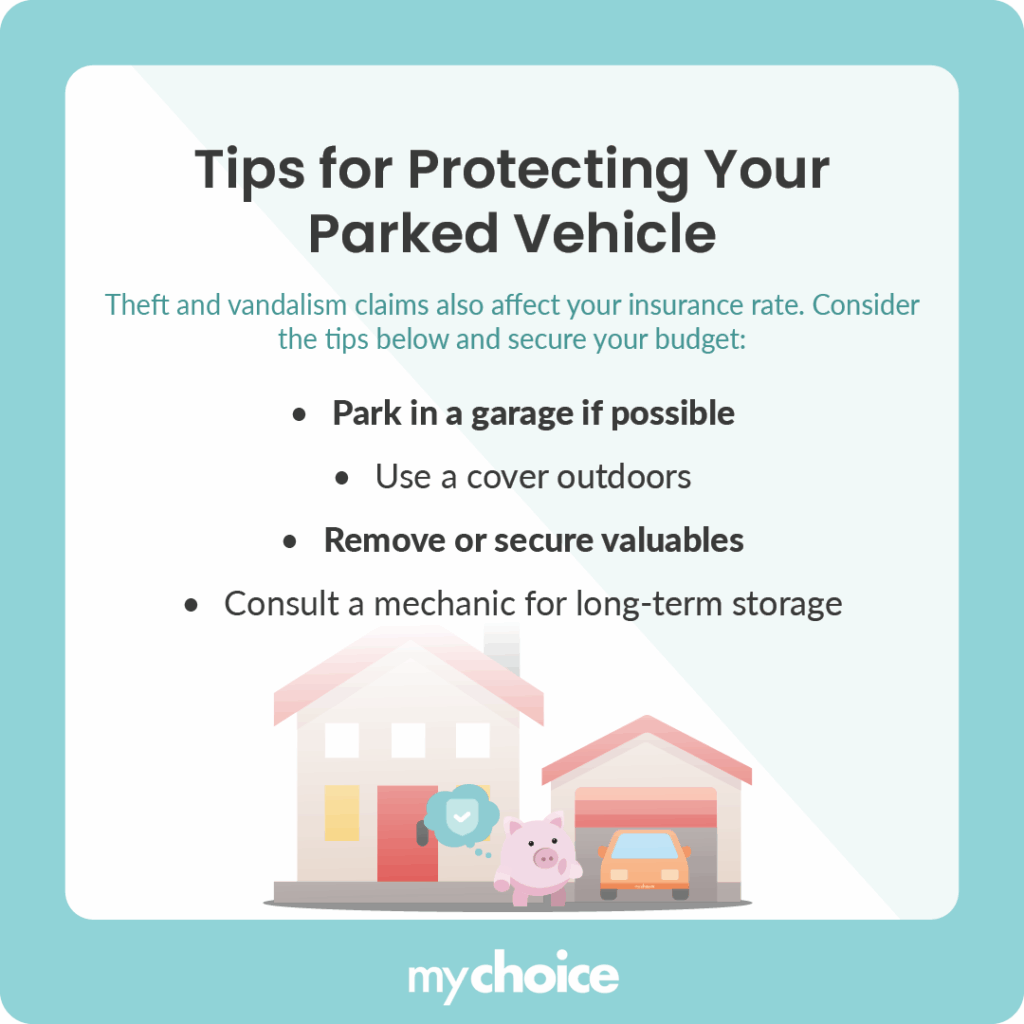
Where and how you store your vehicle is important to keeping it safe. Consider these tips:
- Park inside a garage, if possible.
- Use a vehicle cover when parking outdoors.
- Remove or secure valuables.
- Speak to a mechanic about maintenance before leaving the car in long-term storage.