









Switching car insurance companies in Ontario is easier than many drivers think, but timing the switch properly can save you money and help you avoid cancellation fees, coverage gaps, and unexpected surprises.
Our team reviewed the official Ontario Automobile Policy (OAP 1) and FSRA’s consumer guidance on auto insurance to understand how policy cancellations, refunds, renewals, and replacement coverage work in Ontario.
Learn when it’s worth switching insurers, how to cancel your policy correctly, how to avoid gaps in coverage, and what to compare before accepting a lower quote.
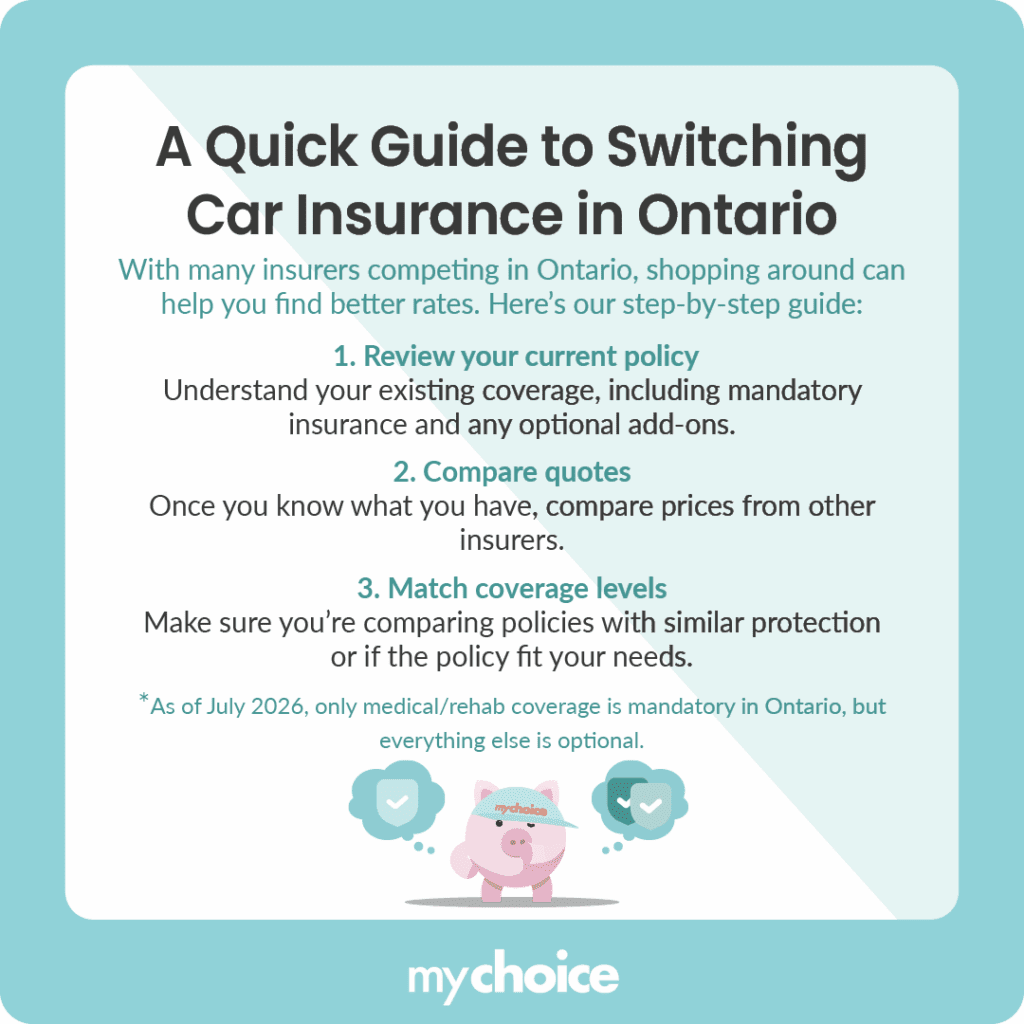
How to Switch Car Insurance in Ontario, Step by Step
Try to avoid any gap in your coverage, because a lapse will not automatically double your premium, but it can shrink your options, since some insurers decline or surcharge applicants who have been uninsured. And driving at all during the gap is an offence under the Compulsory Automobile Insurance Act, with fines starting at $5,000 for a first conviction.
Read More: Consequences of Lapses in Car Insurance
Can you Change Car Insurance Companies at Any Point?
You can technically cancel your policy at any time, but doing so mid-term usually triggers a ‘short-rate’ cancellation penalty. This fee covers the insurer’s administrative costs and typically ranges from 2% to 7% of your annual premium. Unless you are at your renewal date, you should calculate whether your potential savings outweigh this penalty.
When is The Best Time to Change My Car Insurance Coverage?
The best time to look at your car insurance or think about switching is when something in your life changes, or when your policy is up for renewal.
Read More: How to Properly Manage a Car Insurance Renewal
Personal changes like moving to a new address or postal code, getting a new vehicle, or getting married can affect your rates. Switching at renewal makes sense because you avoid cancellation fees.
When It’s Not Recommended to Switch
Sometimes timing matters more than price. Switching right after a negative change to your driving record or too soon into a new policy can lock you into a higher premium or trigger extra fees.
It’s recommended to hold off on changing your policy if:
- You just renewed or recently switched policies
- You recently had a ticket or an accident
- Your risk profile just worsened (i.e. you had a recent claim)
Will Changing Car Insurance Companies Affect My Rate?
Switching, by itself, does not affect your rate. There is no penalty on your record for changing companies. What moves the number is what the new insurer sees when it prices you from scratch: every ticket, claim, and cancellation, with none of your old insurer’s goodwill attached.
Accident Forgiveness does not transfer between companies. If your current insurer is ‘forgiving’ an at-fault accident, a new company will see that accident on your record and charge you for it, and price it in. According to our internal data, this often results in quotes that are 25% to 50% higher.
Should I Shop for Car Insurance Every Year?
Yes, you should compare rates every year, but that doesn’t mean you should always switch. Insurers constantly adjust pricing based on claims trends and profitability, and loyalty discounts often fade after the first term.
At the same time, your own risk profile may improve as tickets age or you build a longer claims-free history. By checking quotes 30-60 days before your renewal, you can ensure you’re not overpaying.
Why Shopping Around is Important
Before looking for a new car insurance company, understand your current policy and provider. For example, Ontario has certain minimum coverage amounts in its mandatory car insurance components.
While the government regulates standard policy terms, Ontario moved to an ‘à la carte’ model on July 1, 2026. This means that while medical and rehabilitation benefits remain mandatory, other previously standard protections like income replacement and death benefits became optional. (Source: Ontario Ministry of Finance; FSRA guidance on the July 1, 2026 auto insurance changes.) Ask both insurers to quote the same benefit selections. Otherwise, the ‘cheaper’ policy may simply have dropped income replacement or death benefits you assumed were included.
Once you understand your current policy, compare quotes from multiple licensed Ontario insurers on identical coverage, limits, and deductibles. That is the only way the price differences mean anything.