









Lending your car over to someone else doesn’t seem problematic until you find that the borrower crashes your car, uses it for delivery work or turns out to be excluded from the policy. The owner’s policy and how you use your vehicle matter as much as permission. For this guide, our team reviewed Ontario’s Insurance Act, the province’s vehicle registration and insurance requirements, and FSRA’s OPCF 27 guidance.
Before you hand over the key, keep reading to learn about who may drive your car, what to confirm before lending it, whose policy may respond after a crash and when regular use needs to be disclosed.
Who Can Drive My Car Under My Insurance in Ontario?
You can lend your Ontario-insured car when the borrower has permission, a valid driver’s licence to drive, and uses the vehicle for purposes allowed by your policy. The owner’s policy is usually the main policy involved in a claim, so regular access or delivery use must be disclosed.
Read More: Am I Insured If I Drive Someone Else’s Car?
What Happens if Someone Who Isn’t on Your Insurance Crashes Your Car?
First, the owner’s insurer will investigate the borrower’s permission and licence. Then they will check whether the driver was licensed and authorized, how the vehicle was used, the coverage on the policy and fault. The borrower’s own policy or OPCF 27 may be relevant, but it does not automatically replace the owner’s policy.
After a collision, the owner and borrower need to document the scene, exchange licence, permit and insurance information.
Then they should follow police or collision-centre rules, and notify the owner’s insurer as soon as possible.
The adjuster will examine consent, driver status, use, coverage and fault.
A claim can affect the owner’s policy even when the owner was not driving, but the effect on future premiums depends on the facts and insurer rules.
Can Lending Your Car to a Friend Affect Your Insurance Rates in Ontario?
It can. A collision or coverage dispute involving the borrower may be recorded under the owner’s policy, but any renewal effect depends on fault, the claim, driver status, use, coverage and the insurer’s approved rating rules.
Can My Friend Drive My Car Regularly? What About Long-Term?
You must tell the insurer before someone starts using the car regularly. A household member, employee, student, caregiver or friend may need to be added to the policy or handled differently, depending on the insurer’s requirements. Get the driver’s status and any OPCF 28A exclusion in writing. Don’t assume that the term “secondary driver” determines how the insurer will treat them, and you should check how they should be listed on the policy.
Delivery, rideshare or other paid passenger services, renting the vehicle to another person and frequent cross-border use require separate confirmation. FSRA’s coverage-exclusions guidance identifies excluded-driver and commercial-use situations that can change coverage. Permission doesn’t override your policy documents and any endorsements.
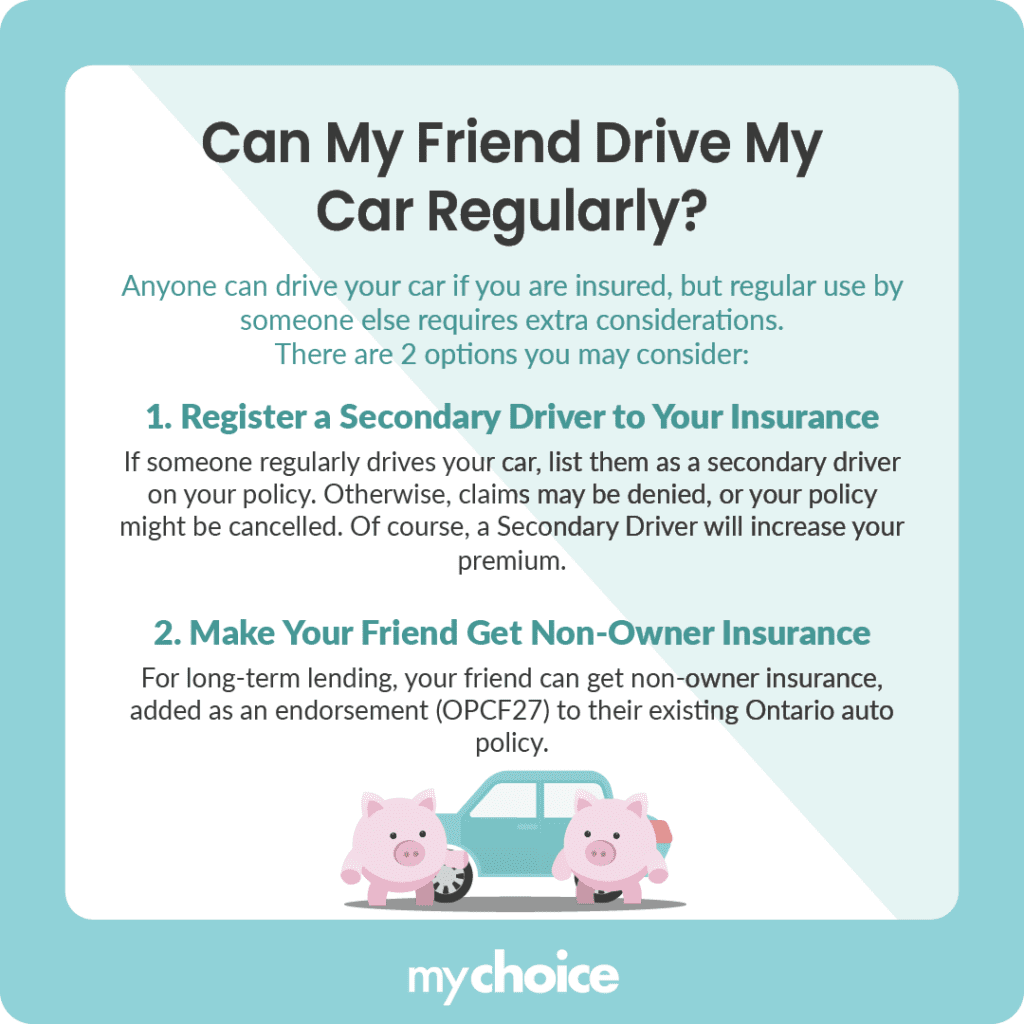
Occasional lending versus regular access
A one-time permitted loan isn’t the same as regular household access, delivery use or renting the vehicle to someone. Disclose regular drivers and changes in use before a loss and ask whether an excluded-driver endorsement applies. Ontario requires the vehicle itself to be registered and insured, so check the province’s registration and insurance guidance. Permission alone can’t override an invalid licence, excluded driver or prohibited use.
Read More: Getting Insured as An Occasional Driver