









How to Prevent Your Car Battery From Dying in Cold Weather
Cold weather is just another part of life in Canada. Thankfully, there are things you can do to protect your car battery from it and potentially save money by extending the life of your battery and avoiding unexpected replacements.
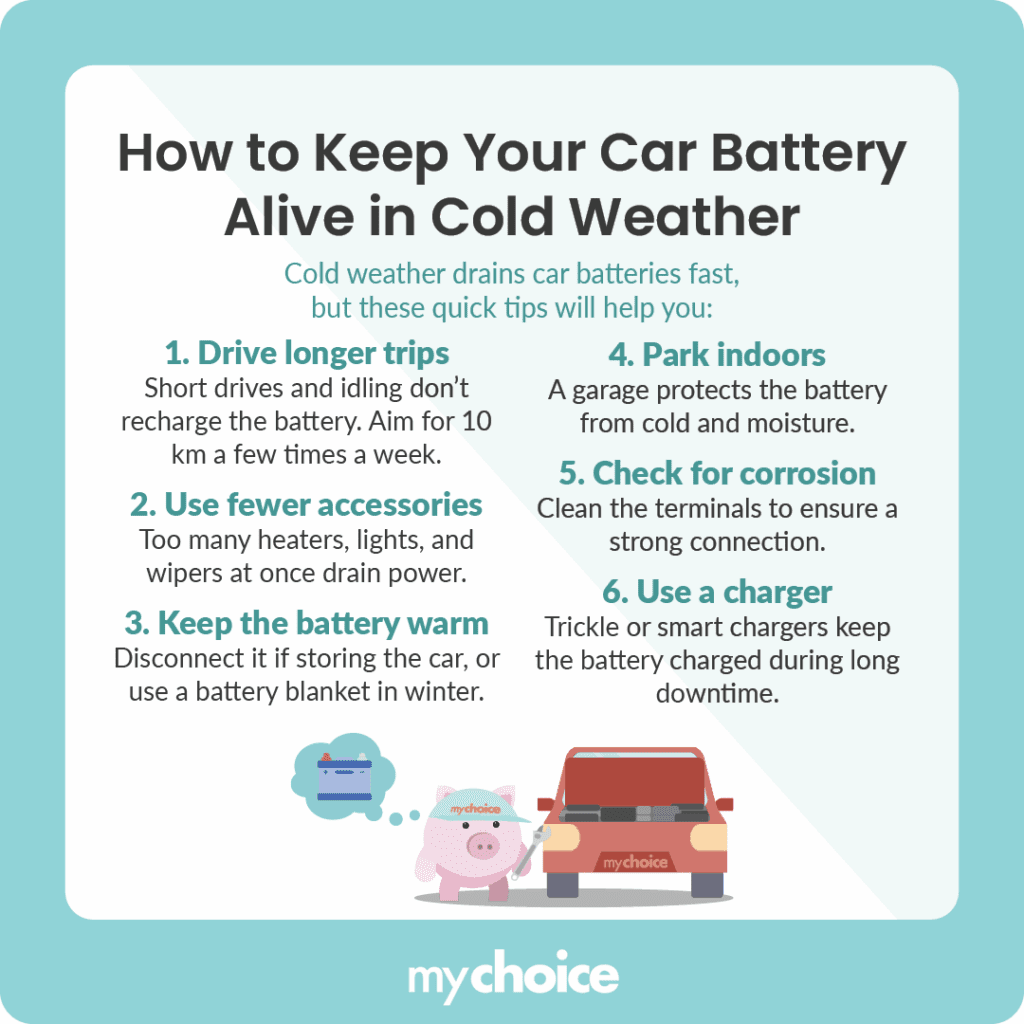
Here are six tips for prolonging your battery’s life over winter:
How Long Do Car Batteries Typically Last?
Most car batteries last about 3–4 years, depending on driving conditions and maintenance.
All car batteries degrade over time, and some factors can shorten a car battery’s lifespan even further. This includes:
- The battery’s size
- Prolonged exposure to abnormally hot and cold weather
- Taking frequent short trips
- Exposure to moisture, corrosion
- Leaving the electrical accessories on when parked
- Frequent driving in heavy traffic
The Effects of Cold Weather on Batteries
Extreme temperatures can affect the longevity of car batteries. These are the reasons why car batteries tend to die out all of a sudden in the winter:
When Is It Time to Replace Your Car Battery?
Knowing when it’s time to replace your car battery can be tricky. Take away some of the guesswork by checking for the following signs regularly:
Key Advice from MyChoice
- Prepare your car before winter arrives. If your battery is already a few years old, testing or replacing it before the coldest months can help prevent unexpected breakdowns.
- Keep emergency equipment in your vehicle. Booster cables or a portable jump starter can help you quickly deal with a dead battery in freezing conditions.
- Consider roadside assistance coverage. Many auto insurance policies or add-ons include battery boost services, which can be helpful if your car won’t start in winter.
- Be prepared for winter roadside emergencies. A dead battery can leave you stranded in cold conditions, so consider keeping booster cables or roadside assistance coverage as part of your auto insurance protection.