









Why Dashcams Matter for Insurance at a Glance
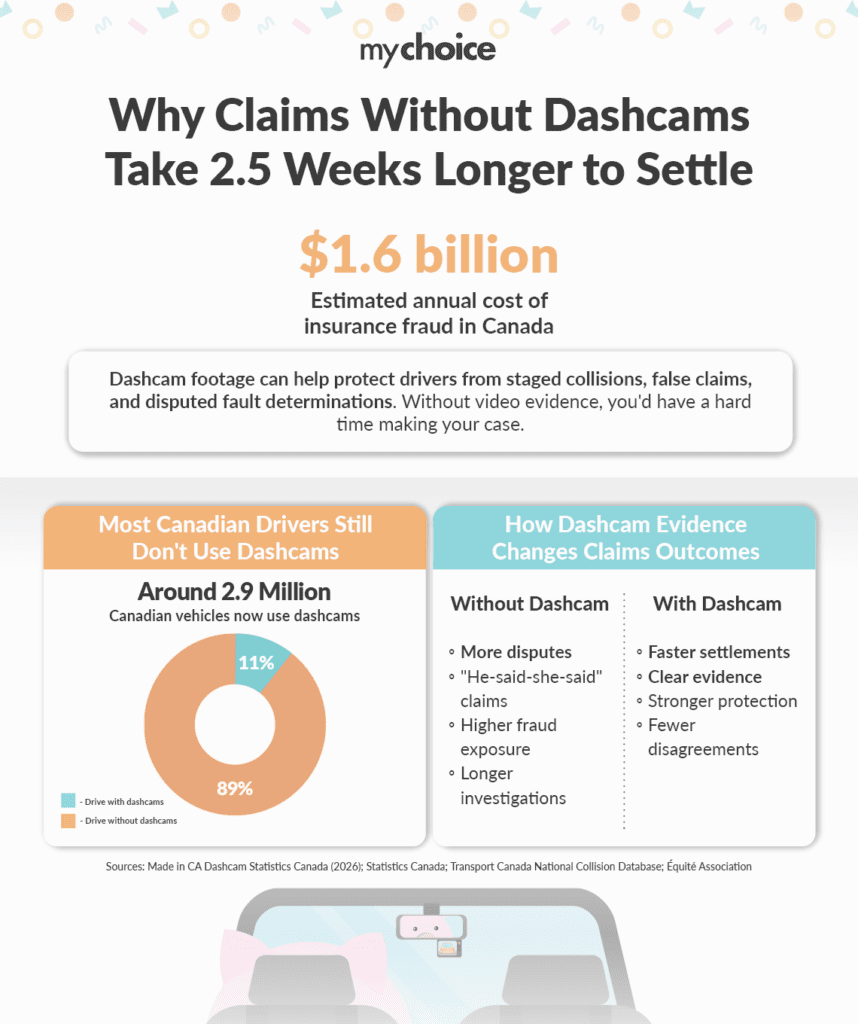
According to data cited by Made in CA, roughly 11% of Canadian drivers use dashcams.
About 42% of Canadian drivers with dashcams say they have used their footage to show they were not at fault in a crash.
Dashcam video can help clear up disputes after a crash, especially when there are no witnesses or police reports.
Made in CA estimates that fraudulent auto insurance claims cost Canadians about $1.6 billion each year.
As prices come down and some automakers begin to offer integrated camera systems or factory-installed dashcams on certain new vehicles, these devices are more accessible than ever. Here’s why installing a dashcam in your vehicle could save you hassle and headaches down the road.
Why Dashcams Matter: The Insurance Industry’s “Uncertainty Problem”
Before dashcams, disputes in insurance claims were sometimes a game of he-said-she-said, especially in situations without police reports or third-party witnesses. If an insurance adjuster determines that a driver is at fault for an incident and the driver then disputes the decision, the claim can drag on for weeks or even months. Depending on the nature of the claim and how likely it is to result in increased premiums, the stakes can be high.
“Insurance claims often become more expensive and time-consuming when there’s uncertainty around what actually happened,” says Aren Mirzaian, CEO of MyChoice. “Dashcams help close that evidence gap by giving insurers, adjusters and drivers clearer information immediately after a collision. As disputes and fraud become more common, video evidence is increasingly becoming one of the most valuable tools drivers can have.”
Dashcam footage can help claims be resolved faster and reduce the time drivers spend disputing fault, which may also help them avoid at-fault determinations that could affect premiums.
How Dashcams Can Protect You From Insurance Fraud
A driver who falsely claims to have had a green light is one thing. But what if you’re targeted by a staged accident, such as a driver pulling in front of you and slamming on the brakes? In many rear-end collisions, the trailing driver is typically presumed to be at fault unless evidence suggests otherwise.
Without video evidence of the suspicious behaviour of the driver in front of you, you’d have a hard time making your case. Dashcam footage may provide important evidence that helps dispute fault determinations in staged or suspicious collisions. Dashcams can also be valuable evidence in hit-and-run situations where identifying the other vehicle is difficult.
Read More: Canada’s Auto Insurance Fraud Crackdown
What Features Are Important in a Dashcam?
When buying a dashcam, look for these features:
- The highest resolution and frame rate you can afford, to ensure you capture the best-quality footage possible;
- Both front and rear cameras for better coverage around the vehicle;
- Loop recording, which lets the camera continuously record and overwrite older footage;
- Wi-Fi or Bluetooth connectivity for easy file transfers;
- A G-sensor, which lets the device detect a collision and automatically save the footage;
- GPS and speed data to provide an additional layer of evidence;
- Night vision to capture usable footage after dark or in adverse weather.
Does Using a Dashcam Lower My Insurance Rates?
Currently, dashcam-related insurance discounts remain relatively uncommon among Canadian insurers. However, dashcams may lower your insurance costs indirectly by providing evidence against disputed at-fault determinations and potentially fraudulent claims.
Bottom Line
- Think about installing both front and rear dashcams to get better evidence if you’re ever in a collision or dispute.
- Save and back up your footage immediately after a collision so you don’t lose important evidence.
- Keep in mind that dashcams might not lower your insurance premiums, but they can help with disputes about who was at fault.
- Mount your dashcam correctly so it doesn’t block your view or violate provincial distracted-driving laws.