









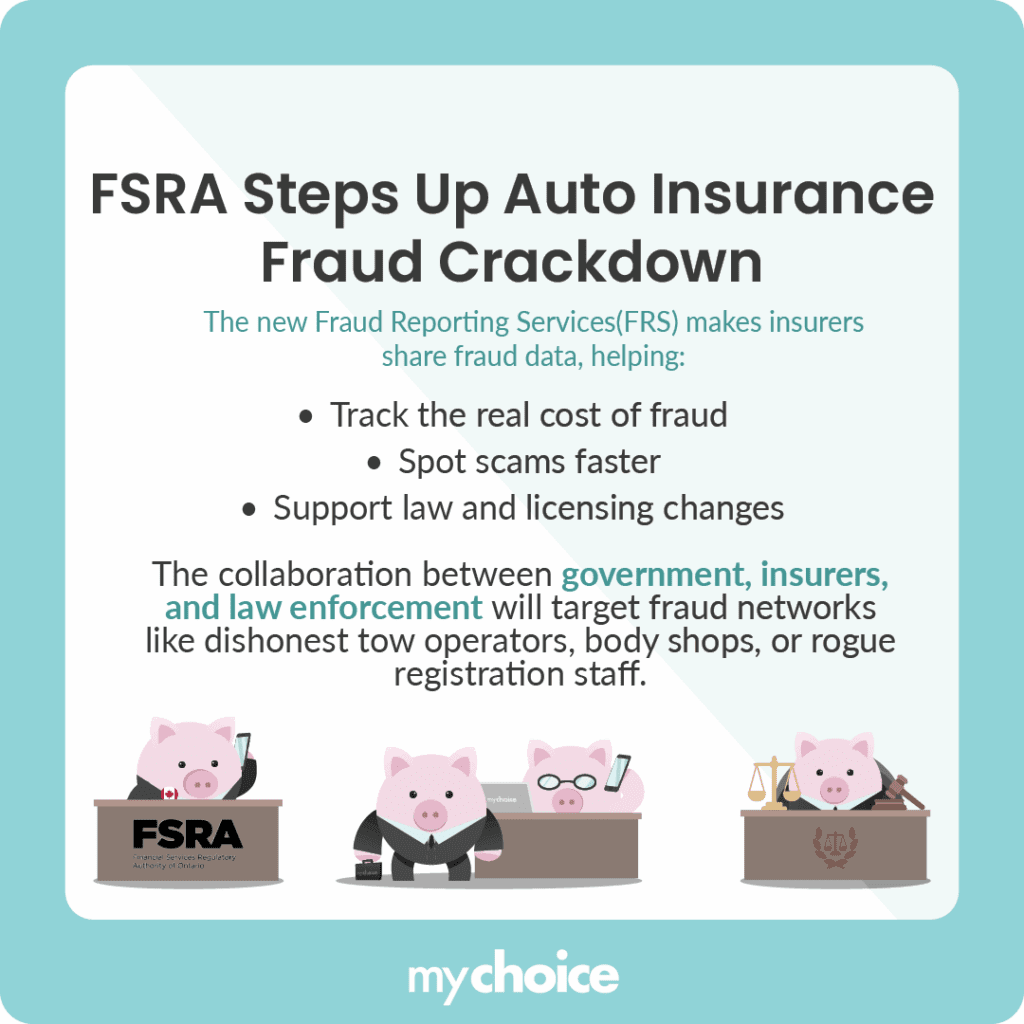
Ontario has approved a new Fraud Reporting Service rule, but it is not yet in force. FSRA’s current page says the rule was approved on June 3, 2025 and will take effect only after related Insurance Act changes are proclaimed and the required time has passed. The accompanying guidance still lists its effective date as undetermined.
For this article, our team opened FSRA’s current rule status page, detailed reporting guidance, and consumer instructions for fraud prevention and reporting.
Keep reading to see what insurers will have to report once the rule takes effect, what is below the reporting threshold, how personal information is limited and what you should do if a claim or service provider looks suspicious.
What Will the Fraud Reporting Service Require?
Once effective, the rule will apply to insurers licensed to carry on auto insurance business in Ontario. An insurer will report a fraud event when it has reasonable grounds to believe the event occurred and takes a qualifying action or decision, such as escalating a file for investigation, denying a claim, terminating a policy, processing a claim despite the evidence or closing an abandoned claim.
The filing deadline in the guidance is within 45 days after the end of each calendar quarter for reportable events from the preceding quarter. If later evidence confirms fraud or makes an earlier report incomplete or inaccurate, the insurer must update the information.
Does a Suspicious Claim Automatically Get Reported as Fraud?
No. FSRA draws a line between suspicion and reasonable grounds to believe. An unusual claim, a policy bought shortly before a loss or an automated fraud indicator may prompt questions, but suspicion alone is below the reporting threshold. The insurer needs verified facts, evidence, context or indicators that make a fraud event more likely than not, plus an action or decision based on that information.
A report is not the same as a criminal conviction. The reporting threshold can be met before an insurer reaches a final conclusion. If the insurer later concludes fraud occurred, the report must be updated.
What Types of Fraud Are Included?
| Category in FSRA guidance | Example |
|---|---|
| Application or underwriting fraud | Intentionally hiding a driver, residence or mileage to obtain a lower premium. |
| Fraudulent claims | Staging a collision, claiming unrelated damage or submitting false invoices. |
| Service-provider fraud | Billing for treatment, towing or repairs that were not provided or were inflated. |
| Insurance distribution fraud | Ghost brokering, fake proof of insurance or deliberate backdating. |
| Internal insurer fraud | A worker creating a false claim or taking a kickback from a vendor. |
What Information Can Be Reported?
The guidance lists information about the policy, claim, vehicle, incident, involved providers, cost and investigation status. It also limits personal information. Insurers should not provide personal information that is unnecessary and must de-identify names and identifying details unless disclosure is necessary for assessing and detecting auto insurance fraud.
FSRA describes the first phase as a way to measure prevalence, create a baseline and identify trends. It anticipates a later phase in which collected information may become available to insurers, but that future use should not be described as a feature already operating today.
What Could This Mean for Your Claim?
The rule does not change your policy coverage or guarantee a premium reduction. It may lead to more consistent insurer records and questions when verified facts point to fraud. Answer accurately, provide requested documents, keep copies and ask the adjuster to explain any delay or decision in writing.
Preserve photos, video, the collision report, tow documents, repair estimates, medical invoices and messages from service providers. Do not sign blank forms or let an unknown person control the claim. If the insurer denies coverage or accuses you of misrepresentation, use the insurer’s complaint process and seek legal advice when the financial or legal stakes are significant.
Read More: See What to Do During a Car Accident Claim
How Can You Report Suspected Auto Insurance Fraud?
Tell your insurer about suspicious activity connected with your policy or claim. For a suspected Ontario auto insurance fraud event, you can also use FSRA’s fraud-tip form. Contact police if you believe a crime has occurred or anyone is in immediate danger.
Read More: Learn About Car Insurance in Ontario