









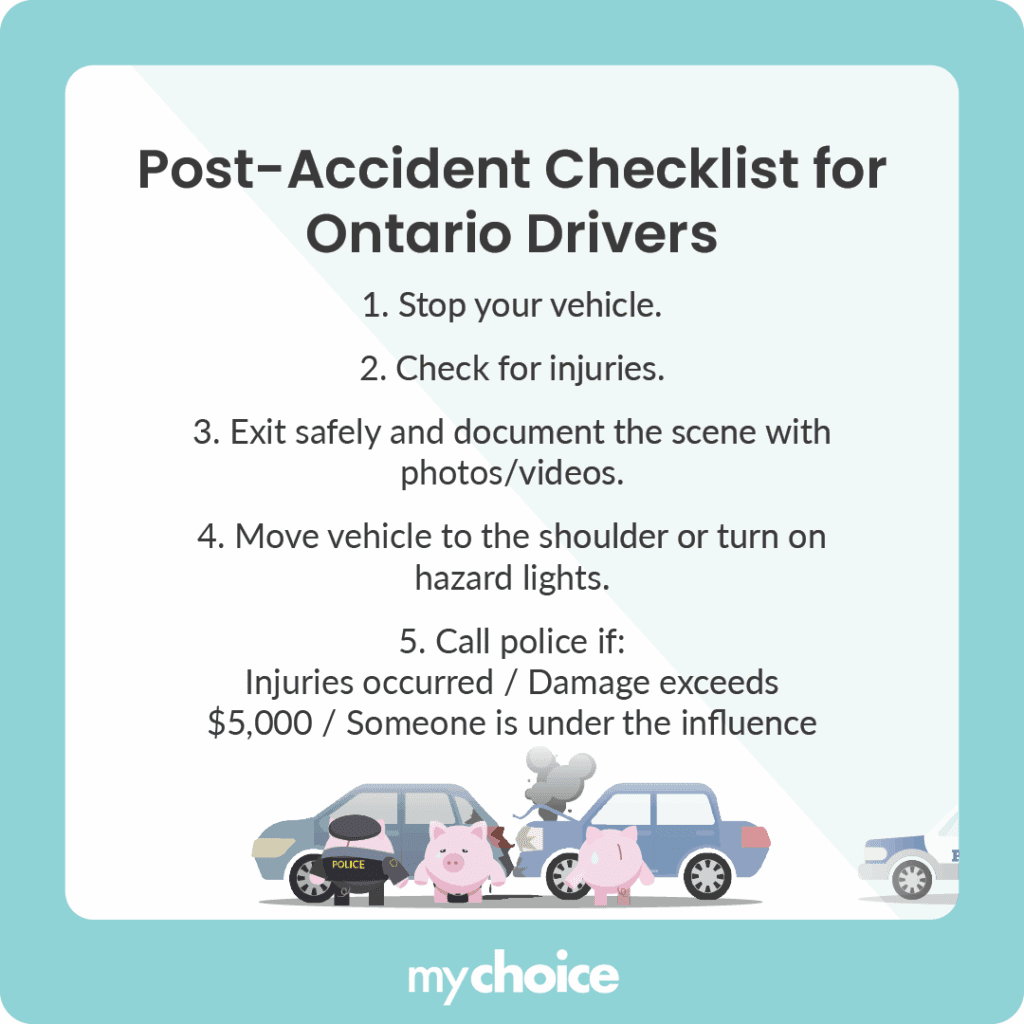
Post-Accident Checklist for Ontario Drivers
Some things must be done right after the accident to ensure you and everybody involved are as safe as possible. So, here’s a short post-accident checklist that you can either memorize or print out in case you ever get into an accident:
- Stop your vehicle.
- Check to see if anybody is injured.
- Exit your vehicle if it’s safe to do so. Take photos and videos of the scene if possible.
- Move your vehicle onto the shoulder of the road or turn on hazard lights.
- You must call the police to the scene immediately if there are injuries, fatalities, or suspicion of criminal acts (like DUI).
For accidents involving property damage only, the mandatory reporting threshold was increased on January 1, 2025, from $2,000 to $5,000. If the combined damage to all vehicles and property appears to exceed $5,000, you must report the accident at a Collision Reporting Centre (CRC) within 24 hours.
What Happens If You Don’t Report an Accident Within 24 Hours in Ontario?
Failing to report a reportable accident (damage over $5,000 or injuries) ‘forthwith’ is an offence under Section 199 of the Highway Traffic Act. Conviction results in a fine of up to $1,000 and three demerit points. Seven points are reserved for the more serious charge of ‘Failure to Remain’ at the scene.
The legal consequences include, but aren’t limited to:
- Jail
- Fines
- Licence suspensions
How Long Do You Have to Report a Car Accident in Ontario?
If anyone is injured or killed, you must report the accident to the police immediately, regardless of the dollar amount of property damage.
The $5,000 threshold only applies to accidents where no one is hurt. If nobody is injured and the damage is below the threshold, you must call a Collision Reporting Centre within 24 hours.
How Soon Should You Inform Your Insurance Company?
If you’re making an insurance claim, most companies accept car accident claims within seven days of the accident.
How to Report a Car Accident in Ontario?
You’re required by law to report a car accident in Ontario if it fulfills at least one of these criteria:
- All vehicles suffered over $2,000 in damage.
- Somebody is injured or killed.
- A government vehicle is involved.
- The accident involves someone driving without insurance.
- Somebody performs a criminal act like DUI.
- A pedestrian is affected by the accident
- There is private or municipal property damage, like hitting a pole or somebody’s home fence.
Generally, you need to report to three parties when an accident happens in Ontario:
- The police
- The closest Collision Reporting Centre
- Your insurer
What You Need to Report a Car Accident in Ontario
When reporting a car accident in Ontario, you need as much information about the incident as possible. This helps your insurer, the police, and the collision Reporting Centre to get the best picture of your incident.
Here’s the essential information you need when reporting car accidents in Ontario:
- Your insurance information
- Your car make, year, and model
- Details about the incident
- Notes about the weather, road conditions, time, and place of the accident
- The other driver’s licence, registration, and insurance details
How to Report a Car Accident in Ontario
Now that you know why reporting accidents is important, it’s time to learn how to do so. Here’s a quick guide to reporting car accidents in Ontario:
Things to Avoid After a Car Accident
Emotions tend to run high after a car accident, and rash decisions are easy to make. If you’re involved in a car accident, remember not to:
- Panic
- Argue with other parties
- Move anybody who’s injured without the help of a medical professional
- Assume full responsibility or blame the other party for the crash
What to Do If You Were Driving Someone Else’s Car
If you’re driving someone else’s car and get into an accident, follow the above checklist and notify the owner. The owner’s insurance will cover the damage if you’re permitted to drive the car and aren’t driving impaired.
Risks of Not Reporting a Car Accident
Ontario laws require you to report a car accident if it fulfills certain criteria. However, sometimes it isn’t as simple as that. Sometimes, you don’t want to report an accident because you made an agreement with the other driver and can pay the expenses out of pocket. People often do this because they don’t want insurance premiums to rise.
However, this isn’t a good idea. Here are some things that might happen if you don’t report a car accident to the police or insurers:
- The other driver can file a police report, which makes it look like you’re running away from the accident.
- The other driver can change their mind and report to their insurer, meaning your insurance company will know and deny your coverage.
- The accident caused over $5,000 in damages, making it a must-report incident.
- You could be injured and not know it, meaning you must pay medical bills to treat them out of pocket.
Do I Have to Report Accidents in a Parking Lot?
You have to report accidents in a parking lot because it still counts as a road accident. Follow the steps outlined in this guide to report parking lot accidents properly.
What Happens if I Get Involved in a Hit-and-Run?
You can make a claim for a hit-and-run under your collision coverage, but because the other driver is unidentified, you will typically be required to pay your deductible out of pocket.
Direct Compensation Property Damage (DCPD), which usually has a $0 deductible, does not apply unless the at-fault driver is identified. Additionally, the driver who escaped may be subject to criminal charges.
Do I Have to Report Minor Car Accidents in Ontario?
You still have to report minor car accidents in Ontario to the Collision Reporting Centre, even if it’s just a small fender-bender. For larger accidents, you must call the police.
Many car insurance policies in Ontario require you to report all accidents, regardless of damage. If you neglect to do so, you may be denied future coverage.
Key Advice from MyChoice
- Take pictures or video of the accident scene if possible to ensure a detailed accident report.
- Report the accident to your insurer within seven days.
- Failing to report an accident after 24 hours may result in legal consequences.