








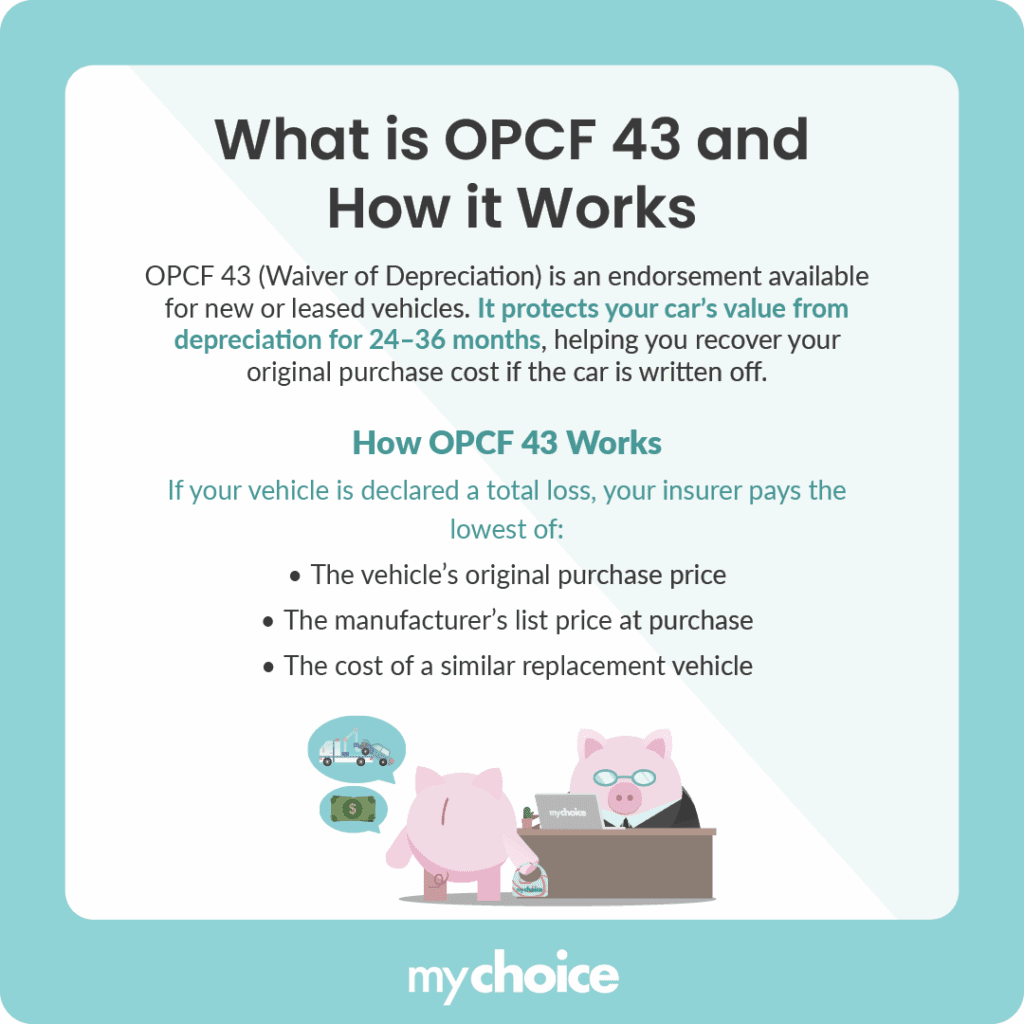
Ontario Policy Change Form 43 (OPCF 43) is known as the Removing Depreciation Deduction endorsement. It helps protect the value of your vehicle by reducing or eliminating depreciation deductions after a covered loss.
Learn how OPCF 43 works, who qualifies, what it covers, how long the protection lasts, and whether it’s worth adding to your policy. To prepare this guide, our team reviewed the official guidance from FSRA on the OPCF 43 endorsement and the standard Ontario Automobile Policy (OAP 1)
How OPCF 43 Works
An original purchaser of a new vehicle may be eligible for OPCF 43 if the insurer offers it and the loss occurs within the number of months shown on the policy. Lease arrangements may use a different form. You should confirm the exact endorsement with the lessor and insurer.
The coverage period is the number of months shown on the policy in force. Available periods and pricing vary by insurer, so confirm the expiry date rather than assuming 24, 36, 48 or 60 months.
OPCF 43 does not promise reimbursement of every amount paid. For an insured loss, the form caps payment at the lowest of actual purchase price, original manufacturer’s suggested list price or the cost of a similarly equipped new replacement, subject to the deductible and other terms.
How Does Car Depreciation Work?
Vehicle depreciation varies by model, condition, mileage, market and time. OPCF 43 uses the official settlement formula rather than a fixed annual depreciation schedule.
Do not estimate a future claim from a generic five-year percentage. Eligibility may expire earlier, and any settlement depends on the insured loss, certificate, form and policy terms.
Read More: What Is Gap Insurance and Do I Need It?
Why Do I Need OPCF 43?
OPCF 43 is optional and may be worth adding for an eligible new vehicle. Compare its additional premium, deductible, coverage period and lowest-of-three limit with the financial effect of depreciation.
For example, if the actual car purchase price is $30,000, the original list price is $31,000, and a similarly equipped new replacement costs $33,000, the OPCF 43 cap is $30,000 before the applicable deductible. The actual payment also requires an insured loss and remains subject to the policy.
How Much Does OPCF 43 Cost and Is it Worth it?
There is no standard universal annual price from insurers. Use the additional premium shown on the quote or certificate and compare it with the months of protection and the deductible.
Whether OPCF 43 is worthwhile depends on eligibility, the quoted premium, vehicle price and depreciation, deductible, coverage period, financing obligations and ability to absorb a shortfall. It is not a universal recommendation.
Read More: OPCF 20: Loss of Use Coverage
Mechanics of OPCF 43
For covered loss or damage, the most payable under OPCF 43 is the lowest of the three listed amounts, including applicable taxes and subject to the deductible shown on the certificate:
- The initial purchase price of your vehicle.
- The list price that was suggested by the manufacturer at the time you purchased your vehicle.
- The price of a similarly equipped replacement car model.
If the vehicle’s market value is higher than the official lowest-of-three cap, OPCF 43 does not replace that formula with an appreciated market-value payment.
Limitations of OPCF 43
While OPCF 43 does protect your car’s value from depreciating over time, there are a few limitations that you should be aware of.
Sometimes, a car’s value can appreciate instead of depreciating, meaning that it actually becomes more valuable over time. Car value appreciation is not typical, but it can happen if your vehicle is a rare or limited model, or if demand increases after you buy it. When this happens, having OPCF 43 as an endorsement on your insurance policy can work against you since it allows the insurance company to pay out a lower amount than your car is currently worth.
The official form requires the insured to be the original purchaser and the automobile to be new at delivery. It does not create a universal “demo vehicle” rule. Ask the insurer whether a particular vehicle and delivery status meet its underwriting requirements.
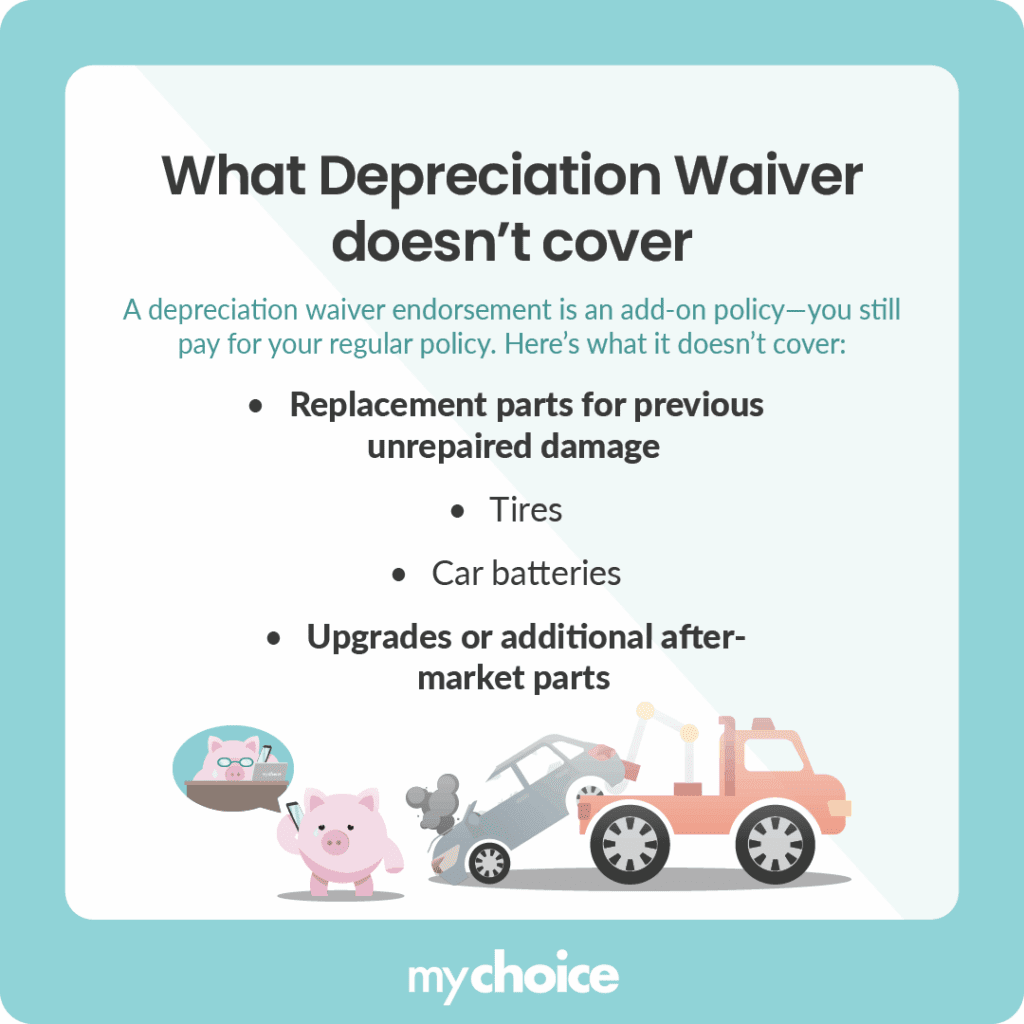
The form does not state that any prior repair automatically ends the endorsement. It excludes tires, batteries and betterment from repairing or replacing parts for prior unrepaired damage. The policy and insurer determine the effect of a prior loss on continued eligibility.