









When your car needs repairs or replacement after an insured loss, you may need another way to get around. Whether it’s a rental car, taxis or public transportation, that can get expensive.
OPCF 20 can help cover these expenses while you wait for your car to be repaired or replaced.
OPCF 20 at a Glance
OPCF 20 is an optional addition to your Ontario auto insurance policy.
- It can cover a similar rental vehicle, taxis or public transportation.
- Daily and total limits apply.
Do I Qualify for OPCF 20?
OPCF 20 works with physical-damage coverage, including Collision or Upset, Comprehensive, Specified Perils or All Perils.
The loss must result from a peril covered by your policy. For example, if a tree branch damages your vehicle but you only have collision coverage, OPCF 20 will not cover your transportation expenses.
What Does OPCF 20 Cover?
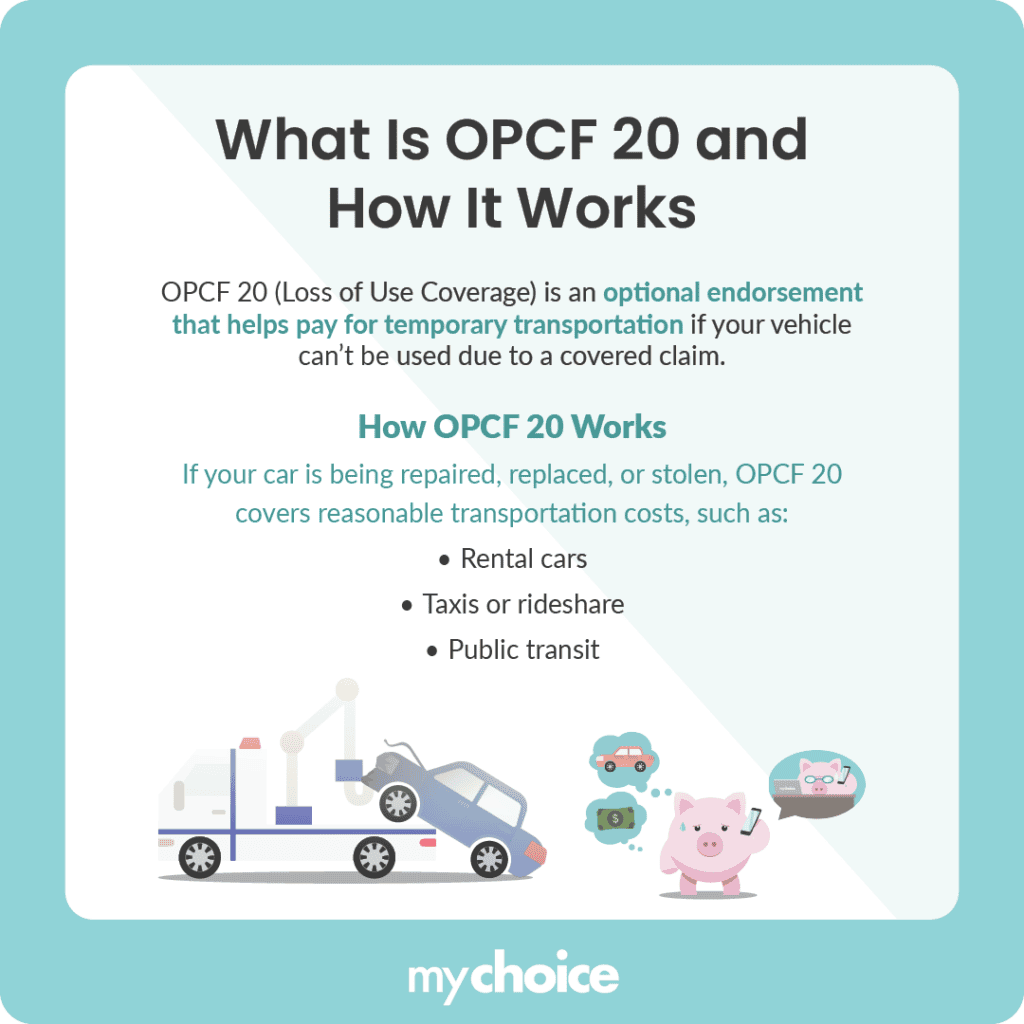
OPCF 20 covers reasonable transportation expenses when the vehicle listed on your policy cannot be used because of insured loss or damage.
It can cover the cost of a similar rental vehicle, taxis or public transportation. It does not cover damage to a rental or borrowed vehicle. That may be covered separately through OPCF 27.
How Much Does OPCF 20 Cost?
Based on MyChoice quote data collected in 2026, OPCF 20 commonly costs approximately $50 to $80 per year.
Common total limits in our quote data include $1,500, $2,000, $2,500 and $3,000. Check your own policy because limits and prices vary.
What Are the Limitations of OPCF 20?
The vehicle must be damaged by an insured peril, and the damage must exceed the applicable deductible.
Your policy will show the maximum amount the insurer will pay per day and per occurrence. Once the total limit is reached, you will need to pay any remaining transportation expenses.
An insurer may arrange a rental or reimburse you after you provide receipts. Ask the adjuster how the claim will be handled before arranging transportation.
How OPCF 20 Works
If your vehicle cannot operate under its own power, reimbursement begins when the loss or damage occurs.
If the vehicle can still be driven, reimbursement begins when it is delivered for repairs.
For theft of the entire vehicle, coverage begins at 12:01 a.m. on the day after you report the theft to the insurer or police.
Coverage ends when the vehicle is repaired or replaced, the limit is reached or the insurer offers payment to settle the claim.
How to Check Your Coverage
Look for OPCF 20 and its limits on your Certificate of Automobile Insurance. If you’re unsure whether you have it, contact your insurance company, agent or broker.
OPCF 20 in Other Provinces
Similar endorsements may be available outside Ontario. Quebec uses QEF 20b, while Alberta and the Atlantic provinces use versions of SEF 20. Coverage and limits may differ.
Read More: A Guide to Ontario Policy Change Forms