









What Happens if I Park Too Close to Fire Hydrants in Ontario?
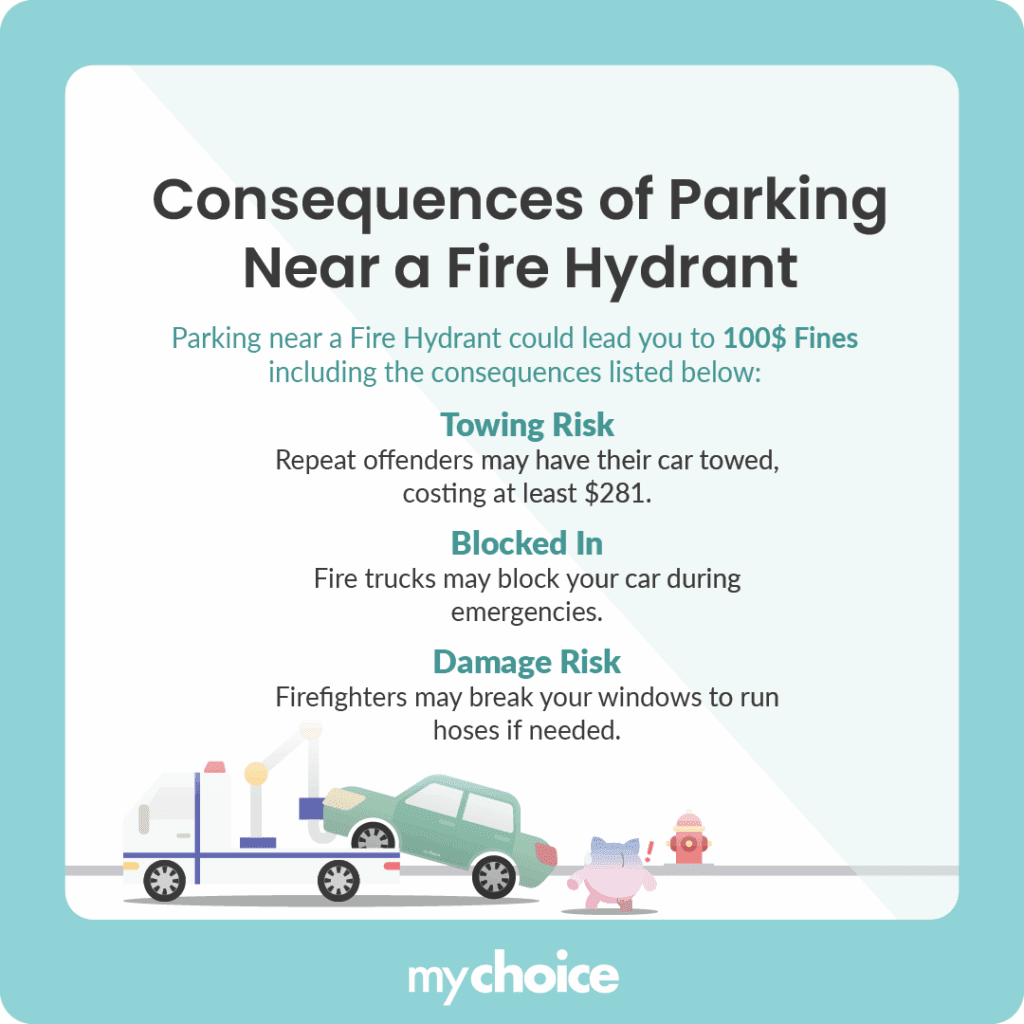
The most common thing that happens if you park too close to fire hydrants in Ontario is that you’ll get ticketed. In many Ontario municipalities, the fine for parking too close to a fire hydrant is about $100, though exact amounts can vary by city. You can pay this fine online or in person at the nearest city hall.
That said, being ticketed isn’t the only risk you face when parking near a fire hydrant. Here are some consequences of parking near a fire hydrant:
- Your vehicle may be towed if it is illegally parked and obstructing emergency access, or if it meets municipal towing conditions such as repeated violations. If your car gets towed, you must pay at least $281 to get it back from the impound lot.
- A fire engine might block your car in for hours while firefighters work.
- Firefighters may break your car windows to ensure their hose can extend in a straight line.
The Rules for Fire Hydrant Parking in Ontario
You’re prohibited from parking within three metres or nine feet of the closest curb to a fire hydrant. Note that you must park at least three metres (about nine feet) away from a fire hydrant. – regardless of how far the hydrant is from the curb.
Unfortunately, the rule can sometimes be a bit unreasonable. An infamous fire hydrant in Toronto, located 20 feet from the street, gathered almost $300,000 in parking fines between 2008 and 2014. However, rules are the rules – you should always check for fire hydrants before parking, even if they’re not visible from the street.
Parking distance requirements vary by province and municipality, though many places have similar restrictions. For instance, British Columbia has a five-metre minimum parking distance from fire hydrants. Always check local traffic laws before travelling or moving.
How Far From a Fire Hydrant Should You Park?
If there are no other parking restrictions, you must park at least three metres or nine feet from the curb near a fire hydrant. Most roads should be wide enough that you can obey this three-metre rule by parking across the street, but you should double-check for other parking restrictions before doing so.
How to Avoid Fire Hydrant Parking Tickets in Toronto
Getting ticketed for fire hydrant parking in Toronto is frustrating because you must pay fines. Even if parking tickets don’t affect your Ontario auto insurance rates or give you demerit points, you’re still spending money on something you can avoid. Moreover, your car can get towed if you’ve been ticketed in the past.
Here are some top tips to avoid fire hydrant parking tickets in Toronto:
- Avoid parking near street corners or intersections.
- Use public transit if possible.
- Find public parking spots near your destination before heading out.
- Double-check for fire routes and no-parking zones when looking for parking spots.
- Don’t idle near fire hydrants.
- Search carefully for fire hydrants, and remember they may not be directly visible from the street.
Key Advice from MyChoice
- Always check for fire hydrants before parking. Even if they aren’t clearly visible from the street, you must still follow the three-metre parking rule.
- Avoid repeated parking violations. While hydrant parking tickets typically don’t affect insurance rates, repeated infractions could lead to towing and additional costs.
- Be mindful of emergency access zones. Parking too close to hydrants can delay emergency response and may result in costly vehicle damage if firefighters need immediate access.