








Why Is There Frost On The Inside Of My Windshield?

3 minutes can save you hundreds. Enter your postal code below and join thousands of Canadians saving on car insurance.

Secure. No Spam. No Fees.

Why You Can Trust MyChoice

MyChoice serves as an independent intermediary between you, financial institutions and licensed professionals without any additional charge to our users. In the interest of transparency, we disclose that we partner with some of the providers we write about – we also list many financial services without any financial gain. MyChoice does not operate a financial institution or brokerage and to ensure accuracy, our content is reviewed by licensed professionals. Our unique position means that we hold no recurring stake in your policy, ensuring our mission to help Canadians make better financial decisions is free of bias or discrimination. 

Last updated on March 05, 2026

4 minute read

MyChoice follows a strict content review process designed to ensure reliable and unbiased information.

Dealing With Frost on the Windshield at a Glance

  • Frost on the inside of your windshield forms when moisture trapped inside the vehicle condenses on the cold glass and freezes overnight.
  • The most common sources of moisture include wet boots, snow on clothing, damp floor mats, and humid air trapped in the car.
  • Dust or dirt on the windshield can make frost form faster because moisture collects more easily on microscopic particles on the glass.
  • You can quickly remove interior frost by turning on the heat and directing airflow toward the windshield, then wiping away the melted moisture with a dry cloth.
  • Running the air conditioner together with the heater helps remove humidity, which speeds up the defrosting process.
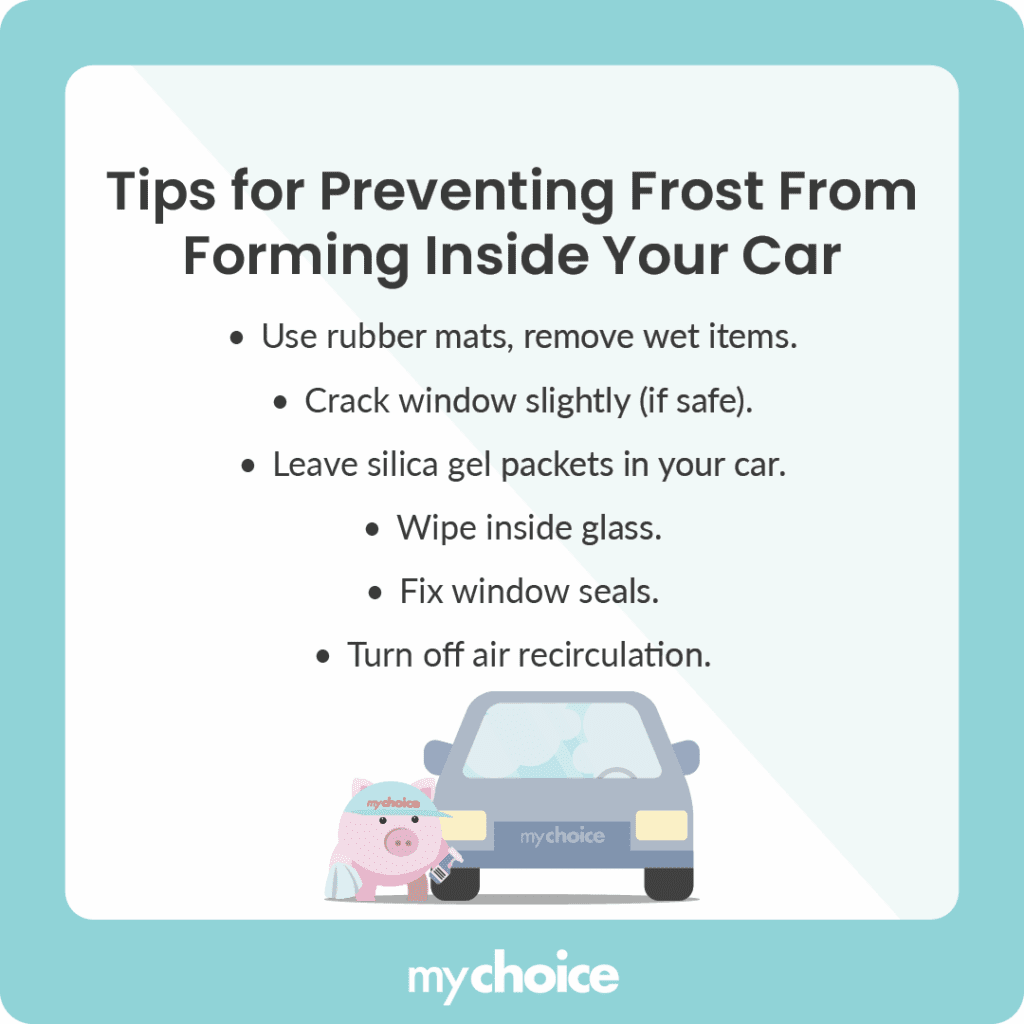
Tips for Preventing Frost From Forming Inside Your Car

How Do I Remove Frost on the Inside of My Windshield?

The best way to remove frost on the inside of your windshield is to hit it with warm air to melt it. Then, make sure to wipe the area down with a dry cloth.

Heat Your Car Up and Turn the AC On

Turning the heat on in your car is the tried-and-true method of removing frost on your windshield, whether inside or out. Crank up the heat, angle it toward your windshield, and you should see it start to melt within a couple of minutes.

Turning the AC on is also good as it will remove humidity from your car and pump dry air inside, speeding up the defrosting process.

Use a Warm Cloth

Use a dry cloth or microfiber towel to wipe away melted frost once the defroster has warmed the windshield, then wipe the affected area. The heat will melt the frost, and the cloth will soak up any water left over. The cloth must be dry, as a wet cloth won’t remove the moisture.

How To Prevent Frost From Forming on the Inside of My Windshield?

You can prevent frost from forming on the inside of your windshield by keeping it clean and your car as dry as possible. While that’s the simplest solution, there are some other things you can do.

Make Sure Your Car Is Dry

Keeping your car completely dry during winter is difficult, but removing as much moisture as possible will prevent frost from forming inside your windshield. There are a few ways to do that, including:

  • If you have carpet floor mats, consider replacing them with plastic or rubber ones during winter and cleaning them daily. Removing wet floor mats will also remove excess moisture from your car.
  • Remove any wet clothes from the car. The moisture from drying clothes gets released into the air and gets trapped inside the car.
  • Make sure water bottles left in the car overnight are closed. The water evaporates and contributes to the humidity in your car.

Crack a Window

Improving ventilation, such as briefly opening windows before leaving the car, can help reduce moisture buildup, preventing it from collecting on your windshield. If you’re leaving your window open, it’s best to park inside a garage or in a safe area.

Use Moisture Absorbers

As the name implies, moisture absorbers soak up moisture from the air and keep your windshield from frosting over. A common type of moisture absorber is silica gel packets. These small packets are often found in products like food, clothes, or shoes. You can gather a few and place them on the corners of your dashboard and around the car.

Clean the Inside of Your Windshield

Use a dry cloth and wipe the inside of your windshield down, as dust and dirt collect water, removing them will lessen the chance of vapour collecting on your windshield and freezing.

Check Your Windows

Humidity can also form in your car if your windshield and windows aren’t properly sealed. The rubber seal around your windows keeps water out, but water can seep through the cracks if it’s damaged. If a crack isn’t fixed, it can cause further damage and may force you to replace your windshield.

Don’t Recirculate Air

Using the air-recirculation button on your dashboard keeps the hot air inside your car, but it also traps the humidity. Humidity is the main cause of frost on the inside of your windshield, so it’s best to turn air recirculation off and instead turn the AC on.

Why Is There Frost on the Inside of My Windshield?

Frost on the inside of your windshield is caused by too much moisture inside the car overnight. When the temperature drops at night, the moist air inside the car condenses on the cold windshield and freezes. Let’s look at some of the probable causes of this:

Moisture

Excess moisture in your car often comes from tracking snow inside, either on your boots or clothes. When the snow melts, the water vapour is released into the air and absorbed by your carpeting and floor mats. Then, when the temperature drops overnight, it condenses on colder surfaces in your car, like your windshield, and freezes.

Weather

In humid areas, there’s more water vapour in the air. If that moisture-filled air stays inside your car, it collects on your windshield and freeze overnight.

Degraded Window Seals

Another cause of residual moisture in your car could come from damaged window seals. If your windows aren’t properly sealed, water can easily seep into your car, evaporate in the heat, and then freeze on your windshield during the chilly hours of the night.

Dirt

Having dust or dirt on your windshield actually helps frost form there. This is because dust and dirt can make it easier for condensation to form, as moisture collects on microscopic particles on the glass. The water droplets cling to the dirt and then freeze when the temperature drops.

Recirculating Air

Using the air-recirculation setting can trap humid air inside the car, which may contribute to fogging or frost on the windows. Recirculating the air in your car traps the moisture inside, exacerbating the situation.

Passengers

Excess moisture inside your car is also caused by people’s breath. We exhale warm air which stays inside the car. While this likely isn’t something you can fix, it is another cause of residual moisture inside your car.

Is Frost on the Inside of My Windshield Dangerous?

Yes, leaving frost on the inside of your windshield can be dangerous. The frost will decrease visibility, which, in the worst case, could result in a car accident. So, it’s best to remove the frost completely before driving your car.

Key Advice from MyChoice

  • Remove moisture from your car whenever possible. Take out wet floor mats, snow-covered clothing, or other damp items before leaving your car overnight.
  • Use rubber or plastic floor mats during winter, as they hold less moisture than carpet mats.
  • Avoid using the air recirculation setting, since it traps humid air inside the car.
  • Keep the inside of your windshield clean to reduce condensation buildup.

Congratulations! You made it to the end!

Now, here is the easy part: complete your quote in under 2 minutes

Discover More About

February 27, 2026
Chinese EVs are coming to Canada. Here’s how much BYD, MG and other models could cost to insure, with provincial breakdowns and projections.
February 10, 2026
Car repair costs rose 4.1% in Canada in 2025. View our breakdown of provincial repair trends, labour shortages, and what they mean for auto insurance rates.
January 26, 2026
In this MyChoice study, we analyzed data collected on our platform to compare insurance costs of popular electric cars with similar gas vehicles.

Even More Ways To Save on Insurance