









After a car accident, it can be confusing to know what exactly you need to do. Should you call 911, a collision reporting centre or your insurer first? The steps you need to take depend on factors like injuries, danger, total apparent damage and the local police process.
For this guide, we reviewed Ontario’s Highway Traffic Act to check the statutory reporting duty, the province’s January 1, 2025 regulatory update to confirm the current damage threshold, and FSRA’s immediate post-accident guidance and claims-process guidance to check insurer notice and evidence steps.
Keep reading to learn what to do at the scene, when Ontario requires a police report, how quickly to notify your insurer and what evidence to keep.
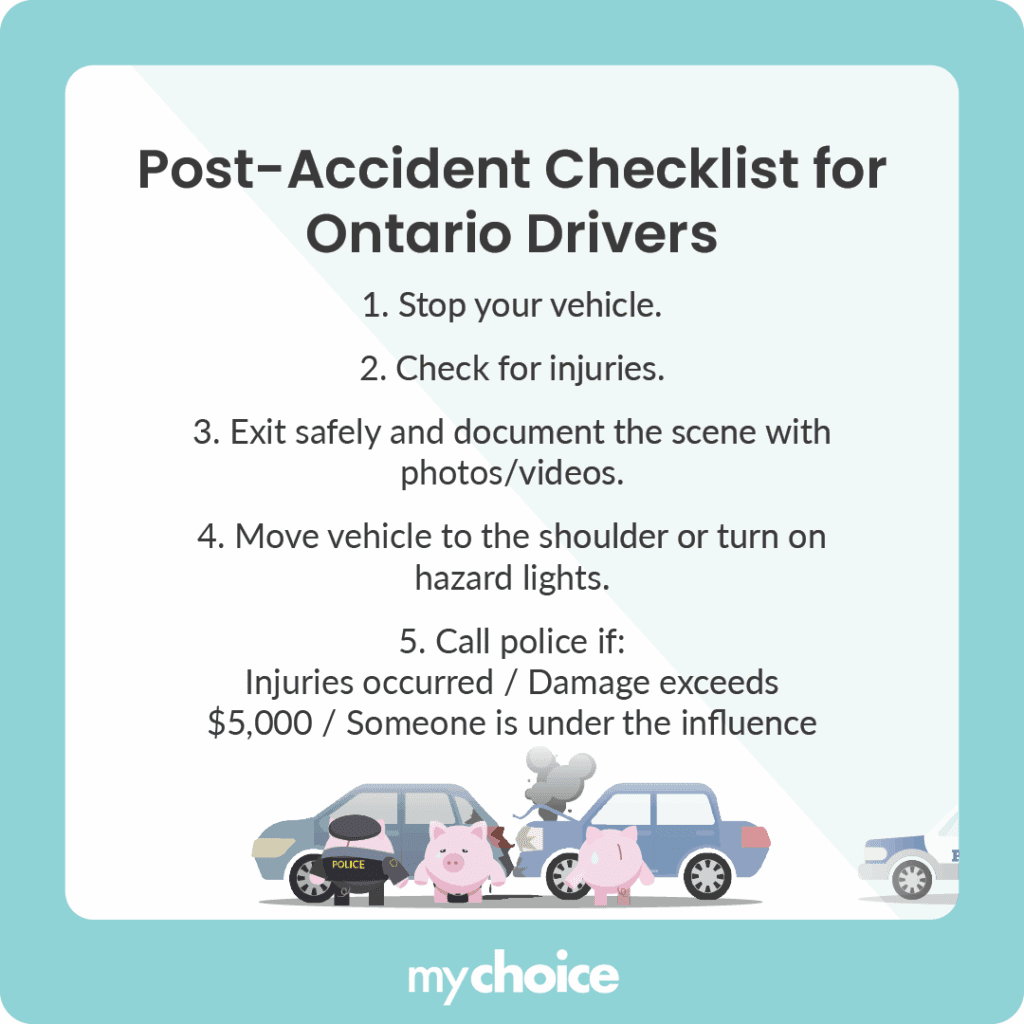
Post-Accident Checklist for Ontario Drivers
Some things must be done right after the accident to make sure you and everybody involved are as safe as possible. So, here’s a short post-accident checklist that you can either memorize or print out in case you ever get into an accident:
- Stop your vehicle.
- Check to see if anybody is injured.
- Exit your vehicle if it’s safe to do so. Take photos and videos of the scene if possible.
- Move your vehicle onto the shoulder of the road or turn on hazard lights.
- You must call the police to the scene immediately if there are injuries, fatalities, or suspicion of criminal acts (like DUI).
After a collision in Ontario, call 911 for injury, immediate danger or suspected impaired or criminal driving. Since January 1, 2025, if the collision caused more than $5,000 in estimated total property damage, you must contact police and follow their instructions about scene attendance, a station or the designated collision reporting centre and timing. Then you have to notify your insurer within seven days or as soon as reasonably possible afterward.
Read More: How is Fault Assigned After an Accident
What Happens If You Don’t Report an Accident Within 24 Hours in Ontario?
Section 199 requires a reportable collision to be reported promptly to the nearest police officer, with the requested information or written statement. The penalties below depend on the specific offence and circumstances:
- Jail
- Fines
- Licence suspensions
How Long Do You Have to Report a Car Accident in Ontario?
If anyone is injured or killed, you must report the accident to the police immediately, regardless of the dollar amount of property damage.
Below-threshold property damage alone doesn’t create the reporting duty under provincial section 199. Still check the local police service’s rules if another circumstance applies or you are unsure.
How Soon Should You Inform Your Insurance Company?
Notify your insurer within seven days of the collision, or as soon as reasonably possible afterward. Police reporting and insurer notice are separate duties, so completing one does not automatically complete the other.
When Must You Contact Police or a Collision Reporting Centre?
Contact police and follow their directions when any of the following applies. But for exact local procedures, use the police service where the collision occurred.
- Total apparent damage to all involved vehicles and other property is more than $5,000.
- Somebody is injured or killed.
- A government vehicle is involved.
- The accident involves someone driving without insurance.
- Somebody performs a criminal act like DUI.
- A pedestrian is affected by the accident
- There is private or municipal property damage, like hitting a pole or somebody’s home fence.
You must contact police when required and follow their CRC/station instructions, but you should notify your insurer separately.
What You Need to Report a Car Accident in Ontario
When you report a car accident in Ontario, you need as much information about the incident as possible. This helps your insurer, the police, and the Collision Reporting Centre to get the best picture of your incident.
Here’s the essential information you need when reporting car accidents in Ontario:
- Your insurance information
- Your car make, year, and model
- Details about the incident
- Notes about the weather, road conditions, time, and place of the accident
- The other driver’s licence, registration, and insurance details
How to Notify Police and Your Insurer
Now that you know why reporting accidents is important, it’s time to learn how to do so. Here’s a quick guide to reporting car accidents in Ontario:
- Once you make an insurance claim after a car accident, you’ll get a call from your insurer’s claims adjusters. You can discuss the compensation details and ask any questions you may have about your available coverage.
- Depending on when and where you call 911, an officer may come to the scene, or the operator may direct you to a police station or reporting centre.
- With police reports, you must follow the officer’s instructions and provide accurate information. Then, an officer will check your report to see if the real damage is consistent with your statements.
- A police report doesn’t determine insurance fault. The insurer applies the Fault Determination Rules by using available evidence, but the report can still contain relevant facts.
- When you call your insurance agent, they usually ask for basic information before processing your claim. As with police reports, answer questions truthfully and follow the agent’s instructions.
Things to Avoid After a Car Accident
Emotions tend to run high after a car accident, and rash decisions are easy to make. If you’re involved in a car accident, remember not to:
- Panic
- Argue with other parties
- Move anybody who’s injured without the help of a medical professional
- Assume full responsibility or blame the other party for the crash
What to Do If You Were Driving Someone Else’s Car
You must notify the owner and the insurer shown on the vehicle’s proof of insurance. Coverage depends on permission, whether you’re an authorized driver, how you used the vehicle, policy terms, optional coverages, deductibles and exclusions.
Risks of Not Reporting a Car Accident
Ontario laws require you to report a car accident if it fulfills certain criteria. However, sometimes it isn’t as simple as that. Sometimes, you don’t want to report an accident because you made an agreement with the other driver and can pay the expenses out of pocket. People often do this because they don’t want insurance premiums to rise.
However, this isn’t a good idea. Here are some things that might happen if you don’t report a car accident to the police or insurers:
- A private agreement does not replace a required police report or insurer notice. Make your own timely record and keep the information exchanged at the scene.
- The other party may later report injury or damage. Notifying sooner lets your insurer preserve evidence and respond.
- The accident caused over $5,000 in damages, making it a must-report incident.
- Some symptoms appear later. Seek appropriate medical care and notify the insurer promptly so you don’t miss any accident-benefit coverage that may be available.
Do I Have to Report Accidents in a Parking Lot?
After a parking-lot collision, stop, exchange information and document the scene. Apply the same injury, damage and other reporting triggers, and check the local police service’s instructions.
Read More: How to Handle Parking Lot Accidents
What Happens if I Get Involved in a Hit-and-Run?
You can make a claim for a hit-and-run under your collision coverage, but because the other driver is unidentified, you will typically be required to pay your deductible out of pocket.
Read More: How to Handle a Hit-and-Run
Direct Compensation Property Damage (DCPD), which usually has a $0 deductible, does not apply unless the at-fault driver is identified. Additionally, the driver who escaped may be subject to criminal charges.
Do I Have to Report Minor Car Accidents in Ontario?
A minor collision isn’t automatically a CRC report. If any reporting trigger applies or you are uncertain, contact the local police service and follow its direction.
Ontario policy guidance requires you to report accidents involving injury or property damage promptly. Late notice can affect that claim, depending on circumstances, but it doesn’t automatically void all future coverage.
Read More: How Much Does Car Insurance Increase After an Accident