









A chipped or cracked windshield isn’t always repairable with an easy fix. Depending on the size, location and features built into the glass, you may need a full replacement. Some windshields also require camera recalibration if your vehicle includes more technical features.
For this guide, we reviewed Ontario’s Passenger/Light-Duty Vehicle Inspection Standard, FSRA’s optional physical-damage coverage guidance and Transport Canada’s driver-assistance technology guidance.
Keep reading to learn what affects windshield repair and replacement costs, when it's covered by insurance, when damage becomes unsafe and what to ask for in an itemized quote.
Does My Car Insurance Cover a Cracked Windshield?
A covered non-collision event may fall under comprehensive or All Perils coverage, depending on your policy wording and deductible. Wear, prior damage or an excluded cause may not be covered.
Check the declarations, deductible and any limits on glass coverage before reporting a claim. Compare how much the insurer would pay after your deductible with the itemized repair or replacement quote. Ask whether the insurer offers optional glass coverage.
How Much Does It Cost to Replace a Windshield?
There is no single replacement price. The total cost depends on the VIN, glass type, mouldings, heating or antenna features and whether cameras or sensors require calibration. You can get an itemized quote and check comprehensive or All Perils coverage when a covered event caused the damage.
When requesting a quote, provide the VIN and postal code. Ask about the glass brand and part number, whether the replacement glass is OEM or equivalent, sensors, heating or antenna features, mouldings, rust remediation, mobile service, ADAS calibration, diagnostic scanning, tax, warranty and how long you should wait before driving the vehicle.
What Factors Affect Windshield Replacement Costs?
Multiple factors can affect windshield replacement costs. Here are some of the more common factors you’ll encounter:
- The make and model of your vehicle due to variations in size and shape.
- Cameras or sensors used by advanced driver-assistance systems.
- Additional damage to your car, such as damage to the windshield frame from the same accident.
Your location may also affect the cost. If you live in a remote area, procuring the right windshield may be more expensive.
Common Causes of Windshield Damage
Your car’s windshield is essential to vehicle safety, so it’s important to keep it in good condition without damage or flaws that could limit your vision.
Extreme Weather Conditions
Rapid temperature changes can spread existing chips or cracks. Avoid pouring very hot or cold water on the glass and have impact damage assessed promptly.
Flying Rocks or Road Debris
This is one of the most obvious and common causes. Small rocks are common, especially on roads or streets under construction, and can bounce up and damage car windows.
Collisions
A direct collision can damage the windshield, surrounding frame and other parts of the vehicle.
Windshield Frame Damage
Edge damage, damage around the windshield frame, corrosion or sealing problems require professional inspection. After replacement, follow the adhesive manufacturer’s recommended waiting time before driving.
Can I Get a Fine for Driving With a Cracked Windshield?
Find a technician to assess the damage as soon as possible. Stop driving if visibility is seriously affected, the glass is unstable or a camera or sensor warning appears.
Ontario’s legal and inspection rules focus on obstruction, visibility issues and defined inspection criteria, not a blanket rule that every crack is illegal. Ontario’s vehicle inspection standard explains the applicable inspection criteria.
A chip or crack isn’t automatically tied to a single Canada-wide fine. The legal question is whether the windshield and the driver’s view meet the rules where the vehicle is operated. Check the current provincial equipment and visibility standards, and repair damage promptly if it affects safe vision or structural performance.
Read More: How to Deal With Traffic Tickets in Ontario
Tips for Protecting Your Windshield
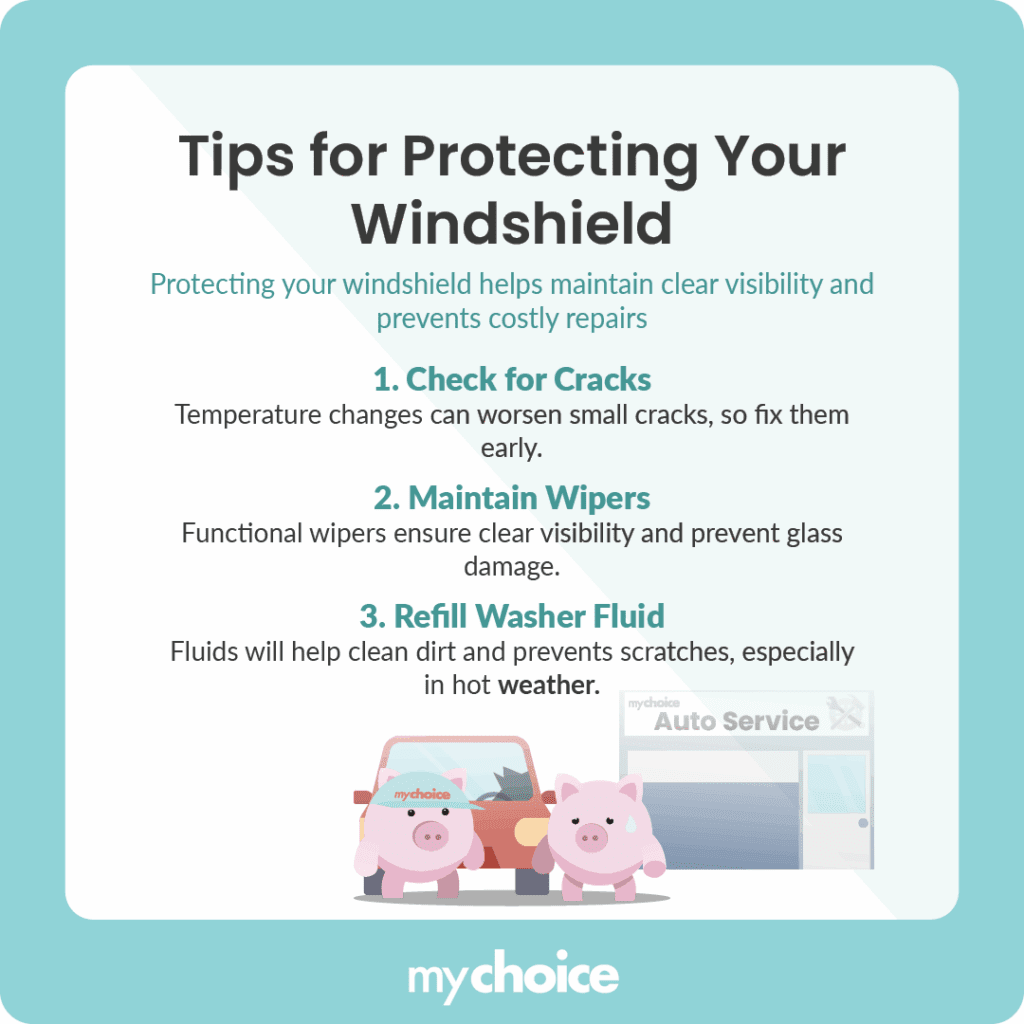
The windshield is undoubtedly the most important glass in your car. That’s why we want to share some tips for caring for your windshield.
Watch Out for Cracks
Watch for cracks or impacts to the windshield and have the damage assessed before it spreads.
Operational Wipers
Replace worn blades that streak, skip or damage the glass, and confirm the washer jets clear the driver’s field of view.
Windshield Fluid
Use washer fluid rated for the expected temperature and keep the reservoir filled.
Windshield Replacement vs. Repair
A qualified technician can determine whether a repair meets safety and vehicle requirements. If the damage affects the windshield’s strength, visibility or driver-assistance cameras, replacement could be the safer option even when repair costs less.
A timely resin repair may be possible for a chip that can safely be repaired, but polishing or repair must not create optical distortion. Replacement may require camera calibration, so ask for the calibration report after the work is completed.
Read More: How ADAS Recalibration Is Driving Up Collision Repair Costs