









Issued in six provinces and three territories, a Class 7 licence is the first licence many young or first-time drivers need to obtain. It is considered a major milestone by young Canadians in many parts of the country.
If you’re considering getting your driver’s licence for the first time, this guide covers the basics of what a Class 7 licence is, where it is issued and how to get one.
What Is a Class 7 Licence in Canada?
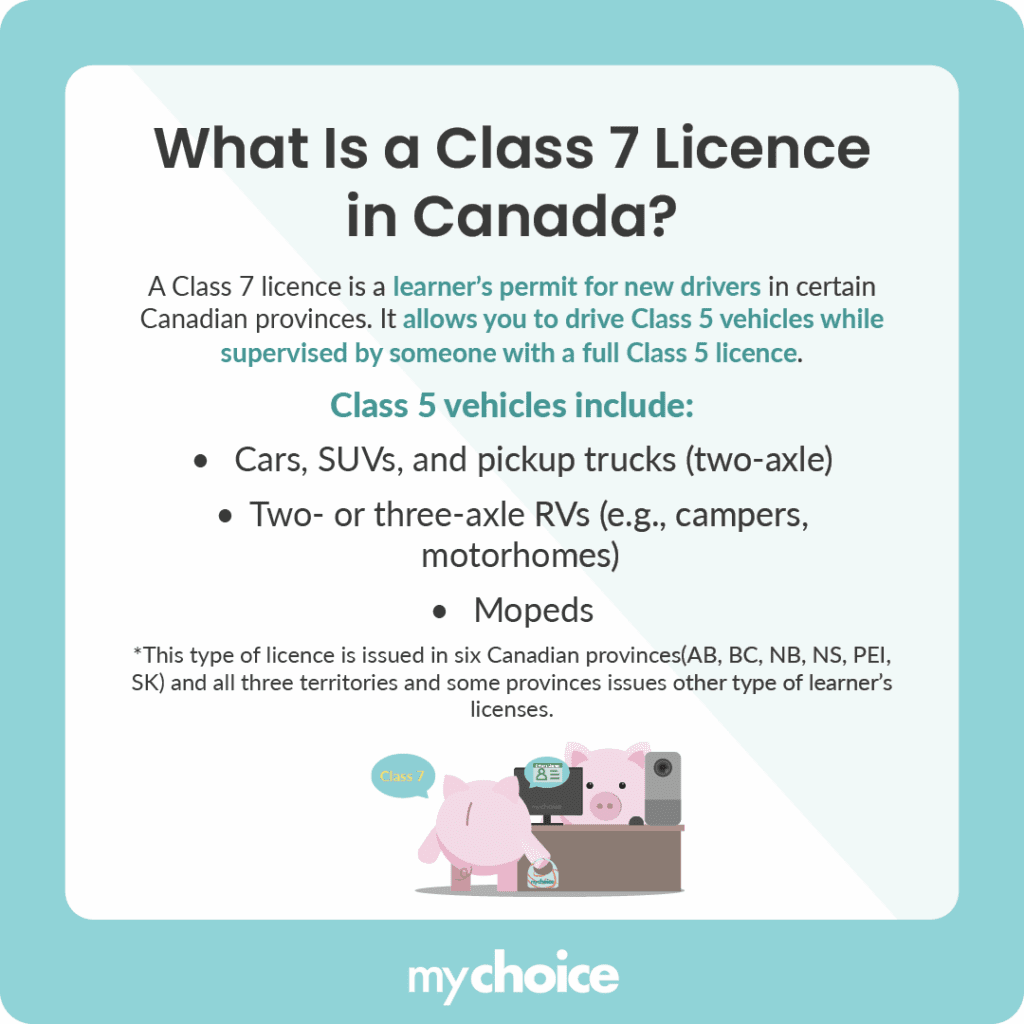
A Class 7 licence is issued to young and first-time drivers in certain provinces and territories. In essence, it is a learner’s permit that allows new drivers to operate Class 5 vehicles under the supervision of a fully licensed driver.
Class 5 vehicles generally include passenger vehicles such as cars, SUVs and light trucks. The vehicles you may operate with a Class 7 licence depend on the province or territory.
The age of eligibility also varies. In Alberta, young drivers can apply for a learner’s permit at 14. In British Columbia, drivers must be at least 16 to begin the Graduated Licensing Program.
Where Are Class 7 Driver’s Licences Issued?
Class 7 licences are issued in:
- Alberta
- British Columbia
- New Brunswick
- Nova Scotia
- Prince Edward Island
- Saskatchewan
- Yukon
- Nunavut
- Northwest Territories
Other Areas
- Newfoundland and Labrador: The province uses a Class 5I learner’s licence rather than the Class 7 designation.
- Manitoba: New drivers obtain a Class 5L learner’s licence before moving to the Class 5I intermediate stage.
- Ontario: New drivers begin with a G1 licence and later obtain a G2 licence before qualifying for a full G licence.
- Quebec: First-time drivers begin with a Class 5 learner’s licence and later move to a probationary licence.
Class 7 Licence in Alberta
In Alberta, new drivers must apply for a Class 7 learner’s licence before they can obtain a Class 5 licence. A Class 7 licence allows a driver to operate a Class 5 vehicle as long as a fully licensed driver is seated in the front passenger seat.
Alberta allows applicants as young as 14. Applicants under 18 must have parental consent.
Applicants must pass a knowledge exam and vision test and provide acceptable identification.
Alberta Class 7 Restrictions
- The driver must be accompanied by someone over 18 who holds a full Class 5 licence or higher.
- The supervising driver must sit in the front passenger seat.
- Class 7 drivers cannot drive between midnight and 5 a.m.
- The driver must have a blood alcohol level of zero.
- There cannot be more passengers than seat belts.
- The licence may be suspended after eight demerit points.
- The Government of Alberta provides the current requirements and restrictions.
Not sure how demerit points work? Learn more in our guide to demerit points.
Class 7 Licence in British Columbia
Under the British Columbia Graduated Licensing Program, the Class 7 licence is divided into two stages:
- Learner’s licence: To get an L licence, you must pass a knowledge test and vision screening.
- Novice licence: You can take the Class 7 road test after holding an L licence for at least 12 months.
You must be at least 16 to apply. Applicants under 19 need consent from a parent or legal guardian.
Class 7 learner drivers can drive on a highway as long as they follow the supervision and other conditions attached to the licence.
BC Class 7 Restrictions
- Learner and novice drivers must display the appropriate L or N sign.
- A learner must drive with a qualified supervisor seated beside them.
- Learners can carry one passenger in addition to the supervisor.
- Novice drivers are generally limited to one passenger unless an exception applies.
- Drivers must have no alcohol or drugs in their blood.
- Learners cannot drive between midnight and 5 a.m.
- Learner and novice drivers cannot use electronic devices, including hands-free devices.
British Columbia is changing parts of its graduated licensing system beginning October 19, 2026. Check ICBC’s current Class 7 requirements before applying.
Class 7 Licence in New Brunswick
New Brunswick has two Class 7 stages: Level 1 and Level 2.
Drivers who are at least 16 can apply. Applicants must pass the required tests, and those under 18 need parental consent.
New Brunswick Class 7 Restrictions
- Level 1 drivers must be accompanied by a licensed supervising driver.
- Level 1 drivers generally cannot drive between midnight and 5 a.m.
- Level 2 drivers may drive without supervision, although nighttime restrictions and exemptions may apply.
- Level 1 and Level 2 drivers must maintain a blood alcohol level of zero.
- Passenger restrictions apply during the graduated licensing period.
Class 7 Licence in Nova Scotia
Nova Scotia has two types of learner’s licences: the standard Class 7 licence for passenger vehicles and the LM licence for motorcycles.
New drivers in Nova Scotia can apply at 16. Applicants who are 16 or 17 need written consent from a parent or guardian.
To obtain a Class 7 licence, you must pass a knowledge test and vision screening. The learner stage normally lasts 12 months but may be reduced to nine months by completing a recognized driver education program.
Nova Scotia Class 7 Restrictions
- The learner must be accompanied by a supervising driver.
- No passengers are allowed other than the supervising driver.
- The learner must maintain a blood alcohol level of zero.
The province provides its current Class 7 testing requirements online.
Class 7 Licence in Prince Edward Island
Prince Edward Island uses a graduated licensing program. Drivers begin with a Class 7 instruction permit before moving through the remaining stages.
Anyone 16 or older can apply for an instruction permit. Applicants under 18 need parental or guardian consent.
To qualify, you must pass a written knowledge test, signs test and vision test.
Prince Edward Island Class 7 Restrictions
- A supervising driver who has held a valid licence for at least four years must sit in the front passenger seat.
- Passenger restrictions apply during the graduated licensing stages.
- The driver must have a blood alcohol level of zero.
- The driver cannot use a handheld device.
- Nighttime restrictions apply to some drivers under 21.
The province lists the current requirements for a Class 7 instruction permit.
Class 7 Licence in Saskatchewan
Saskatchewan’s Class 7 licence allows a new driver to operate Class 5 vehicles as a learner.
The usual minimum age is 16, although students enrolled in a high school driver education program may apply at 15. Applicants under 18 require parental consent.
To obtain the licence, you must pass the Basic and Sign knowledge tests and meet the identification requirements.
Saskatchewan Class 7 Restrictions
- A supervising driver must sit in the front passenger seat.
- The supervisor must hold the equivalent of a Class 5 or higher licence and cannot be a novice driver.
- The supervisor must have held a valid licence for at least 365 days during the previous three years.
- The driver must maintain a blood alcohol level of zero.
- The learner stage lasts at least nine months.
More information is available from SGI’s Class 7 licence guide.
How to Get a Class 7 Licence in Canada
The steps vary depending on where you live. For the most part, you’ll need:
- Valid identification
- Proof of your legal name and date of birth
- Proof of residence, where required
- Money to cover the test and licence fees
- Written parental consent if you’re under the applicable age
Check your province or territory’s requirements before attending the licensing office.
Tips for Preparing to Get a Class 7 Licence
Review Your Driver’s Guide
Visit your province or territory’s website and find its driver’s guide. It should cover the road rules, traffic signs and safety information included in the knowledge test.
Take a Practice Test
Practice tests can help you get a feel for the questions and identify subjects you need to review before taking the official test.
Observe a Fully Licensed Driver
Gather some real-world experience by accompanying a fully licensed driver. Watch how they approach different traffic situations and ask questions about road signs and driving rules.
The Bottom Line
Obtaining a Class 7 licence is an important step for many young drivers. It provides greater freedom while giving new drivers time to develop their skills under supervision.
Aside from a licence, you’ll need insurance to drive a vehicle. Read our car insurance tips for young drivers before you start comparing policies.