









Vehicle theft has been a problem in Canada for many years. In 2023 alone, Canadians reported 70,475 stolen vehicles, according to Équité Association’s 2024 Auto Theft Trend Report. Insurance companies have also dealt with spikes in theft claims, which can contribute to higher premiums.
With the collective efforts of national agencies and increased public vigilance, auto theft decreased by 18.6% in 2024.
One of the best ways you can protect your car is to invest in effective anti-theft devices that alert you to attempted break-ins and deter thieves. Keep reading to learn about ten anti-theft devices that may help you avoid becoming a victim of car theft.
How Do Anti-Theft Devices Affect Car Insurance?
Fewer car thefts mean fewer claims for insurers, so it benefits them when customers take steps to reduce the risk of their vehicles being stolen.
However, there is no discount that applies to every insurer or anti-theft device. Some insurers may provide a discount, while others may reduce or remove a theft surcharge.
Ask your insurer which devices it approves and get the premium difference in writing before buying one.
Active, Passive and Tracking Anti-Theft Devices: What’s the Difference?
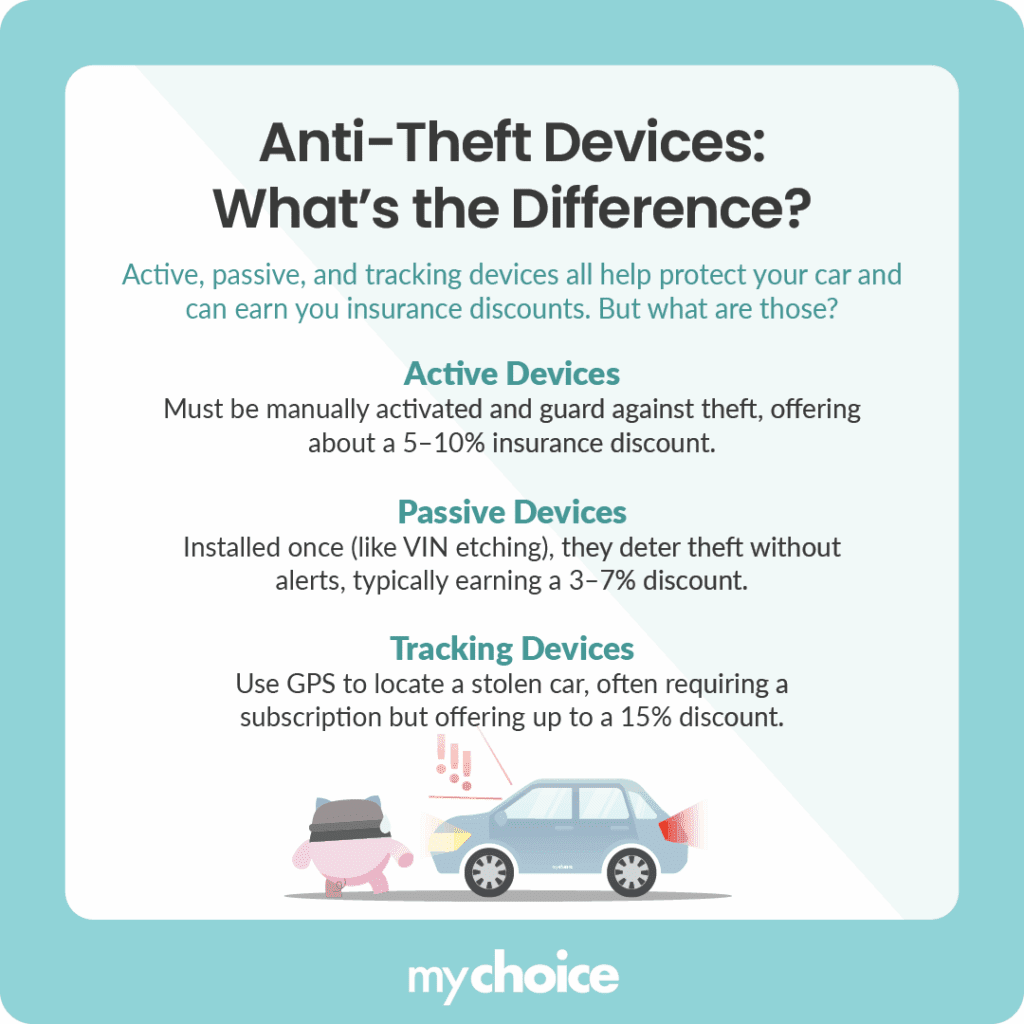
Active, passive and tracking anti-theft devices serve different purposes in keeping your car safe. Here’s a quick rundown of how each type is designed to protect you.
- Active anti-theft devices: These devices need to be activated whenever you leave the car. Steering-wheel locks and kill switches are examples.
- Passive anti-theft devices: These include devices that operate automatically or only need to be installed once, such as immobilizers, VIN etching and window film.
- Tracking anti-theft devices: If other devices fail to stop the theft, a tracking or recovery system may help police locate your car. Some products require a subscription.
The Top 10 Anti-Theft Devices to Consider
There’s a lot to consider before buying an anti-theft device for your car, and seeing dozens of options on the market can get overwhelming. So, we’ve narrowed it down to a list of ten devices that may be worth considering.
Vehicle-Tracking Systems
A vehicle-tracking system may send a notification if someone moves your car without permission. Depending on the product, it may also provide location information if the vehicle is stolen.
Read our full review of TAG vehicle-tracking systems.
VIN Etching
VIN etching involves placing the vehicle identification number on the car’s windows. This may make the vehicle less appealing to thieves because it can be harder to conceal or resell.
However, thieves may still break into the car or sell parts that aren’t etched.
Smart-Key Proximity Alarms
Smart-key proximity alarms can be linked to your smartphone to alert you if someone breaks into or moves your car. They may also set off a loud alarm to draw unwanted attention to the thief.
The features depend on the product.
Kill Switches
Kill switches can be useful because if a thief can’t start the car, it becomes harder to steal.
The switch is usually hidden and interrupts part of the starting system. Have it installed by a qualified professional.
Steering-Wheel Locks
Steering-wheel locks look physically intimidating and can discourage someone from targeting your car.
Investing in one made from a durable material such as steel may keep some thieves away because they know it will take additional time and effort to break the lock.
Hood Locks
If you’re concerned about protecting your engine compartment, battery or fuse box, a hood lock may help.
Hood locks require a key or another release method, making it more difficult to access parts beneath the hood.
Window Security Film
One common way thieves break into cars is through a window. Window security film offers another layer of protection.
It is made from a clear polymer film and works by holding shards of glass together when someone tries to break the window. This forces a thief to spend more time breaking in and may scare them away when paired with an alarm.
Security Wheel Lug Nuts
Security wheel lug nuts make it more difficult to steal wheels and rims.
They replace one or more of the regular lug nuts and require a matching key or tool for removal.
Under-Dash Lockboxes
If you must leave valuables in the car, a small under-dash lockbox can make them more difficult to steal.
A lockbox doesn’t prevent the vehicle itself from being stolen. Avoid leaving valuables in the car whenever possible.
Wireless Motion-Sensor Alarms
This type of device detects vibration or movement, such as someone trying to open a door or break a window.
When it senses movement, it may alert your smartphone and sound a siren. The exact features depend on the product.
Does an Anti-Theft Device Provide Theft Coverage?
No. An anti-theft device may discourage theft or help police recover the vehicle, but it does not provide insurance coverage.
Theft or attempted-theft damage may be covered if your policy includes Comprehensive, Specified Perils or All Perils coverage. Your deductible and other policy terms will apply.