









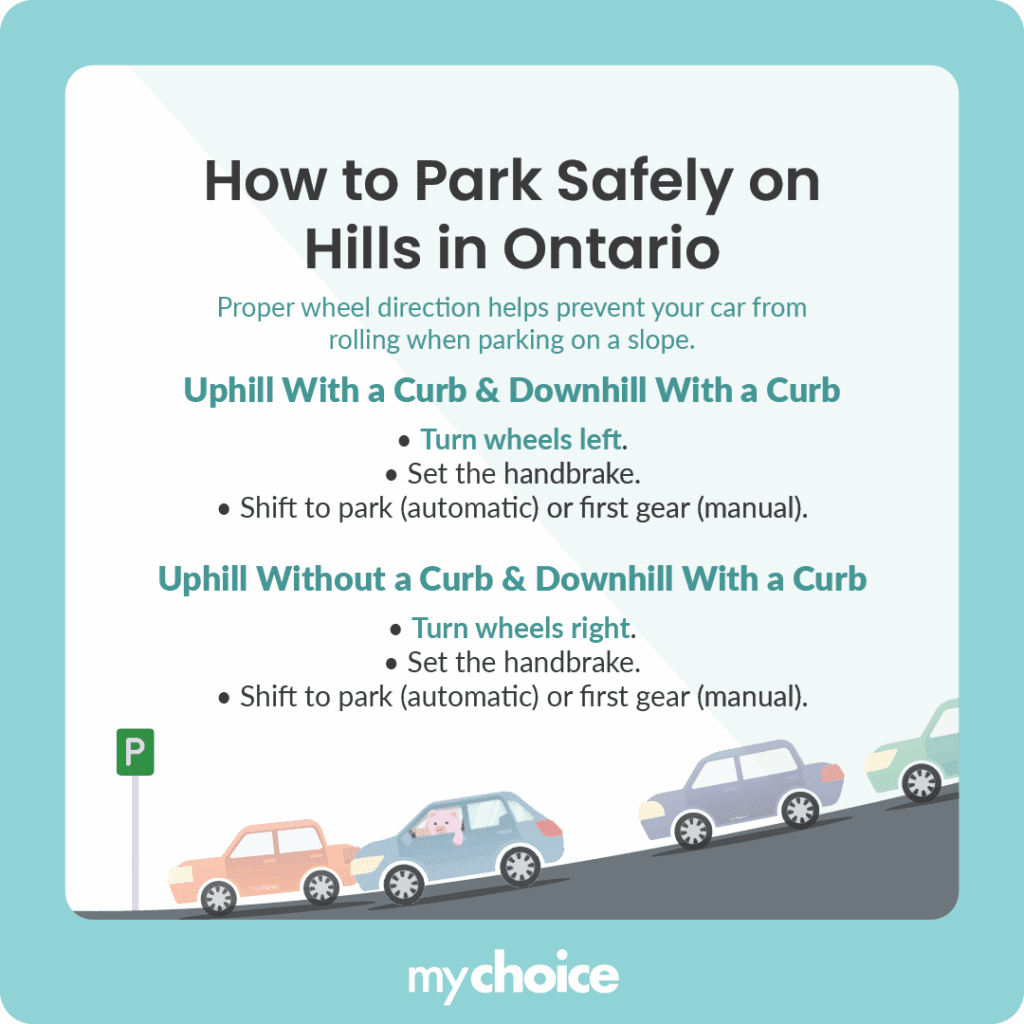
Uphill and Downhill Parking in Ontario
Whether you’re a newly-licensed driver or an experienced driver, parking can be a little tricky to get right. But on hills, parking can be downright nerve-wracking – one wrong move, and you could find your car careening down into traffic.
Here’s how you can safely and successfully park on a hill:
Tips for Parking on a Hill Safely
If you live or work in a particularly hilly area, it’s important to know the following tips and tricks for safe and stress-free parking:
- Before pulling into a parking spot, always check your mirrors for any possible hazards nearby.
- Always turn your tires before shutting your engine off. This will allow you to take advantage of your car’s power steering, making turning your wheels much easier.
- Don’t forget to engage your parking brake before you exit your vehicle. This will keep your car from rolling down the hill and into traffic (or off the road).
- Be careful when exiting your vehicle. If you’re parked on a particularly steep hill, you could lose your balance as you leave your car. Hills also make visibility difficult for those climbing or descending, so exercise caution, especially when driving at night.
- When pulling out of your parking spot, always put on your indicators and check your mirrors to ensure you don’t run into any oncoming traffic.
- If you intend to load your car with heavy cargo or tow a trailer, consider purchasing a couple of wheel chocks. This will give you an added sense of security that your car isn’t going anywhere.
- Follow traffic signs. If there is a “No Parking” sign on a hill, remember that it’s there for your or others’ safety.
Basic Parking Rules in Ontario
Now that we covered the specifics of parking on a hill in Ontario, let’s cover some basic parking rules:
- Do not park on the travelled part of a road. In other words, don’t park on any part of the road drivers pass through. If you must stop, pull over to the shoulder.
- Do not park on a hill or a curve where you don’t have a clear view for at least 125 metres in both directions.
- Do not double-park or obstruct another parked car, sidewalk, crosswalk, or road entrance.
- Do not park within three metres (about 9 feet) of a fire hydrant.
- Do not park within 100 metres of a bridge.
- Do not park within six metres of a public entrance to a public hall, theatre, or hotel when it’s open.
- Park at least 9 metres away from an intersection, or 15 metres if the intersection is controlled by traffic lights.
- Park at least 15 metres away from the nearest rail of a railway crossing.
- Always check if people, vehicles, cyclists, or other road users are near you before opening your car door.
- Do not leave your engine idling after parking your car. Turn off your lights and ignition, and always lock your doors to avoid theft.
- Do not leave your children or pets alone in your car.
- When pulling out of your parking spot, always use your turn signal and check for traffic before proceeding.
Key Advice from MyChoice
- Always engage your parking brake when parking on a hill. Failing to secure your vehicle properly could result in a rollaway accident and a potential insurance claim.
- Be aware that rollaway accidents can affect insurance claims. If your parked vehicle causes damage to another car or property, you may still be considered responsible.
- Use additional precautions on steep hills. Wheel chocks or parking blocks can provide extra protection when parking in areas with steep inclines.