








5 Ways To Get Your Car Ready for Winter in Canada

3 minutes can save you hundreds. Enter your postal code below and join thousands of Canadians saving on car insurance.

Secure. No Spam. No Fees.

Why You Can Trust MyChoice

MyChoice serves as an independent intermediary between you, financial institutions and licensed professionals without any additional charge to our users. In the interest of transparency, we disclose that we partner with some of the providers we write about – we also list many financial services without any financial gain. MyChoice does not operate a financial institution or brokerage and to ensure accuracy, our content is reviewed by licensed professionals. Our unique position means that we hold no recurring stake in your policy, ensuring our mission to help Canadians make better financial decisions is free of bias or discrimination. 

Last updated on February 03, 2026

3 minute read

MyChoice follows a strict content review process designed to ensure reliable and unbiased information.

Key Takeaways from this guide:

  • Having a good winter emergency kit in your car can keep you warm, visible, and safe if you get stranded or stuck in the snow.
  • Winter tires are a must in Canada and should be put on when temperatures drop below 7°C.
  • Most insurance companies offer discounts for using winter tires, which can help cover much of their cost.
  • Changing your oil and making sure your battery is in good shape can help prevent breakdowns and hard starts in cold weather.
  • As temperatures drop, so does tire pressure. This can affect how your car handles, its fuel efficiency, and braking.
  • Wiper blades, washer fluid, and defrosters are all important for keeping your view clear in snow, slush, and freezing rain.
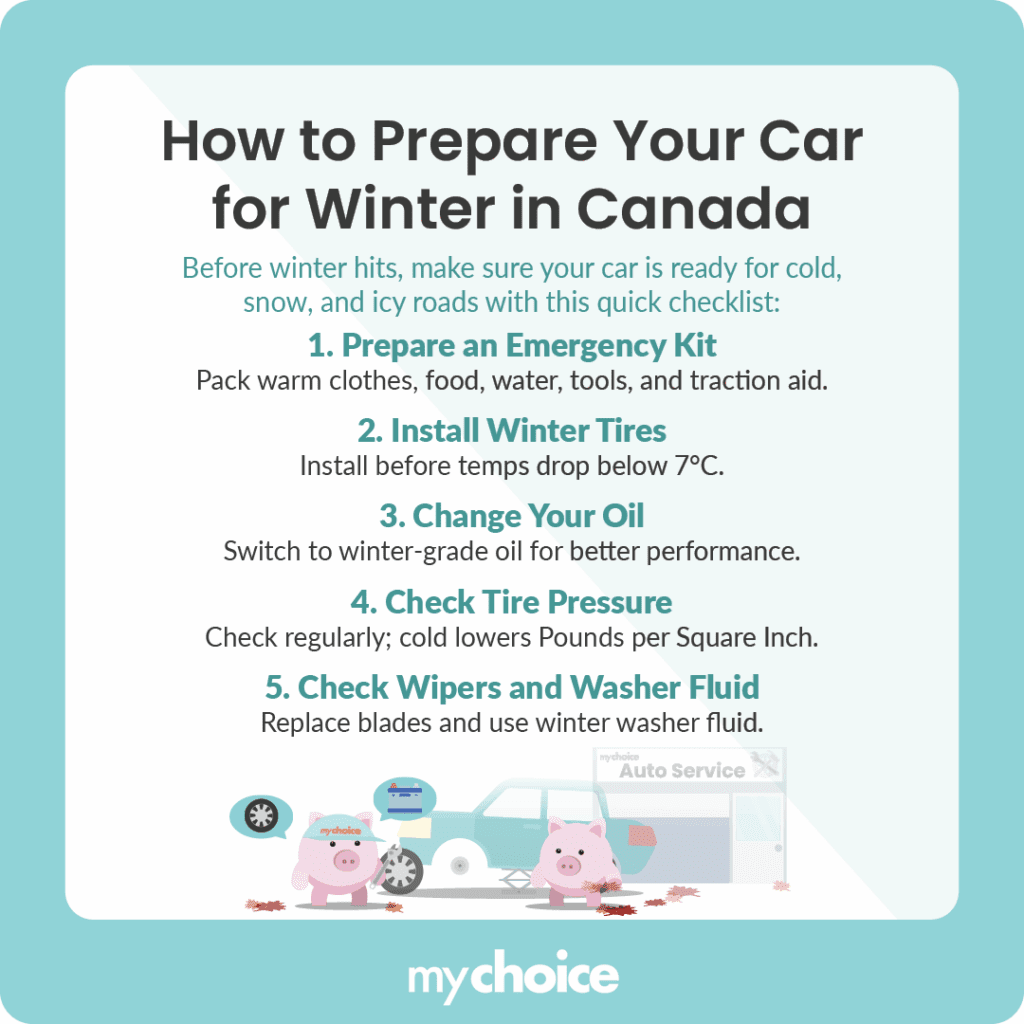
How to Prepare Your Car for Winter in Canada

1. Prepare An Emergency Car Kit

You should always keep an emergency kit in your car during winter. A proper kit should help you stay warm, free your car from snow, handle basic roadside issues, and stay safe if you are stranded.

  • A complete change of clothes
  • Extra socks and gloves
  • Water-resistant boots
  • A warm blanket

You may also want to include a tarp, which can be used as a temporary shelter or as a dry surface while making repairs.

  • Small shovel
  • Ice scraper
  • Flashlight
  • Flares or roadside signalling equipment
  • Jumper cables
  • Tire gauge
  • Tire chains
  • Inflated spare tire
  • Tire-changing tools
  • Basic tool kit
  • Windshield wipers and washer fluid

For traction, keep an abrasive material such as sand or non-clumping kitty litter to help your tires grip snow or ice.

  • First-aid kit
  • Food and water
  • Hard candies
  • Paper towels
  • Trash bags

During winter, it’s also a good idea to keep your gas tank full, which helps prevent fuel line freezing and reduces the risk of running out of gas in an emergency.

Your emergency kit should reflect your lifestyle. Consider adding medications, spare glasses, pet supplies, or extra blankets if you drive with children. Bring food for pets and warm blankets for any children who will be driving with you.

2. Purchase A Set Of Winter Tires

Winter tires are a must in Canada. Unlike all-season tires, they are made with:

  • Softer rubber
  • More aggressive tread
  • Tread patterns that funnel slush away

These features improve traction and control in icy conditions and reduce the risk of skidding. Winter tires should be used whenever temperatures fall below 7°C.

Most insurers offer winter tire discounts, which often offset much of the cost. Combined with the safety benefits, winter tires are well worth the investment.

3. Change Your Oil Before Winter

Cold temperatures cause oil to thicken, making it harder for your engine to lubricate properly. Changing your oil before winter helps your engine warm up faster and run more smoothly in cold conditions.

If your vehicle struggles to start on cold mornings, an oil heater can help keep oil warm overnight.

When getting an oil change, it’s also a good time to check your battery, as cold weather drains battery power and increases electrical strain. Ensuring proper battery fluid levels is a quick step that can prevent winter no-start situations.

4. Check Your Tire Pressure Regularly

Tire pressure affects fuel efficiency, handling, and braking. As temperatures drop, tire pressure drops as well — typically by one PSI for every 10°F decrease.

Even vehicles with tire pressure monitoring systems can develop under-inflated tires in winter. If your dashboard warning light turns on, checking tire pressure should be one of the first steps.

Here’s a quick guide to the top winter tire brands to consider.

5. Check Your Wiper Blades and Visibility Systems

Clear visibility is essential during winter. Wiper blades that work fine in summer often struggle with snow, slush, and freezing rain.

Before winter:

  • Make sure wiper blades are in good condition
  • Keep the windshield washer fluid topped up

You should also:

  • Confirm your defroster works properly
  • Keep dashboard vents unobstructed
  • Learn how to adjust temperature controls to prevent fogging
  • Keep a snow brush and ice scraper in your car at all times

It’s easy to forget these items until you need them, so make sure they’re in your vehicle before the first frost.

Key Advice from MyChoice

  • Get your car ready before the first big storm, not after. Breakdowns and crashes often increase early in the season when drivers aren’t prepared.
  • Use proper winter tires and verify that your insurance company applies the discount. Winter tires significantly improve traction, and choosing a car that handles well in Canadian winters can further reduce your risk.
  • Keep emergency supplies in your car all winter, especially if you drive outside the city or travel early or late in the day.
  • Learn which vehicles perform best in winter conditions in our guide.
  • Understand how to reduce risk when roads glaze over with ice in our guide on how to drive safely in freezing rain.

Congratulations! You made it to the end!

Now, here is the easy part: complete your quote in under 2 minutes

Discover More About

February 27, 2026
Chinese EVs are coming to Canada. Here’s how much BYD, MG and other models could cost to insure, with provincial breakdowns and projections.
February 10, 2026
Car repair costs rose 4.1% in Canada in 2025. View our breakdown of provincial repair trends, labour shortages, and what they mean for auto insurance rates.
January 26, 2026
In this MyChoice study, we analyzed data collected on our platform to compare insurance costs of popular electric cars with similar gas vehicles.

Even More Ways To Save on Insurance