







How Long to Keep Insurance Records

3 minutes can save you hundreds. Enter your postal code below and join thousands of Canadians saving on car insurance.

Secure. No Spam. No Fees.

Why You Can Trust MyChoice

MyChoice serves as an independent intermediary between you, financial institutions and licensed professionals without any additional charge to our users. In the interest of transparency, we disclose that we partner with some of the providers we write about – we also list many financial services without any financial gain. MyChoice does not operate a financial institution or brokerage and to ensure accuracy, our content is reviewed by licensed professionals. Our unique position means that we hold no recurring stake in your policy, ensuring our mission to help Canadians make better financial decisions is free of bias or discrimination. 

Last updated on March 20, 2026

6 minute read

MyChoice follows a strict content review process designed to ensure reliable and unbiased information.

How Long to Keep Insurance Records at a Glance

  • Hold on to old insurance policies if you have any open or unresolved claims, since you might need them to finish the claims process.
  • After a claim is settled, it’s a good idea to keep your insurance documents for a few more years. This can help if any disputes, audits, or legal questions come up.
  • The Canada Revenue Agency (CRA) usually suggests keeping tax records for at least six years. This rule can also apply to some insurance documents.
  • You often need to keep life insurance documents much longer, sometimes even forever, because of estate and tax reasons.
  • You don’t have to keep every insurance document. Once policies or cards expire and you no longer need them, you can usually throw them away.
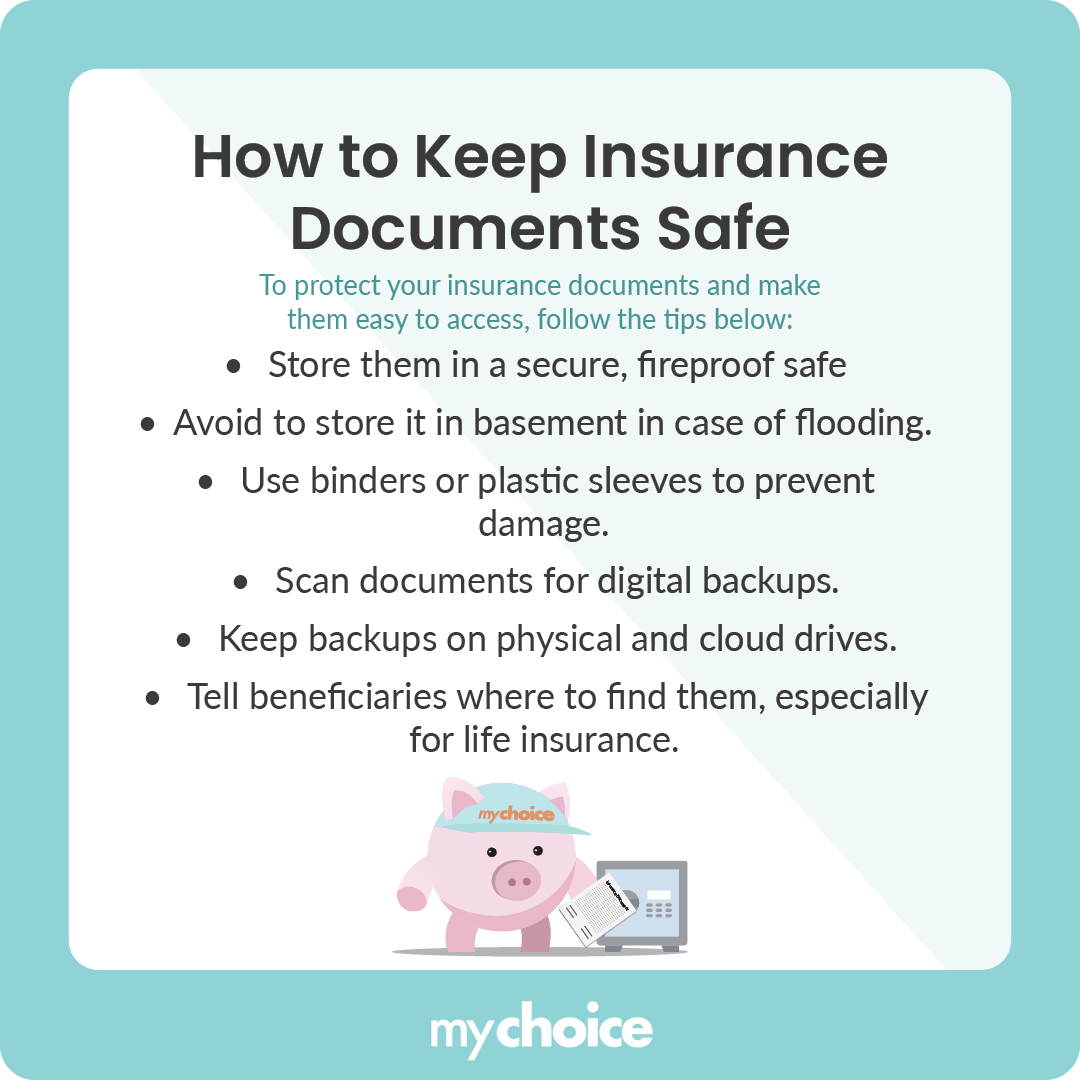
How to Keep Insurance Documents Safe

Is There Any Reason to Keep Old Insurance Policies?

There are some reasons why you should keep old insurance policies. One of the most common reasons to keep old policies is because you have an open claim that hasn’t been settled yet. Disposing of insurance policies with an outstanding claim might make the process harder.

This rule doesn’t just apply to policies, either. It applies to other claim-related paperwork. So, this means you should keep any repair receipts, hospital bills, and other documents related to that particular open claim. Even if that particular policy is expired, you shouldn’t toss them until the claim is resolved.

How Long Should You Keep Old Insurance Policies?

Generally, you should keep old insurance policies until there are no more outstanding claims. If you don’t have outstanding claims, you may be able to dispose of old policies after they expire, but it’s often recommended to keep them for several years in case of disputes, audits, or legal issues.

If your insurance documents are tied to tax filings (such as business use of a vehicle or home office deductions), the Canada Revenue Agency recommends keeping supporting records for at least six years.

Here’s a quick look at how long you should keep policies for different insurance types:

Home Insurance

Home insurance usually renews annually. So, you should keep at least until your new policy begins, and ideally for a few years afterward, especially if there’s any risk of claims, disputes, or tax implications. But you should check for any unresolved claims when your policy expires. If you still have outstanding insurance claims, keep the documents until they’re resolved.

Car Insurance

Canadian car insurance policies usually last one year. The same rules apply here – you should keep at least until your new policy begins, and ideally for a few years afterward, especially if there’s any risk of claims, disputes, or tax implications. If you have any outstanding car accident claims, resolve them first before tossing your old policy documents.

Life Insurance

Life insurance is a little different from auto and home insurance since life policies are typically active for longer. We recommend keeping life insurance documents for several years after a claim is settled, and in many cases, it’s best to keep them indefinitely, especially for estate or tax-related purposes.

This ensures any outstanding claims or tax consequences will be resolved. Read our guide to the tax consequences of insurance to learn more.

That said, it’s best to keep your loved one’s life insurance documents indefinitely in case any more problems arise with their estate.

Do You Have to Keep Old Insurance Claim Documents?

Once a claim is resolved, you may no longer be required to keep the documents, but it’s often recommended to retain them for several years in case of disputes, audits, or future reference. A resolved claim means the insurer has closed the claim and made all entitled payments. It also means the policy related to that particular claim has expired.

You can safely toss any resolved claims documents from expired policies. However, you may want to keep some of them around in case you need to file a similar insurance claim down the line.

Insurance Documents to Keep

With all the insurance documents you have, it can be confusing to choose which ones you should keep and which you should throw away. Here are the documents you can benefit from keeping:

  • Insurance card: Your insurance card (or a pink slip for auto insurance) is proof that you’re a policyholder. You should carry these on you at all times in case you may need to show that you own an insurance policy. Your insurance card is especially important for auto and health policies since police officers or hospitals may ask you to show them when needed.
  • Declarations page: A declarations page summarizes your insurance coverage in one handy document. You should keep this because it often explains how to file claims, which can be useful if you’re new to insurance.
  • Open claims documents: You shouldn’t throw away open claims documents because you might need them to settle the claim. This applies to the claim filing document as well as related paperwork like receipts for medical bills or vehicle repairs. You should also hold onto any insurance claims documentation like police reports or accident photos.
  • Billing statements: There’s generally no legal requirement to keep insurance billing statements for personal use, but they may be useful for tax purposes or financial records. But you might find past billing statements useful for comparing rates when you’re shopping for new policies.

Insurance Documents You Don’t Have to Keep

On the flip side, you have documents that are fine to dispose of when they expire. In fact, disposing of these old documents is encouraged. Not having them around means they can’t be used for identity theft.

Insurance docs you can throw away include:

  • Expired main policies: Your main policy document details everything you need to know about your insurance coverage. They’re usually lengthy and take a bit of space to store. Fortunately, you may not need to keep expired policy documents long-term, but retaining them for several years is often recommended in case of claims, disputes, or tax-related questions. You can safely throw them away without getting into trouble – as long as you don’t have any outstanding claims.
  • Old insurance cards: Insurance cards work similarly to main policies. If you have a new one from the insurer, the old one is generally rendered obsolete. Feel free to throw them away if you don’t need them anymore.

Should You Keep Insurance Documents After Switching Insurers?

You’re not required to keep insurance documents after switching insurers, as long as all claims are cleared. But if you still have unresolved claims, you need to keep the old documents until they’re closed.

How to Keep Insurance Documents Safe

Keeping insurance documents safe is important to protect yourself from identity theft. It also ensures you know where the documents are, saving you a lot of effort when you need them.

So, how do you keep insurance documents safe? Here are our tips:

  • Store your insurance documents in a secure and fireproof home safe.
  • Don’t store your documents in the basement in case of flooding.
  • Put your insurance documents in binders or plastic sleeves before storing them in a safe to reduce wear and tear.
  • Scan paper documents to make digital backups.
  • Copy your digital backups into physical and cloud drives so you don’t lose all your backups when one fails.
  • Tell your beneficiaries where your documents are located and how to access them. This is especially important for life insurance to make the claims process easier when they find out you passed away.

Properly Disposing of Old Insurance Documents

Insurance documents are very sensitive because they contain confidential information. If your policy documents fall into the wrong hands, you can end up a victim of identity theft and insurance scams. That’s why you have to dispose of old insurance documents properly.

Destroying your insurance documents ensures irresponsible parties won’t misuse them. Here are some easy ways to safely dispose of old insurance documents:

  • Put the documents in a cross-cut shredder. Cross-cut shredders destroy documents more thoroughly than strip-cut shredders, so people won’t be able to piece them together. You can buy a shredder at an office supply store, use the one at your workplace, or hire a record destruction service.
  • Submerge the documents in water. Leave the bucket out for a day, then mix it into a pulp with a paint mixer to completely destroy the documents. You can also use bleach to hasten the process.
  • Burn the documents in an outdoor fire pit until they turn to ash. Observe proper fire safety measures to keep yourself and your home safe.
  • Securely delete digital copies only after ensuring you no longer need them for legal, insurance, or tax purposes. Consider physically destroying the hard drives if you’re particularly concerned about your information’s safety.

Key Advice from MyChoice

  • Hold on to all insurance documents for any active or unresolved claims. This includes receipts, reports, and any letters or emails.
  • Keep expired policies for a few years, even if you’ve switched insurance companies. You might still need them for disputes or as a reference.
  • Make digital copies of important documents so you can find them easily when you need them.

With over a decade in Canada’s insurance sector, Aren is a leading voice in the industry, providing thought leadership on auto insurance, underwriting innovation, and how technology is reshaping insurance.

Congratulations! You made it to the end!

Now, here is the easy part: complete your quote in under 2 minutes

Discover More About

April 2, 2026
EV write-offs are increasing due to higher repair costs and faster depreciation. Learn what’s driving the trend, and what it means for car insurance.
March 17, 2026
ADAS calibration is driving up car insurance claim costs. Learn how sensors, cameras, and repair delays are increasing premiums in Canada.
February 27, 2026
Chinese EVs are coming to Canada. Here’s how much BYD, MG and other models could cost to insure, with provincial breakdowns and projections.

Even More Ways To Save on Insurance