









What Is A Driving Record?
Your driver’s licence history in Ontario is basically your driving record. Depending on the type of driving record you get, this can include information on your residential address, licence replacements, and class changes.
That said, every Ontario driving record type will have the following information recorded:
- Licence owner’s name
- Driver’s licence number
- Birth date
- Sex
- Height
- Licence expiry date
- Licence class
- Licence status (e.g., any active fine suspensions)
- Condition codes to indicate driving requirements (e.g., “A” for “adequate lenses”)
- Endorsements for driving, a.k.a. permissions to drive specific vehicles like school buses
- Earliest available licence date
How Do I Check My Ontario Driving Record?
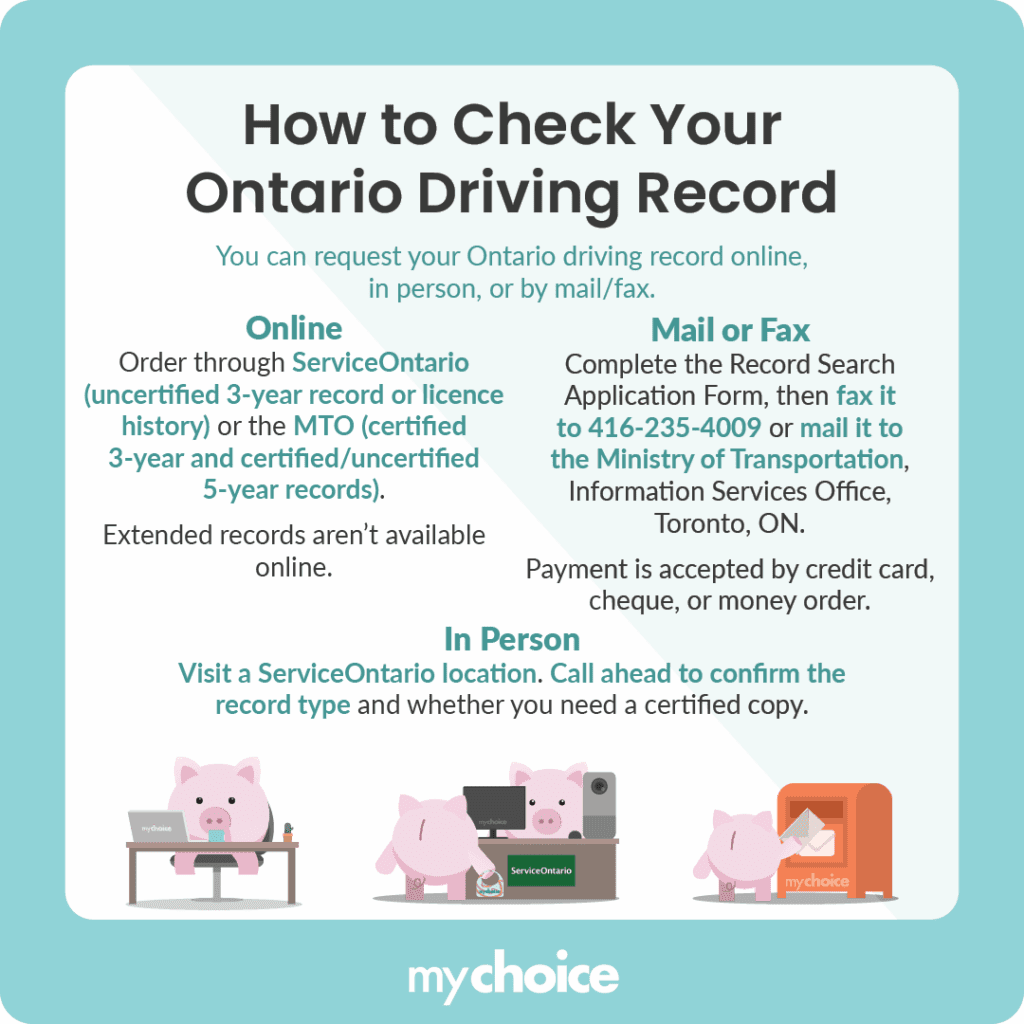
You can check your Ontario driving record online, in person, or via mail or fax. Here’s a guide on how you can check through each method.
What’s The Difference Between An Uncertified And A Certified Record?
An uncertified copy and a certified copy of your driving record will contain the same type of information. However, a certified copy comes with an official seal from the Ministry of Transportation. While true, be aware that uncertified records are delivered immediately as PDFs when ordered online, whereas certified records with an embossed seal can take up to 15 business days to arrive via regular mail
Types Of Driving Records
Insurers, employers, and courts all request a certain type of driving record for different purposes. Here’s a quick description of each one and the differences between them.
What Is A Driver’s Abstract?
A driver’s abstract is the uncertified record of your driving history in the past three years. Many employers require a copy of this abbreviated driving record. It’s also commonly requested by auto insurers to determine your premium rates.
Driving Record vs Driver’s Abstract
A driving record can be uncertified or certified by the Ministry of Transportation. There are also driving records that cover periods beyond three years. Apart from the basic information listed above, some driving record types also include any collisions, licence replacements, and a complete record of activity under the Criminal Code of Canada.
A driver’s abstract in Ontario, on the other hand, is typically uncertified and only covers the following information apart from the basics listed above:
- Any active fine suspensions
- All reinstatements, convictions, and suspensions under the Highway Traffic Act for the past three years.
- Your total demerit points
Key Advice from MyChoice
- We recommend ordering your own 3-year abstract annually before your insurance renewal. This allows you to verify that old tickets have actually “fallen off” so you can negotiate a better rate.
- Disclose your collisions manually. Standard MTO abstracts do not show collisions. However, insurers will find them through claims databases. Withholding this information can lead to a policy cancellation for misrepresentation.
- Watch the 4-Point threshold. If you are a G1 or G2 driver, a single conviction carrying four or more demerit points (such as speeding 30 km/h+ over or following too closely) triggers an automatic 30-day license suspension.