









A car alarm can help protect your vehicle from theft and damage, but if it keeps going off for no reason, it can quickly become a stressful and annoying problem.
An alarm that keeps going off can disturb your sleep and your neighbours. Worse still, false alarms can make you complacent, leaving you unprepared when your car is actually damaged or broken into.
Learn some potential reasons why your car alarm keeps going off, how this could affect your car insurance, and how you can fix it or turn it off.
For this guide, our team reviewed Équité Association’s layered approach to vehicle theft prevention, FSRA’s guidance on anti-theft solutions and the Ontario Automobile Policy rules on comprehensive coverage and mechanical-breakdown exclusions.
How to Turn Off a Car Alarm That Keeps Going Off
If you can get to the car, try these steps:
- Unlock or lock your vehicle’s doors: In some cases, remotely locking or unlocking the doors with your key fob will stop the alarm. You can also use your physical key.
- Turn on your car: If your car lets you turn the ignition on while the alarm is triggered, do so. You can also try turning the key to the ACC position, with the radio on and the engine off.
- Try your spare key fob: A weak fob may fail to disarm the system even when a spare still works.
- Check the owner’s manual: Reset steps are specific to the vehicle or alarm system.
- Press the shut-off switch, if available: Some aftermarket systems have a concealed valet or override switch. Check the system’s manual before using it.
If you see a smashed window or forced lock, treat it as a possible crime. Call 911 if the crime is in progress or anyone is in immediate danger. Otherwise, contact the police non-emergency line.
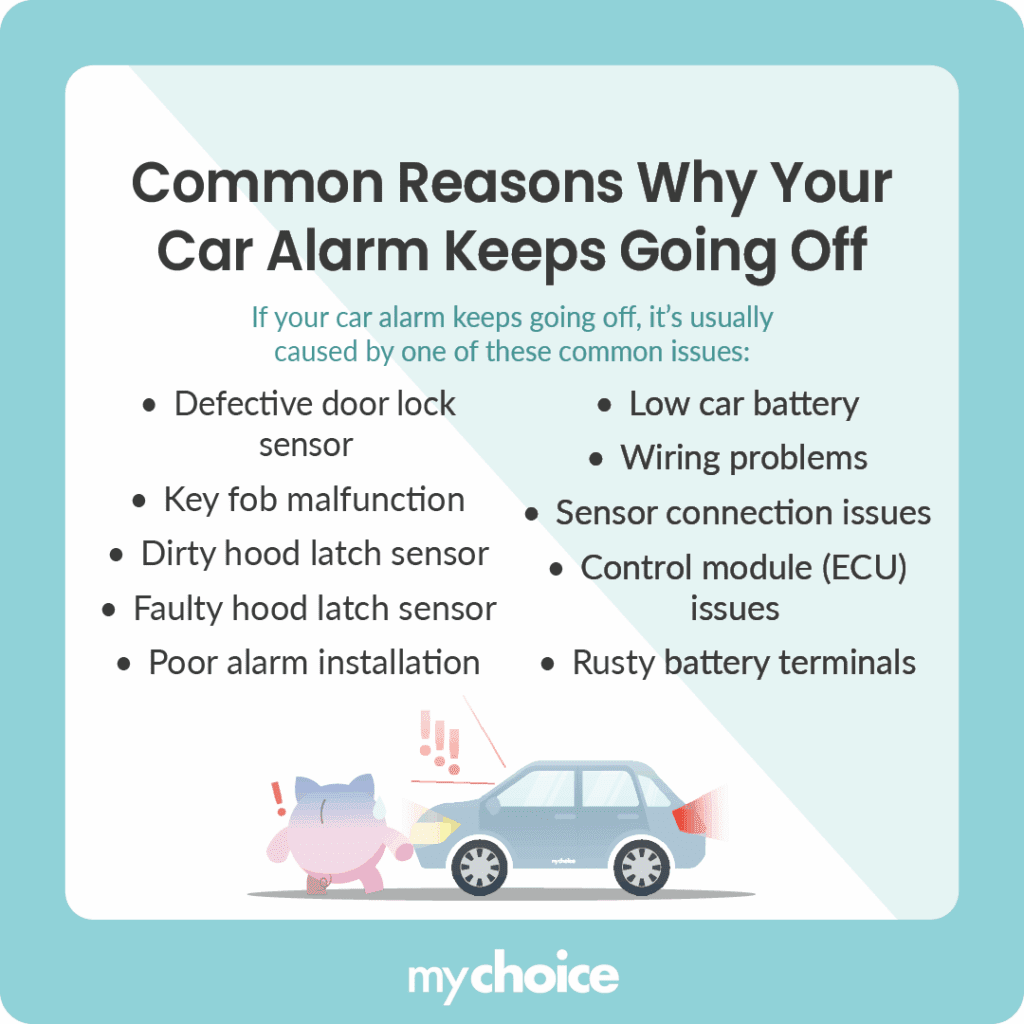
Why Does My Car Alarm Keep Going Off?
In some cases, you can easily trace what’s causing your car alarm to go off constantly. Finding the cause will help you figure out how to fix it.
1. Key Fob Malfunction
A key fob is a transmitter for keyless car entry. If it’s working properly, your key fob will lock or unlock your doors and disarm the alarm.
A dying battery may be the reason it won’t disarm with the fob. Try the spare. If that works, replace the battery in the first fob.
Key fobs typically use a small coin-cell battery. Follow the instructions in your owner’s manual when opening or resetting the fob. There is no single reset procedure for every vehicle.
If a new battery and reset don’t fix the problem, the fob may have damaged contacts or need professional reprogramming.
2. Low Car Battery
Many car owners may not know this, but low power can trigger a car alarm. Weak batteries are more likely to cause problems in cold weather.
Have the battery checked if the car is slow to start, the lights are dim or the alarm begins going off without an obvious cause. A battery can appear charged and still fail under load.
3. Corroded Battery Terminals
Corrosion around the battery terminals can interfere with the electrical connection. Road salt and moisture may cause white or green buildup on the battery posts.
Minor corrosion can be cleaned carefully, but corrosion does not explain every battery problem or repair an internally damaged battery. If you’re uncertain, have the battery and charging system checked.
4. Door, Hood or Trunk Sensor
Your vehicle uses sensors to detect whether its doors, hood and trunk are closed. If one is dirty, damaged or stuck, the vehicle may think that someone is trying to get inside.
Check the dashboard for a door, hood or trunk warning light that stays on after everything has been closed.
Water leaks, damaged wiring or a faulty latch can also affect these sensors. A mechanic with the appropriate scan tool may be able to identify which circuit is triggering the alarm.
5. Lock Actuator Problems
If you can’t unlock your vehicle or stop the alarm, there may be a problem with a lock actuator. One of the door latches may be stuck between locked and unlocked, causing the vehicle’s computer to believe the car is not secure.
This can cost a few hundred dollars in parts and labour, so don’t jump to this conclusion until you’ve checked the key fob, battery and sensors.
6. Poor Alarm System Installation
Factory alarm systems offer limited levels of security, so some car owners install aftermarket security systems.
Unfortunately, an improperly installed system can cause repeated false alarms. If you installed the system yourself, check the manual to make sure you followed the instructions. If a shop installed it, bring the car back and explain the problem.
Common causes include an overly sensitive shock sensor, a hood switch that isn’t closing properly, a dying backup battery or a faulty wiring connection.
Read More: Compare Other Anti-Theft Devices for Your Car
7. Wiring Issues
If your key fob, battery or sensors aren’t causing the alarm, the wiring may be the problem.
Look for other electrical issues, such as headlights flashing when they shouldn’t, the horn chirping at random, interior lights staying on or the battery repeatedly going dead. These problems may point to damaged wiring or a control-module issue.
8. Control Module Problems
Newer vehicles use electronic control modules to manage their locks, alarm and other systems. If one of these modules has a problem, it may send the wrong signals and make the car think its security has been compromised.
Disconnecting a control module can create more problems. Have an automotive professional use the correct scan tool to diagnose it.
Factory and Aftermarket Alarm Systems
Factory alarm systems are connected to the car’s original wiring and will often reset when the car recognizes a valid key.
Aftermarket systems may add a separate alarm box, siren, shock sensor and additional door or hood switches. Depending on the unit, it may have a valet mode, override button or reset procedure.
Équité Association recommends a layered approach to theft prevention. An audible alarm may draw attention to a theft attempt, but it should not be your only defence.
Does a False Alarm Affect Car Insurance?
A false alarm without damage generally isn’t an insurance claim. The cost of repairing a weak battery, dirty sensor, faulty fob or poorly installed alarm is normally the vehicle owner’s responsibility.
Under the standard Ontario Automobile Policy, comprehensive coverage may apply to theft, attempted theft, vandalism and certain other insured events, subject to the policy wording, deductible and exclusions.
Mechanical or electrical breakdown, rust, corrosion and ordinary wear are generally excluded unless the damage results from a covered event.
If there is damage from a break-in or vandalism, photograph it before repairs and contact your insurer. Whether making a claim makes sense may depend on the amount of damage and your deductible.
Read More: See What Comprehensive Car Insurance Covers