









If you’re weighing whether to buy car insurance straight from an insurer’s website or to go through a broker, this guide lays out the real trade-offs, what going direct genuinely gets you, where it can quietly cost you, and how to tell which camp you’re in.
Before writing this article, we reviewed FSRA’s rules on how auto insurance is sold and proven in Ontario, RIBO’s standards for what a broker actually owes you, and the Facility Association’s terms for drivers who can’t get coverage in the regular market. We weighed these against the practical realities of online quoting and self-service policy management to map out who each buying channel actually suits.
What Does it Mean to Buy Direct Car Insurance?
Buying insurance direct means purchasing a policy directly from an insurance company, usually through its website or call centre, without using a broker or intermediary.
Without a broker, you will be the one with full control of every single process, from requesting quotes, purchasing your policy, changing your policy, making claims, and the like.
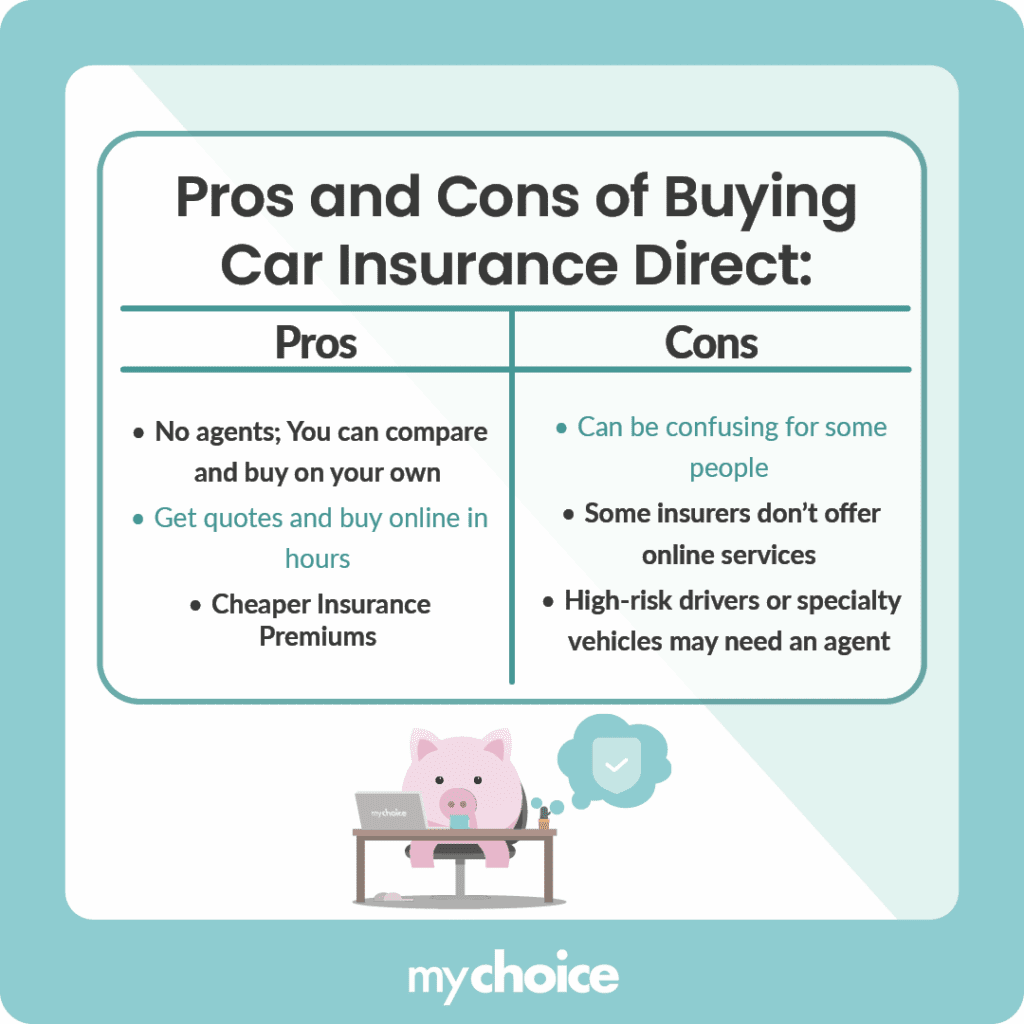
Benefits of Buying Car Insurance Directly From an Insurance Company
Here’s what going direct genuinely gets you — and the fine print attached to each advantage.
The Drawbacks of Getting Car Insurance Direct
While buying car insurance online definitely has its pros, it isn’t ideal for everyone. Check the major cons of buying car insurance directly from a company below:
When Should You Buy Car Insurance Direct?
You should buy auto insurance direct if you’re willing and able to put in the time to research good companies and policies, enjoy hunting for bargains, and don’t have a complicated driving history or high-net-worth assets like classic cars.
Buying directly from an insurer is a good option for you if:
- you have a clean driving record;
- you drive a standard vehicle;
- your insurance needs are straightforward; and
- you are comfortable comparing rates again at every renewal.