









All Perils is optional physical-damage coverage that combines Collision or Upset and Comprehensive coverage. In Ontario, it also covers certain thefts by someone in your household and by an employee who drives, uses, services or repairs the insured vehicle. A deductible and policy exclusions still apply.
For this guide, our team reviewed FSRA’s optional-coverage guide and Section 7 of the current Ontario Automobile Policy.
Keep reading to compare All Perils with Collision, Comprehensive and Specified Perils, see the main exclusions and decide whether the extra protection is worth the price for your vehicle.
Read More: How Car Insurance Works in Ontario
What Does All Perils Auto Insurance Cover?
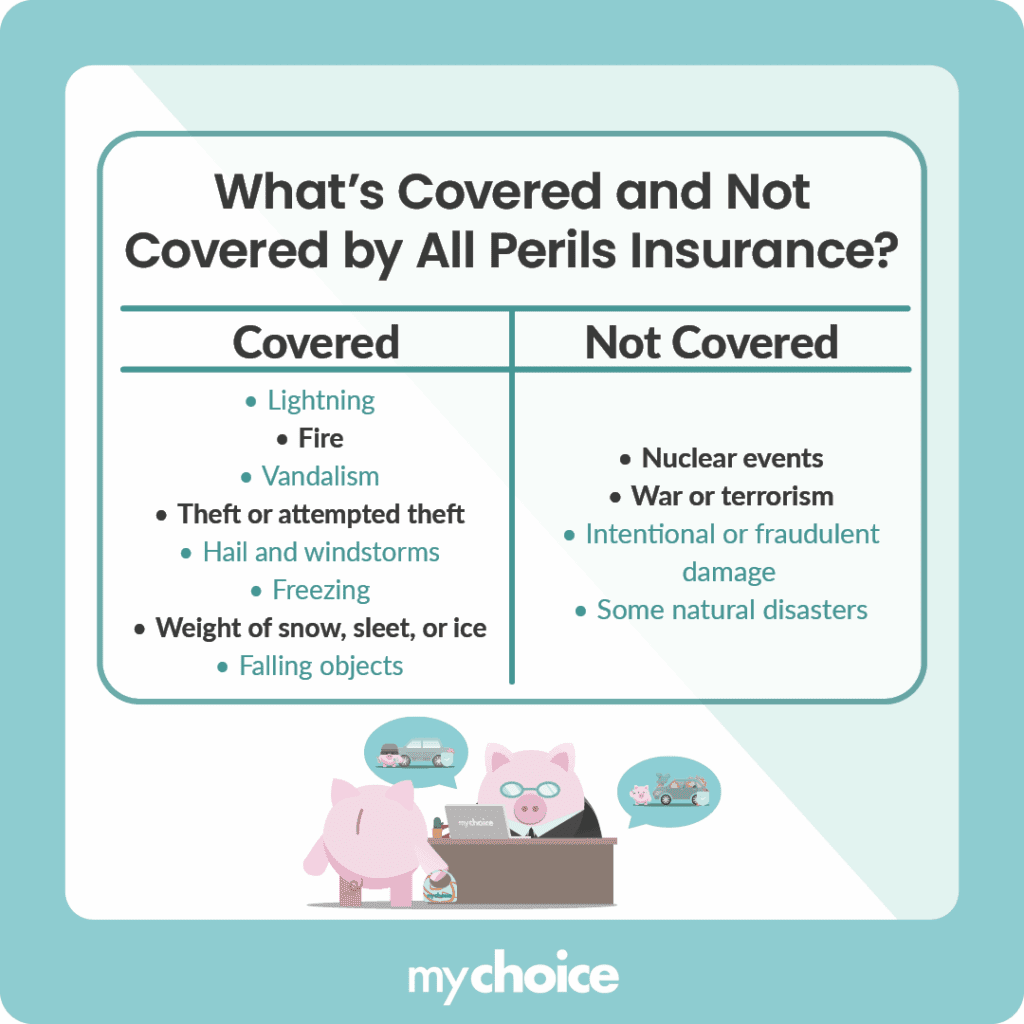
All Perils can respond to covered collision and upset losses, plus non-collision events included under Comprehensive. Examples include theft, attempted theft, fire, vandalism, hail, rising water, earthquake and falling or flying objects, subject to the policy wording.
Its distinctive feature is theft coverage for certain people who may be excluded under narrower physical-damage options. The Ontario policy includes theft by a person who lives in your household and by an employee whose work involves driving, using, servicing or repairing the vehicle.
How Is All Perils Different from Other Coverage?
| Coverage | What it generally covers | Key limitation |
|---|---|---|
| Collision or Upset | Collision with another vehicle or object, or the vehicle tipping over | Does not cover most non-collision losses |
| Comprehensive | Non-collision losses, including specified perils, falling or flying objects, missiles and vandalism | Does not cover collision or upset |
| Specified Perils | Only the events listed in the policy, including fire, theft, windstorm, hail, rising water and earthquake | An unlisted cause is not covered |
| All Perils | Collision or Upset plus Comprehensive, with the additional household-member and specified employee theft protection | Deductible and exclusions still apply |
All Perils and buying Collision plus Comprehensive can look similar, but they are not identical because of the theft wording. Compare the actual quote and policy forms rather than relying on the coverage label alone.
What Does All Perils Exclude?
The Ontario policy excludes several types of loss, including ordinary wear and tear, rust, corrosion, mechanical fracture or breakdown, tire damage and freezing, unless the resulting damage falls within a stated exception. Damage caused by an intentional act or illegal use may also be excluded depending on who caused it and the policy terms.
A cause can matter as much as the damaged part. For example, an engine failure from wear is different from engine damage caused by a covered fire. Ask the adjuster to identify the policy provision used if a claim is denied.
How Much Does All Perils Coverage Cost?
There is no reliable universal price. The premium depends on the vehicle, driver, location, deductible, claims record and insurer. Ask for two quotes using the same vehicle, drivers, limits and deductibles: one with All Perils, and one with separate Collision and Comprehensive coverage.
The difference between those quotes is the price of choosing All Perils in your case. Check whether the two options use the same deductible and settlement terms before treating the cheaper one as equivalent.
Is All Perils Worth It?
It may suit a newer, higher-value or financed vehicle when you want broad physical-damage protection and the household or employee theft wording matters. A lender or lessor may require physical-damage coverage, but the contract may not require the All Perils option specifically.
For an older low-value vehicle, compare the annual premium and deductible with the vehicle’s actual cash value. If the most the insurer would pay after the deductible is small, narrower coverage or self-funding the risk may be more practical. Confirm the effect before removing coverage because you cannot add it after a loss.
Read More: See How Car Insurance Deductibles Work