









Even if you’ve never been involved in a fraudulent claim, auto insurance fraud can contribute to higher insurance costs in Ontario. Fake claims, staged collisions, AI-generated documents and provider fraud all contribute to the cost increase across the insurance system.
For this article, the MyChoice editorial team reviewed FSRA’s current consumer fraud-prevention steps, the regulator’s definition and reporting threshold for a fraud event and its rate-approval process.
Read on to learn how insurance fraud can affect auto insurance costs, the common types of fraud Ontario drivers should watch for and what you can do if you suspect fraud.
How Insurance Fraud Impacts You as a Consumer
Ontario insurers must get FSRA approval for changes to their rates. When reviewing a rate change, FSRA considers factors such as claims costs and insurer expenses. Even when an overall rate change is approved, the effect can differ from one customer to another.
Higher fraud-related claims costs can contribute to rate changes over time, but one fraud incident in an area does not automatically increase every nearby driver’s premium. Unfortunately, there isn’t currently a dollar amount showing how much fraud adds to every driver’s premium.
Read More: How Pressure on Canada’s Car Insurance System Affects Drivers
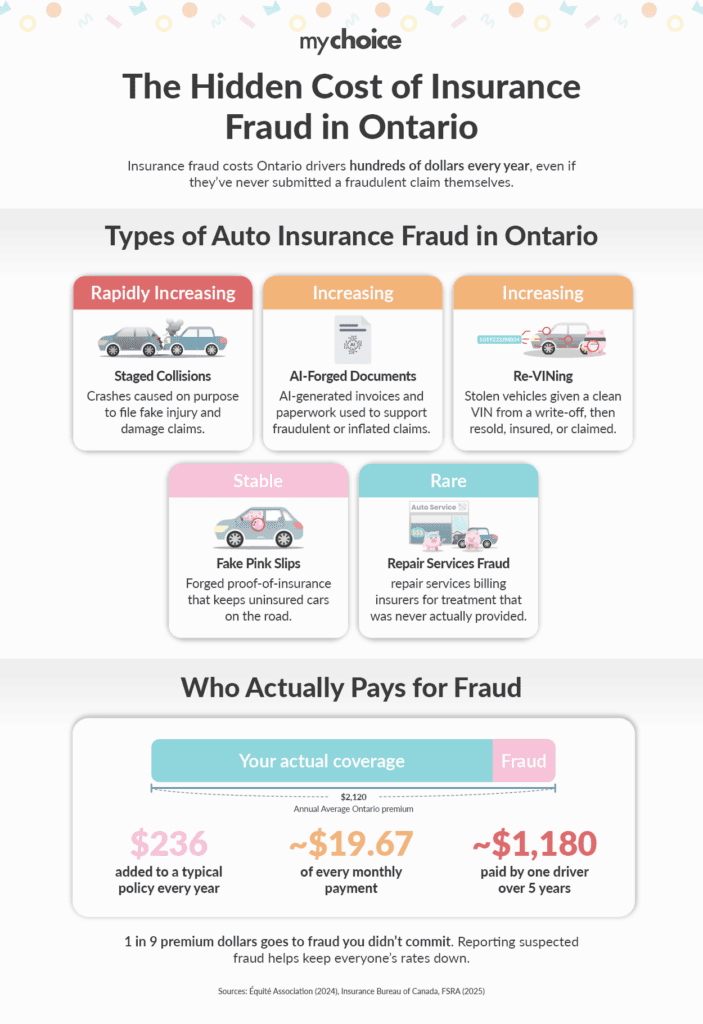
The Five Types of Auto Insurance Fraud Driving Up Your Bill
Here’s a look at the different types of fraud, why they cause rate increases and what you can do as an honest driver to help reduce auto insurance fraud in Ontario.
Staged collisions are a growing form of auto insurance fraud in Ontario. Data from Aviva Insurance quoted by CP24 shows 1,066 fake crashes in Canada in 2025, up 400% year over year. These are often single- or multi-car collisions between fraudsters, but some also involve brake-checking innocent drivers to trigger rear-end crashes.
The rise of AI has made it easier for bad actors to edit or falsify documents. This is often used in combination with staged collisions or to inflate legitimate claims to include already present or exaggerated damage.
Fraudsters transfer a vehicle identification number from a written-off vehicle to a stolen one, then resell it or use it for false insurance claims. This practice is common with curbsiders, which are unregistered vehicle sellers who make a business out of flipping sketchy cars for profit. Équité Association reported a 72% year-over-year increase in vehicle finance fraud detected through investigations involving ports in Quebec and Nova Scotia. Re-VINing remains one of several fraud techniques used within the broader stolen vehicle ecosystem.
A consumer may receive altered or fake proof of insurance from an unlicensed seller. Always double-check the agent, company or broker before paying.
A provider may bill for services not delivered, inflate work or misrepresent the cause or extent of damage. Review invoices and ask questions about work submitted under the claim.
How Honest Drivers Can Help Lower Fraud Costs
Use a dashcam. A dashcam provides video evidence of staged collisions that can help catch fraudsters in the act.
Be vigilant when buying a used car. Check the VIN against all documents provided to you, and check that the car’s registered owner is the same person or business you’re dealing with. Look for signs of tampering or removal around the dashboard where the VIN is located and inside the engine bay. If you find something suspicious, don’t just walk away: report it.
Check repair work. If you need repairs related to an insurance claim, follow up with your insurer and check that the work submitted is the same as what was reported to you. Finding discrepancies may help shine a light on dishonest auto repair shops.
Submit a report. The Financial Services Regulatory Authority of Ontario has a legislative mandate to deter fraudulent practices relating to insurance and other financial sectors. Its recommended steps for mitigating fraud include reporting it to both your insurance company and law enforcement.
Read More: How Dashcams Can Speed Up Insurance Claims