









In Ontario, age is one of many factors that insurers consider when determining automotive insurance premiums. The stereotype is that this applies mainly to young drivers, who are known to have higher incident rates and significantly higher premiums than the rest of the population. But another demographic is drawing increasing attention from insurers: drivers aged 65 and older.
Seniors account for a significant share of fatal collisions and have some of the highest fatality rates following a crash. As the Canadian population ages, these risks are expected to become more common.
Our team reviewed Transport Canada’s latest collision statistics, research from the Insurance Institute for Highway Safety (IIHS) on older driver safety, Statistics Canada population projections, and proprietary MyChoice auto insurance quote data in preparation for this article.
Read on to learn how age affects car insurance for seniors, what happens when drivers turn 80, and what older drivers can do to keep premiums low.
How an Aging Population Is Changing Insurance Risk
The answer is quite simple. As Canada’s population continues to age, insurers are increasingly managing a portfolio where severe injury claims among older adults make up a larger share of total losses.
The Real Insurance Challenge: Severity, Not Frequency
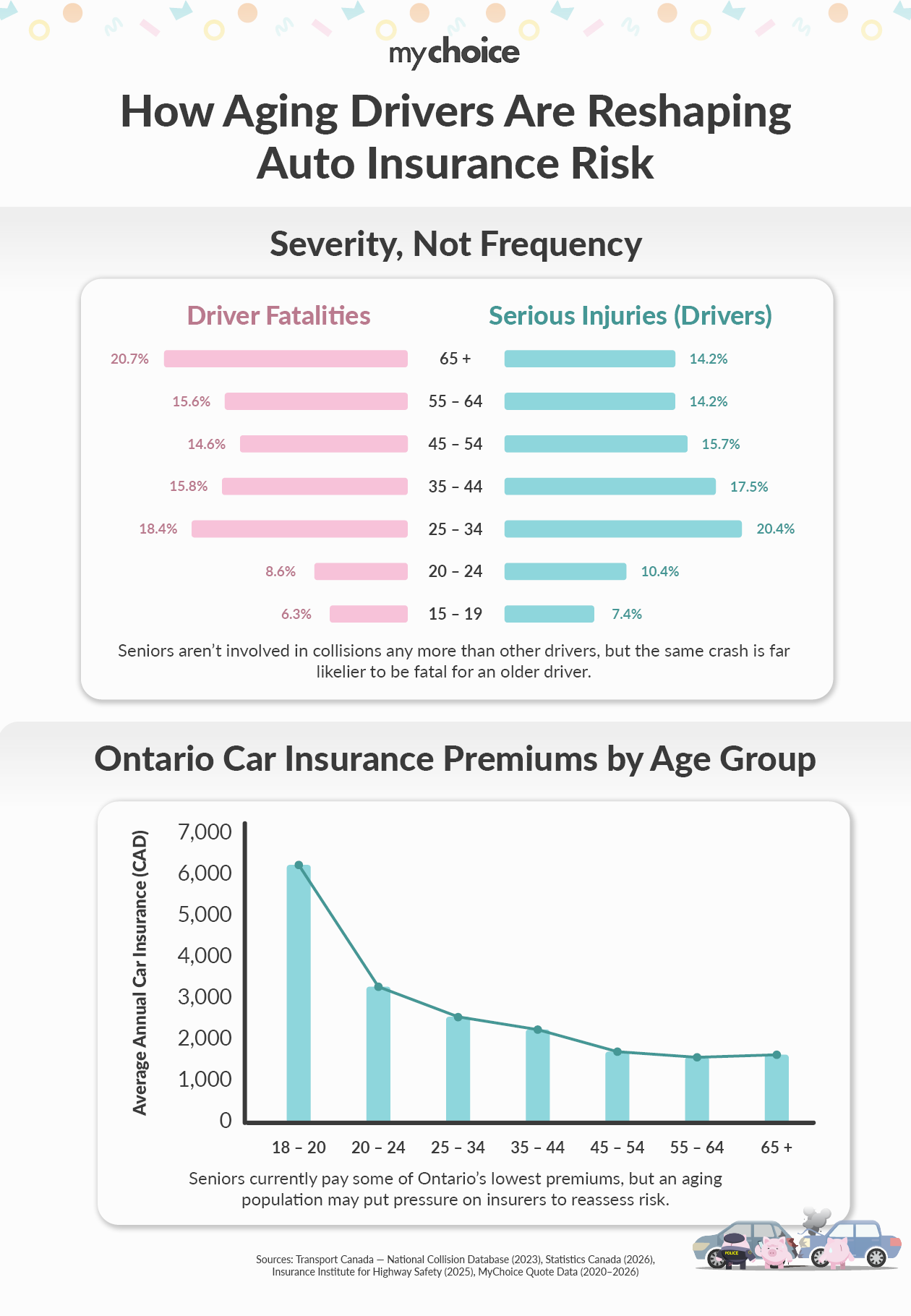
Transport Canada’s motor vehicle traffic collision statistics from 2023, the most recent available at the time of writing, reveal that seniors are not involved in driving incidents more frequently than the rest of the population. However, the collisions they are involved in are far more likely to be fatal.
In 2023, Transport Canada recorded 446 fatal collisions across the country involving people aged 65 and older. That figure counts anyone in the age group involved in a deadly crash, whether behind the wheel, in the passenger seat or on foot, so it measures how vulnerable older road users are when a collision happens, not how often senior drivers cause one. The same dataset shows is that once a crash occurs, people 65 and older are considerably more likely to die of their injuries than younger road users.
A 2025 study by the Insurance Institute for Highway Safety (IIHS) says collisions involving seniors are more likely to be fatal due to “their increased susceptibility to injuries, particularly to the chest, and medical complications, rather than an increased tendency to get into crashes.”
The Share of Senior Drivers Is Growing
The percentage of drivers in Canada who are seniors is increasing. Data from the same Transport Canada report cited above shows that over 5.8 million licensed drivers across the country are 65 or older. Our own MyChoice internal data collected through our platform shows a similar trend. The share of insurance quotes for drivers 65+ increased from 5.6% in 2020 to 6.7% in 2026.
People aged 65 and older have already become one of the largest groups of licensed drivers in Canada, and this trend will grow even further. Population data from Statistics Canada shows that people aged 65 or older made up 19.5% of the Canadian population in 2025. That’s projected to expand to 21.9% by 2030, at which point the entire Baby Boomer generation will be seniors. By 2060, 25.2% of the population, or one in four Canadians, will be 65 or older.
How Much Do Seniors Pay for Auto Insurance in Ontario?
Currently, MyChoice.ca’s auto insurance data for Ontario shows that premiums for drivers aged 65 and older are among the lowest in the province. The average annual premium for a senior is quoted at $1,727. This is not far off the lowest average premium by age group, which is $1,684 for drivers aged 55 to 65. And it’s a far cry from the price for drivers aged 18 to 20, who pay the highest annual premiums on average at $6,118.
Drivers looking to better understand how age, driving history, and retirement affect premiums can explore our guide to senior car insurance in Ontario.
What This Means for Senior Drivers
As more Canadians reach retirement age, insurance affordability could become just as important a factor as ongoing mobility when making decisions about where to live and how to structure life in the golden years.