









Expensive modern safety features in newer vehicles could reduce some collision risks, but they can also make repairs more expensive. As a result, those features can push insurance costs in different directions.
For this guide, our team reviewed FSRA’s market and claims-cost guidance, Transport Canada’s automatic emergency braking guidance, IBC’s nonprofit CLEAR methodology, and the Financial Consumer Agency of Canada’s overview.
Keep reading to learn why some newer vehicles cost more or less to insure, how repair technology and theft experience matter and how to compare quotes for the exact model.
Are Newer Cars More Expensive to Insure?
Newer cars are not automatically more expensive to insure. Higher-value, specialized parts, sensors, and calibration increase repair or replacement costs, while strong safety or theft performance can work in the opposite direction.
When insurance companies consider insuring a brand-new car versus an older or used car, the two most important factors are repair costs and the vehicle’s replacement value. After an accident, a new car might need proprietary parts, advanced electronics, and new materials, all of which can be more expensive and time-consuming to replace. On the other hand, some used cars have less expensive or more widely available replacement parts. This can translate into less expensive claims.
Depreciation also affects the vehicle’s value if it is declared a total loss. A brand-new car has a significantly higher market value than an older model, which means that insurance companies will need to pay out a lot more if a new model gets completely wrecked.
Read More: The Real Cost of Owning a Car in Canada
Does the Year and Make of the Model Matter?
Insurers consider how different vehicles perform in claims, theft and repair costs. Your car’s year, make, and model are among the most significant factors in that calculation.
A brand-new model might come with the latest safety features that reduce accident rates, such as automatic emergency braking or lane-keeping assist. These features can lower your accident risk, which may lower your premiums. However, these high-tech components can also increase repair costs when accidents occur, so the same technology can reduce some risks while increasing repair costs.
When comparing quotes, use the VIN or exact make, model, trim and model year for every quote, holding drivers, address, limits, endorsements and deductibles constant. CLEAR compares vehicles using factors such as how often claims occur, how expensive they are, theft history and safety performance.
What Can Make a Newer Car More or Less Expensive to Insure?
These factors can raise or lower the premium, and their combined effect depends on the exact vehicle.
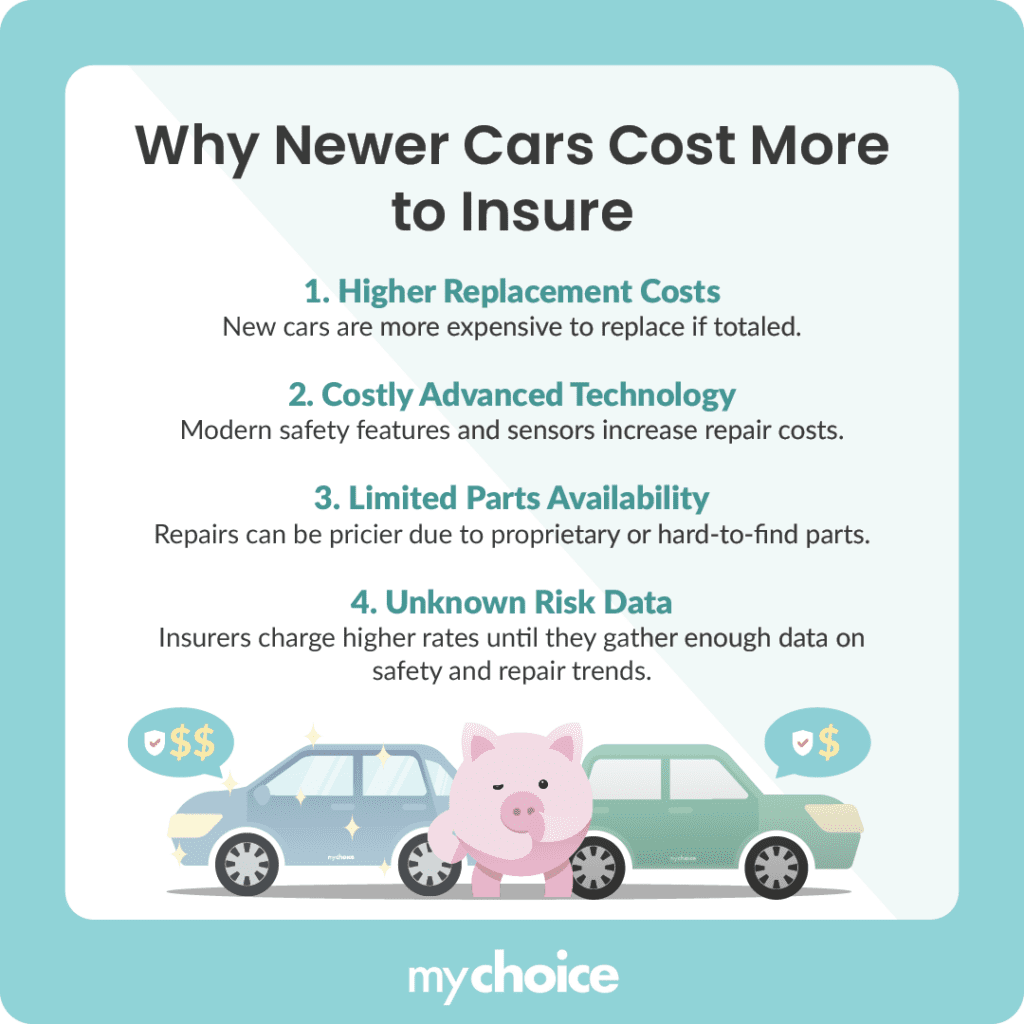
Higher replacement value:
A brand-new car is usually more expensive to replace if written off than an older car. A higher replacement value can contribute to a higher premium because the insurer may have to pay more after a total loss.
Advanced technology:
Newer cars often include electronic systems and sensors that can improve safety but are costly to fix. Insurers factor in the price of repairing or replacing these advanced parts.
Replacement parts availability:
Parts availability and repair procedures can vary by model, so get a quote for the exact vehicle instead of assuming its age tells you what it will cost to insure.
Insufficient risk profile data:
Canadian loss-rating analysis uses available model-year claims, theft, repair and safety information. Limited data does not automatically increase your premium.
Tips to Manage Insurance Costs for New Cars
If you’re buying a newer car, there are several ways to compare and manage insurance costs. Here are some tips to save on your insurance premiums:
Bundle different insurance policies:
Some insurers offer a discount when you bundle auto insurance with another policy, such as home or tenant insurance. The discount varies by insurer.
Check Safety and Anti-Theft Equipment:
Check which safety features are installed on the vehicle and ask your insurer whether an approved discount applies. Safety technology can affect claims and repair costs in different directions.
Keep a clean driving record:
Driving and claims history can affect a quote, but the result also depends on vehicle, location, use, coverage, deductibles and filing rules.
Adjust your deductible:
Choosing a higher deductible can lower your insurance premiums. However, you should have enough savings to cover that deductible in case you need to file a claim.
Read More: How Car Insurance Deductibles Work
How to Compare a Newer and Older Vehicle Before You Buy
Ask for quotes using each vehicle’s exact VIN, trim and model year. Keep the drivers, garaging address, annual use, liability limit, accident benefits, physical-damage coverage, endorsements and deductibles the same. This isolates the vehicle difference as closely as a consumer quote allows.
Then compare the full annual premium, not only Collision or Comprehensive. Check whether financing or leasing requires physical-damage coverage, whether a depreciation-removal endorsement is available and affordable, and how much you could pay through deductibles after a claim. A newer vehicle is the better insurance choice only if the exact quote and protection fit your budget.
Read More: See How the OPCF 43 Endorsement Works