









Collision coverage can help pay to repair or replace your vehicle after an at-fault accident, but it isn’t always worth keeping on an older car. As your vehicle loses its value over time, you might need to reconsider whether collision coverage is still worth its separate premium and deductible.
To prepare this article, our team reviewed FSRA’s optional and extra auto-coverage guidance to confirm that collision is optional in Ontario, the Ontario Automobile Policy to check how an insured loss is settled, and FSRA’s rating-factor guidance to separate the collision premium from the total policy price.
Keep reading to learn how to compare your car’s likely claim value with the deductible and premium, when financing changes the decision and what protection remains if you remove collision.
Do You Need Collision Coverage on an Older Car?
Collision coverage on an older car is worth keeping when the vehicle’s likely claim value after the deductible, and your need for a replacement vehicle, justify the separate premium. Consider removing it only if no lender or lessor requires it and you can comfortably fund repairs or replacement yourself, because vehicle age alone is not a cutoff.
For example, if a vehicle’s estimated actual cash value is $4,000 and the collision deductible is $1,000, the maximum vehicle payment may be about $3,000 before any applicable deductions or policy adjustments. Compare that potential loss with the annual collision premium and the amount you could afford to replace on short notice.
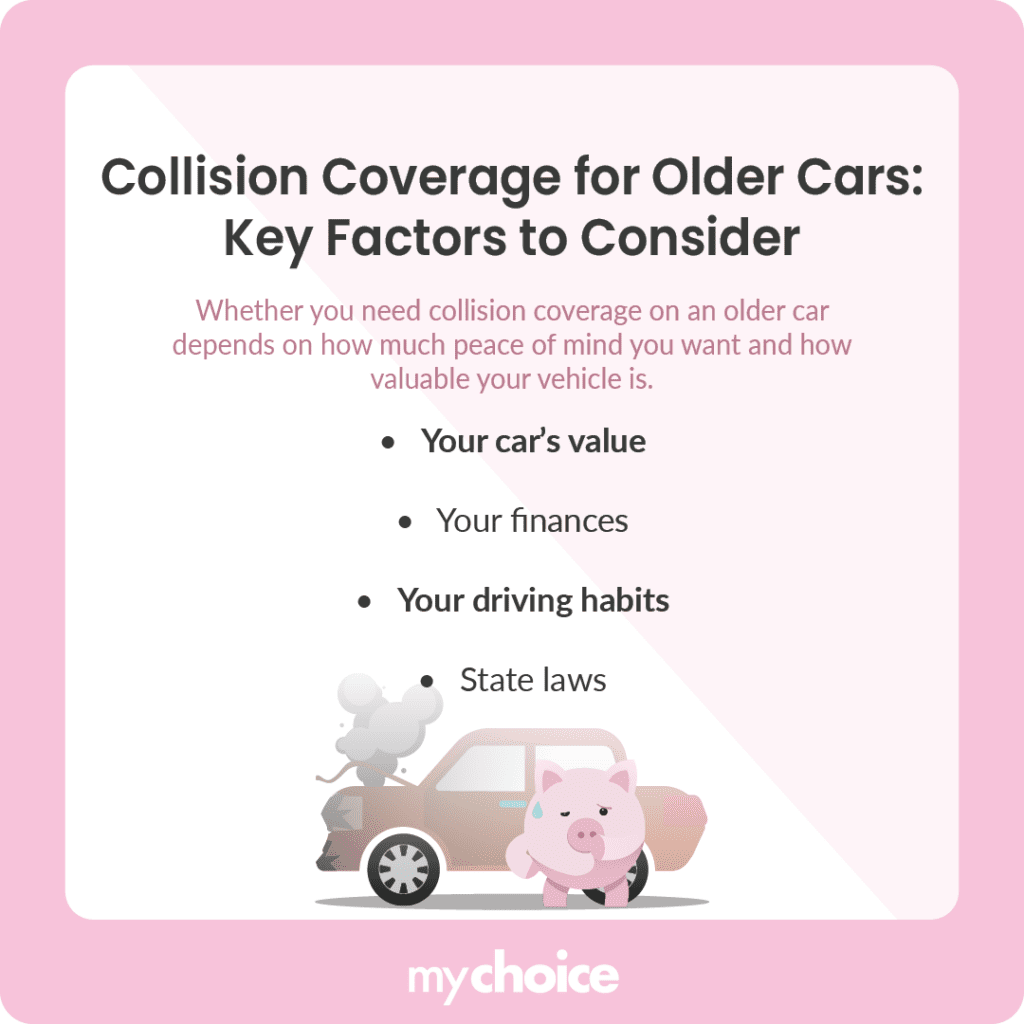
You can make an informed decision about collision coverage for your older vehicle by considering these factors:
When to Stop Collision Coverage
While collision coverage can give you peace of mind, especially if you live in an accident-prone area, dropping it sometimes makes more sense than maintaining it. Besides your vehicle being low-value, other instances in which you might consider dropping collision coverage include the following:
Read More: When Should I Get Full Coverage Car Insurance?
How to Calculate Your Car’s Value
So, you’re torn between keeping your collision coverage and dropping it, which involves calculating your vehicle’s value. Where do you start?
You can use an online valuation tool to get an estimate on older or certified pre-owned vehicles. These resources allow you to find your vehicle’s make and model and get a quote, but they may not be the most accurate way to value your car.
Another option is consulting your local dealership. If you’re still in touch with the dealership that sold you the car, you can ask them to value your vehicle based on a physical inspection and against current market conditions. It’s best to provide as much information about your car, such as its repair history and maintenance reports.
When you get your vehicle valued, here is the information that can be helpful:
- The car’s make and model
- The car’s mileage
- The overall condition of the car, including its exterior, interior, and mechanical components
- Additional features like leather seats, a sunroof, a navigation system, or a sound system
Alternatives to Collision Coverage
Consider these alternatives if you’re dropping collision coverage on your old car.
Keep Your Mandatory Protection
Ontario’s mandatory policy package includes more than third-party liability. Removing collision doesn’t remove mandatory accident-benefit and uninsured-automobile protection; check the certificate for the exact remaining coverage.
Consider Comprehensive Coverage
Comprehensive coverage protects you against theft, vandalism, natural disasters, and other accidents not caused by a collision. It can provide ample protection against unexpected losses, but it may not be necessary if you have a low-value car.
Self-Insure if You Can Afford the Risk
Setting aside replacement funds can help absorb damage to the owner’s vehicle, but it doesn’t replace legally required auto coverage or satisfy a lender’s physical-damage requirement.
Consider Classic Car Insurance
For a collectible vehicle, get a specialist valuation and written eligibility terms before assuming a classic-vehicle policy is available or suitable.
A collector policy follows its own wording for covered perils, valuation, use restrictions, repairs and deductibles. It does not automatically finance restoration.
Ask for the current eligibility definition, permitted annual use, storage conditions, driver rules and valuation method in writing.
Review Your Deductible
Request written quotes at each available deductible and compare the future annual premium with the resulting out-of-pocket exposure.
A higher deductible generally lowers the premium, but it must remain affordable after a loss. Any renewal effect after a claim depends on the driver, claim and insurer’s approved rules.
Read More: How Car Insurance Deductibles Work