









Comprehensive auto insurance helps pay for damage to your vehicle from a range of events that aren’t collisions. Whether your claim is covered depends on the cause of the damage, the deductible, and exclusions. Our team reviewed FSRA’s guide to optional auto insurance coverages and FSRA’s guide to auto insurance rating factors, then made recommendations based on these resources and Ontario’s Automobile Policy (OAP 1) and FSRA’s tips for saving on auto insurance.
What Exactly Does Comprehensive Auto Coverage In Ontario Include?
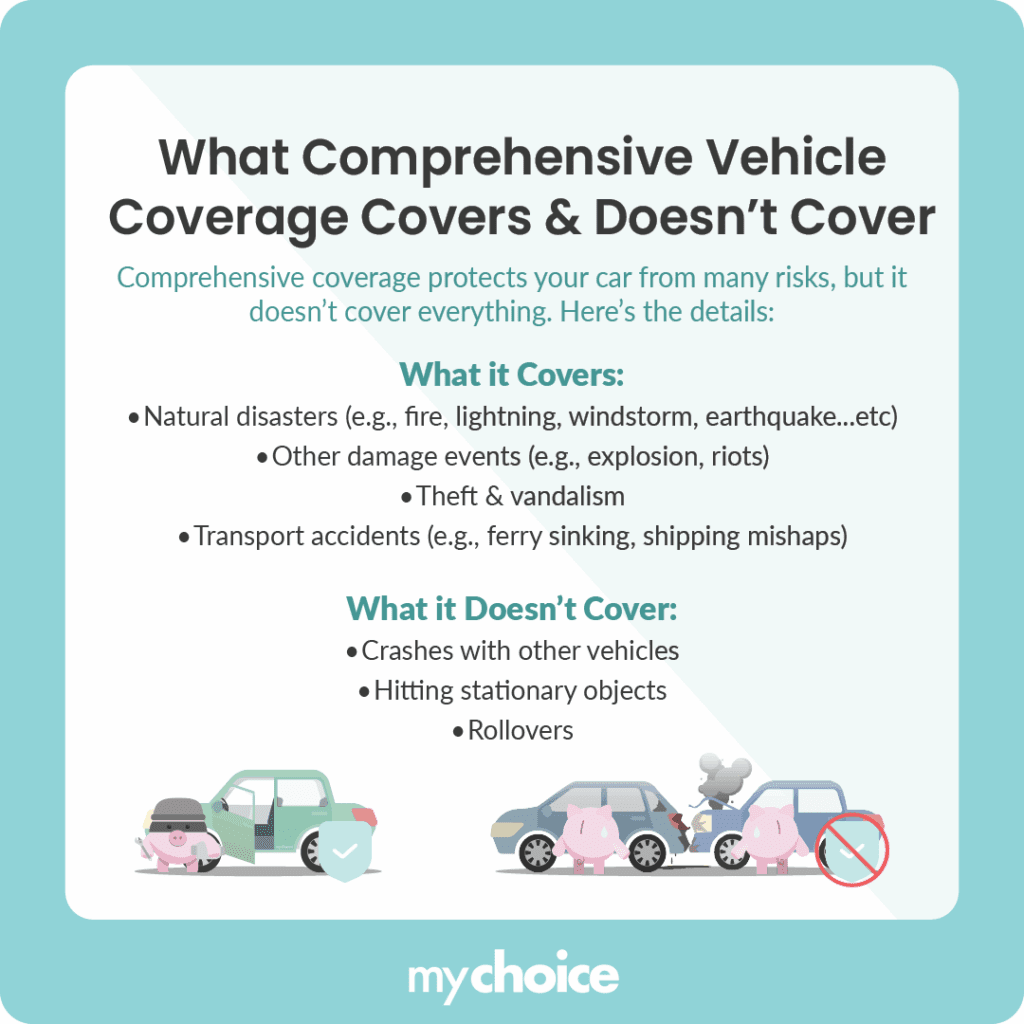
Comprehensive insurance is optional in Ontario. It can pay for sudden, accidental loss of or damage to your vehicle, except for collision or upset. FSRA lists some perils, including fire, theft or attempted theft; lightning, windstorm, hail, rising water, earthquake; explosion, riot, civil disturbance, falling or flying objects, and vandalism.
Deductibles and exclusions may apply.
| Incident | How it is generally treated |
|---|---|
| Theft or attempted theft | May fall under comprehensive or specified perils |
| Fire, lightning, windstorm or hail | May fall under comprehensive or specified perils |
| Rising water, earthquake, explosion or riot | May fall under comprehensive or specified perils |
| Falling tree, flying debris or vandalism | May fall under comprehensive |
| Collision with another vehicle or object | Not comprehensive; collision or another property-damage coverage may respond |
| Vehicle rolls over | Not comprehensive; collision or upset coverage may respond |
| Personal belongings stolen from the vehicle | Not covered as damage to the vehicle under comprehensive; another policy or coverage may apply |
| Household member steals the vehicle | The standard comprehensive wording excludes this; all perils may provide broader protection |
Does Comprehensive Insurance Cover Windshield Damage?
OAP 1 includes an example of a comprehensive claim involving a broken windscreen caused by a fallen tree. If the policy has a $500 deductible, the policyholder must pay the first $500 of the loss. If the loss is less than $500, the policyholder must pay it in full.
Read More: Factors That Affect Windshield Replacement Costs
How Much Does Comprehensive Coverage Cost In Ontario?
There is no single reliable price for comprehensive coverage across Ontario. The cost varies by vehicle, insurer, location, claims history, deductible, and other rating factors.
Get quotes with comprehensive coverage and quotes without it. Get quotes for several deductible amounts. This will help you learn the true cost of comprehensive for your car. Then decide whether the difference in premium is worth what you would receive after the deductible is subtracted if your car was stolen or destroyed.
Read More: Car Insurance Premium Breakdown in Ontario
How Comprehensive Fits Into The Full Ontario Premium
Comprehensive costs $196.76 (8.4% of an Ontario premium), Collision costs $266.26 (11.4% of an Ontario premium), and Direct Compensation Property Damage costs $623.97 (26.6% of an Ontario premium), assuming an Ontario premium of $2,345/year. MyChoice analyzed 50,000 auto insurance quotes collected on our platform since the start of 2026.
Comprehensive Vs. Collision Vs. Specified Perils: Know Your Options
| Coverage | What it covers | Key limit |
|---|---|---|
| Specified perils | Only the causes named in the policy, such as fire, theft, hail or rising water | Payment will not be made for a cause not specifically listed. |
| Comprehensive | Non-collision losses, including specified perils, falling or flying objects and vandalism | Damage or loss caused by collision or upset is not included in this coverage. |
| Collision or upset | Collision with another vehicle or object, or a rollover | A separate deductible may apply |
| All perils | Combines collision and comprehensive and can extend theft protection in certain household or employee situations | Exclusions still apply. |
Read More: Compare Collision and Comprehensive Car Insurance
How A Comprehensive Claim Is Calculated
For a repairable covered loss, the insurer generally pays the eligible repair cost above the policy deductible. For example, $2,400 in covered repairs with a $500 deductible leaves a potential insurer payment of $1,900.
The remaining balance on your loan for a vehicle is not used to determine the value of the vehicle. Unless specified in an endorsement to your policy, settlement amounts are generally based upon the actual cash value of the vehicle immediately before the loss, less your applicable deductible.
Read More: See How Car Insurance Deductibles Work
Common Comprehensive Car Insurance Mistakes Ontario Drivers Make
- Damage resulting from a collision or upset/overturn requires separate coverage.
- In case of theft or other damage, policyholders count on their insurance to replace laptops, tools and other belongings. Determine exactly which insurance covers items in your vehicle.
- Choosing a deductible that’s close to the price of a typical glass repair or close to the value of their car.
- Dropping coverage on a leased or financed car without checking the loan or lease agreement.
When Comprehensive Coverage Is Critical
Comprehensive coverage can be helpful if losing your vehicle would create financial difficulty. Comprehensive auto insurance covers theft, fire, severe weather, and other forms of vehicle loss that don’t result from collisions. Although Ontario law doesn’t require it, a lender or lessor may require comprehensive coverage.
The maximum amount you’d be paid is the car’s value before the loss, minus your deductible. Compare that figure to the cost of insuring the car for a year. FSRA gives an example that it might not be worthwhile to get optional collision or comprehensive insurance on cars worth less than $2,000 because your payout might not be much more than your deductible.
Read More: Learn When Full-Coverage Car Insurance May Make Sense