








What Are the Consequences of Lapses in Your Car Insurance History?

3 minutes can save you hundreds. Enter your postal code below and join thousands of Canadians saving on car insurance.

Secure. No Spam. No Fees.

Why Use MyChoice

MyChoice.ca is an independent platform that helps Canadians find their best insurance options and make informed financial decisions. Our service is free to use. We may earn a commission from some providers when you buy a policy, but it never affects the price you pay or how products are reviewed. To help ensure accuracy, our content is researched and reviewed by licensed insurance professionals before publication.

First published on February 13, 2025

3 minute read

Updated By Vitalii Starov on August 24, 2026

MyChoice follows a strict content review process designed to ensure reliable and unbiased information.

A lapse in car insurance coverage can happen for various reasons like missing a payment, selling your vehicle, or cancelling your policy. Not every coverage lapse has the same consequences, but some can affect your insurance rates or even your ability to drive legally later.

For this guide, we reviewed Ontario Regulation 664 to check when a coverage lapse may affect classification, the Compulsory Automobile Insurance Act to confirm the rules for operating an uninsured vehicle, and FSRA’s guidance on working with an insurer, agent or broker to explain how to request a written reason for an underwriting decision.

Keep reading to learn how different lapse reasons are treated, what records to keep, what can happen after non-payment or uninsured driving and how to restore coverage safely.

Read More: How to Resolve a Missed Car Insurance Payment

Why Insurers Care About Lapses in Coverage

A period without insurance while you do not own or drive a vehicle is different from cancellation for non-payment or driving uninsured. A payment lapse may affect eligibility or pricing under permitted rules, while uninsured driving can lead to legal penalties. You should document why the gap occurred and do not drive until replacement coverage gets active.

There are three different situations: a person sells a car and does not drive, a policy is cancelled for non-payment, or a person operates an uninsured vehicle. Ontario Regulation 664 and the Compulsory Automobile Insurance Act apply differently to each one.

Ontario Regulation 664 sets out when lapse circumstances may be used. A gap is not evidence that someone is irresponsible or financially unstable.

A gap may reflect selling a vehicle, travel or another lawful reason. Therefore, if a lapse affects your application, ask for the insurer’s written classification basis instead of assuming unreliability. Also, a gap itself does not show how likely someone is to make a future claim, so don’t forget to record the reason.

Cancellation for non-payment is one specific situation and should not be conflated with every period without coverage.

The legal obligation isn’t to operate an uninsured automobile. A person who doesn’t own or drive a vehicle is a separate situation.

The Underwriting Process and Lapses in Coverage

Insurers use their approved underwriting rules and the records relevant to your application, because Ontario Regulation 664 limits the use of ordinary coverage lapses.

Ask whether a listed regulatory exception applies and request the reason in writing if coverage is declined, restricted or priced differently.

Read More: How to Get Car Insurance After Cancellation in Ontario

What Are the Consequences of Lapses in Your Car Insurance History?

An ordinary period without driving, a cancellation for non-payment and unlawful uninsured driving can lead to different outcomes.
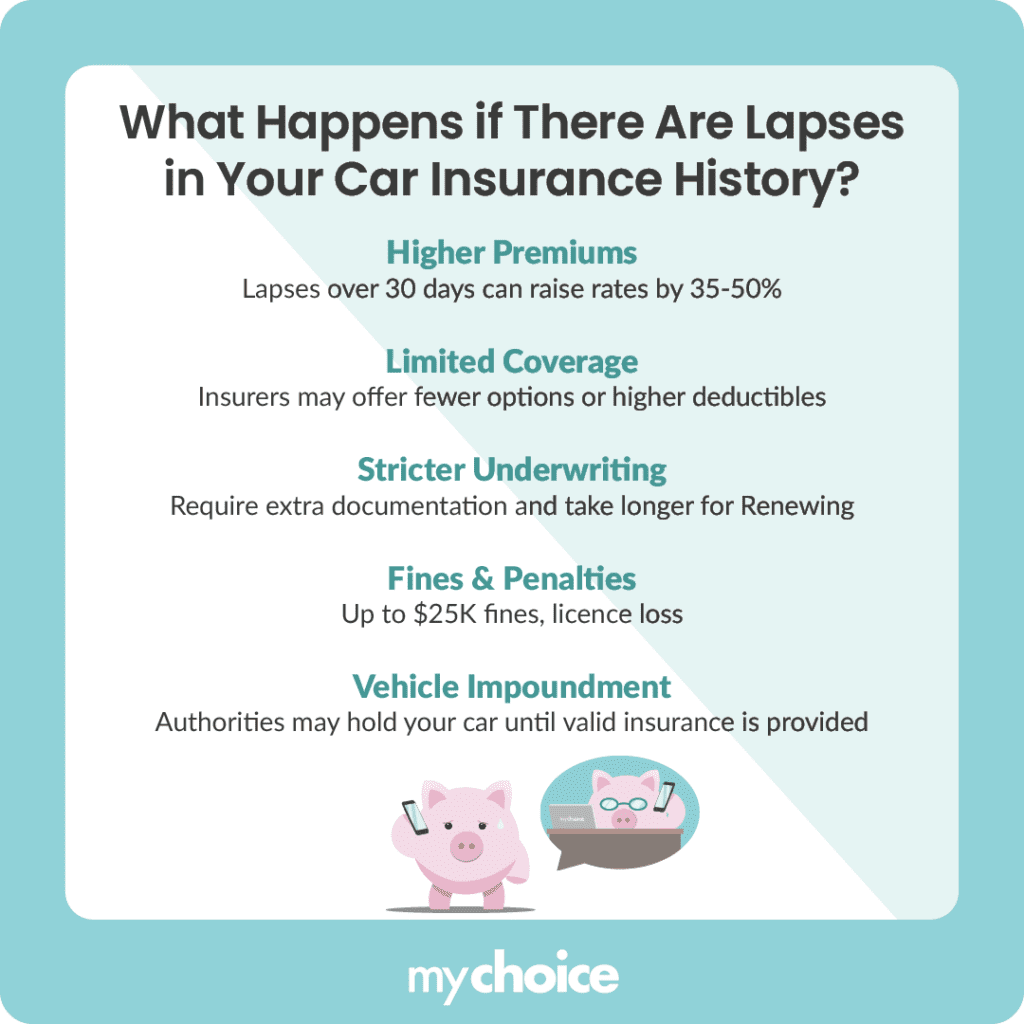
Higher Premiums

The effect of your rate increase depends on the permitted classification rule, driver, vehicle, coverage and insurer filing. On average, your premiums can go up to 20% after a policy lapse in Ontario, according ot our internal quote data.

Record the cancellation reason and compare quotes with the same coverage, deductibles and limits. Non-payment may affect eligibility or price, but there is no standard for the increase amount.

Insurance rates and penalties for lapses may also vary across provinces.

Limited Coverage Options

If coverage is declined or restricted, ask for the written reason and the rule or record relied on, because option availability depends on the actual circumstances.

Stricter Underwriting Process

An insurer may request documents related to the lapse. Keep prior certificates, cancellation notices, payment records, and a brief explanation of what happened. You don’t need to assume every application will be delayed.

Fines and Penalties

Do not drive until coverage is active. In Ontario, the Compulsory Automobile Insurance Act sets the offence and court penalty. The insurer does not charge that fine.

Licence consequences depend on the province, offence and the court’s decision.

Vehicle Impoundment

An inactive policy record is different from an uninsured-driving enforcement event. Seizure, towing and release rules depend on the province and local process.

Read More: How to get Your Car out of Impound

Consequences of Car Insurance Lapses

How to Keep Your Insurance History from Lapsing

Keeping your insurance history updated is vital to avoiding legal and financial consequences. Here’s what you can do to keep your insurance history from lapsing.

Set Reminders or Automate Payments

Setting reminders is the simplest way to ensure your insurance is paid on time. If you’re renewing your policy, remind yourself to review it before it expires to review your options and make the necessary updates. Use a physical calendar or set alarms on your smartphone. 

Alternatively, you can arrange automated payments with your insurer. If your payment method changes, update your details.

Communicate with Your Insurer

Financial difficulties may be inevitable. If you think you might miss a payment, contact your insurer before it is due to see if they offer flexible payment plans or find another temporary solution.

Maintain Proof of Coverage

If you’re switching insurers or need to temporarily stop your insurance, maintain proof of coverage so your provider knows your insurance status. Document any moves so your insurer can send renewal notifications to the correct address.

Have a Backup Plan

Contact the insurer before the payment date, ask about approved payment options, and get the effective date and terms of any replacement coverage in writing.

If you need temporary coverage, confirm if the product is available, and check an approved policy’s exact effective date, expiry, eligibility and coverage before driving.

Read More: How to Switch Car Insurance Companies in Ontario

With over a decade in Canada’s insurance sector, Aren is a leading voice in the industry, providing thought leadership on auto insurance, underwriting innovation, and how technology is reshaping insurance.

Congratulations! You made it to the end!

Now, here is the easy part: complete your quote in under 2 minutes

Discover More About

September 3, 2026
Learn how vintage and classic car insurance work in Ontario, what coverage you may need, how collector cars are valued, and ways to protect your vehicle.
August 21, 2026
Someone damaged your car? Find out when insurance covers vandalism, whether it’s worth filing a claim, and what you could pay yourself.
August 11, 2026
Learn how adding a teen driver to your Ontario car insurance policy affects your premium, what it costs, and ways to keep insurance affordable.

Even More Ways To Save on Insurance