









When financing a vehicle, drivers may be required by the financing institution to add OPCF 23A or OPCF 23B to their auto insurance policy. While these Ontario Policy Change Forms might seem like minor additions, they play an important role in protecting the financing company in case of a claim.
What do OPCF 23A and OPCF 23B do? Are these endorsements required when financing a vehicle? Read on to learn about the specifics of OPCF 23A/23B and why they matter when financing your vehicle.
How OPCF 23A/23B Works
- OPCF 23A and OPCF 23B are endorsements designed to protect the lienholder’s financial interest in a financed vehicle.
- While OPCF 23A and OPCF 23B perform similar functions, they have some key differences.
- Many financing companies require you to add OPCF 23A or OPCF 23B to your auto insurance policy as part of the loan agreement.
Why Lienholder Protection Matters
When you finance a vehicle, the financial institution providing the loan is known as the lienholder. The lender has a financial interest in the vehicle until the loan is repaid, so damage to the vehicle can affect that interest.
OPCF 23A and OPCF 23B protect the lienholder in certain covered claims. They do not provide gap insurance or change the terms of the financing agreement.
OPCF 23A: More Than Just a Finance Requirement
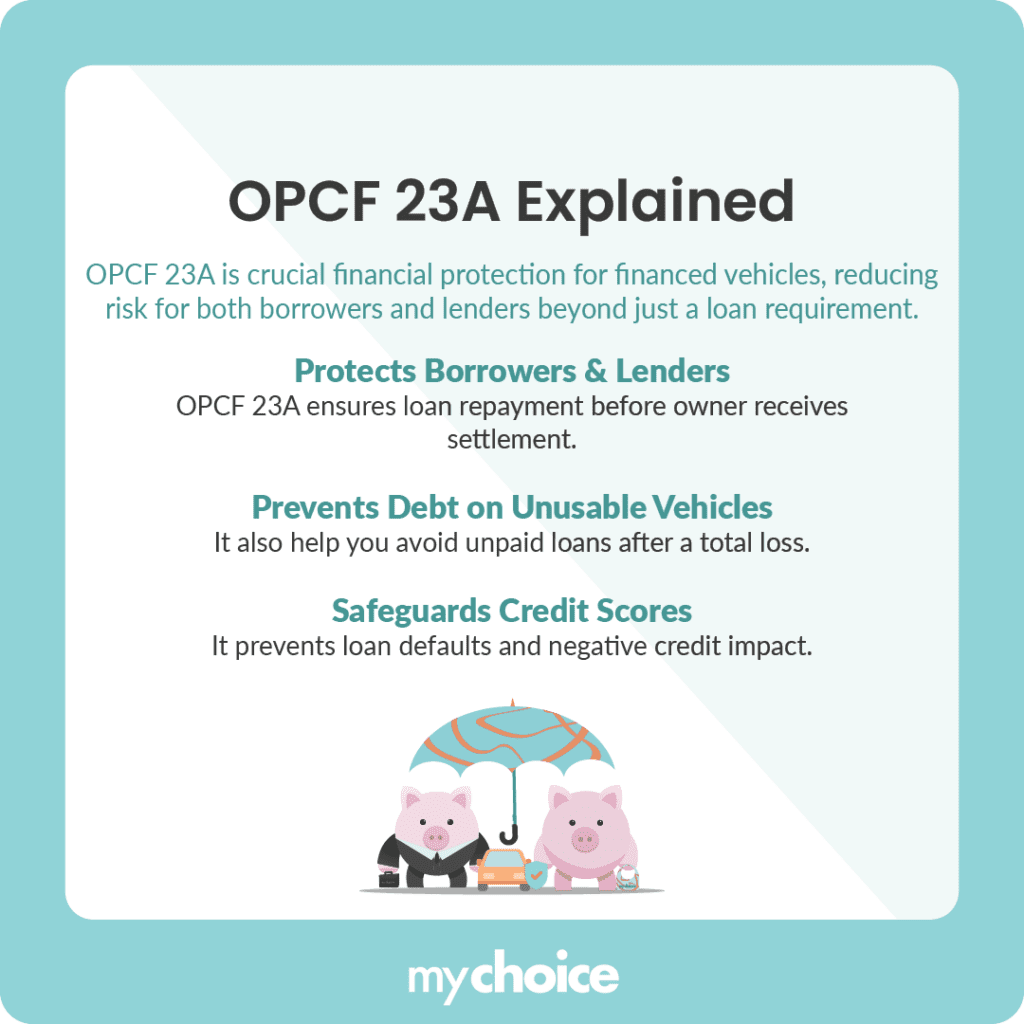
Many vehicle owners misunderstand OPCF 23A as just another checkbox lenders require on the loan agreement. However, it protects the lender’s interest in certain insurance payments.
If a covered claim is settled without the vehicle or damaged parts being repaired or replaced, payment may be made jointly to the insured and lienholder. The settlement is still subject to the policy terms, deductible and settlement value.
What Happens When You Skip OPCF 23A?
If OPCF 23A is required under your financing agreement, failing to maintain it may breach that agreement. The consequences will depend on the terms of the loan.
OPCF 23B vs. OPCF 23A: Key Differences
OPCF 23B provides the lienholder with additional protection. It may protect the lienholder’s interest against invalidation due to certain breaches of statutory conditions, exclusions, misrepresentations or fraud by the insured.
Under OPCF 23B, the lienholder also agrees to certain obligations. These can include paying outstanding premiums when requested and notifying the insurer of certain changes or breaches of policy conditions.
OPCF 23A addresses the distribution of certain insurance payments following vehicle loss or damage. If the vehicle or damaged parts are not repaired or replaced, payment may be made jointly to the insured and lienholder. OPCF 23A also requires the insurer to provide the lienholder with certain notices about the policy.
Depending on the financing agreement, you may be required to add either OPCF 23A or OPCF 23B to your auto insurance policy.
How OPCF 23A Interacts With Other Coverages
OPCF 23A works alongside vehicle insurance coverages such as comprehensive and collision. It modifies how certain payments are made and requires notices to the lienholder about specified policy changes.
OPCF 23A does not replace gap insurance. Gap insurance may cover some or all of the difference between the vehicle’s insured value and the outstanding loan after a total loss.