









If someone breaks into your car and steals your belongings, a single insurance policy may not be enough to cover everything. Damage to the vehicle and theft of personal belongings can fall under different policies, with separate deductibles and proof requirements.
For this guide, we reviewed the Financial Consumer Agency of Canada’s home and tenant insurance guidance to confirm that eligible personal property stolen from a vehicle may fall under a property policy, FSRA’s optional physical-damage coverage guide, and the 2026 Ontario Automobile Policy.
Keep reading to see how the policy covers each part of the loss, protect the scene, document the claim and avoid assuming that one policy covers everything.
Does Car Insurance Cover Theft of Personal Items?
Auto insurance usually covers insured damage to the car, not an ordinary phone, laptop, bag or other personal property stolen from inside it. Items that are part of the vehicle may be covered differently from personal belongings you leave inside it. You might get coverage for personal items through your home or tenant insurance even if the theft occurs away from your home, which can mean a separate claim and deductible.
Read More: Learn How Contents Insurance Protects Your Belongings
What’s Covered by Your Auto Insurance Policy?
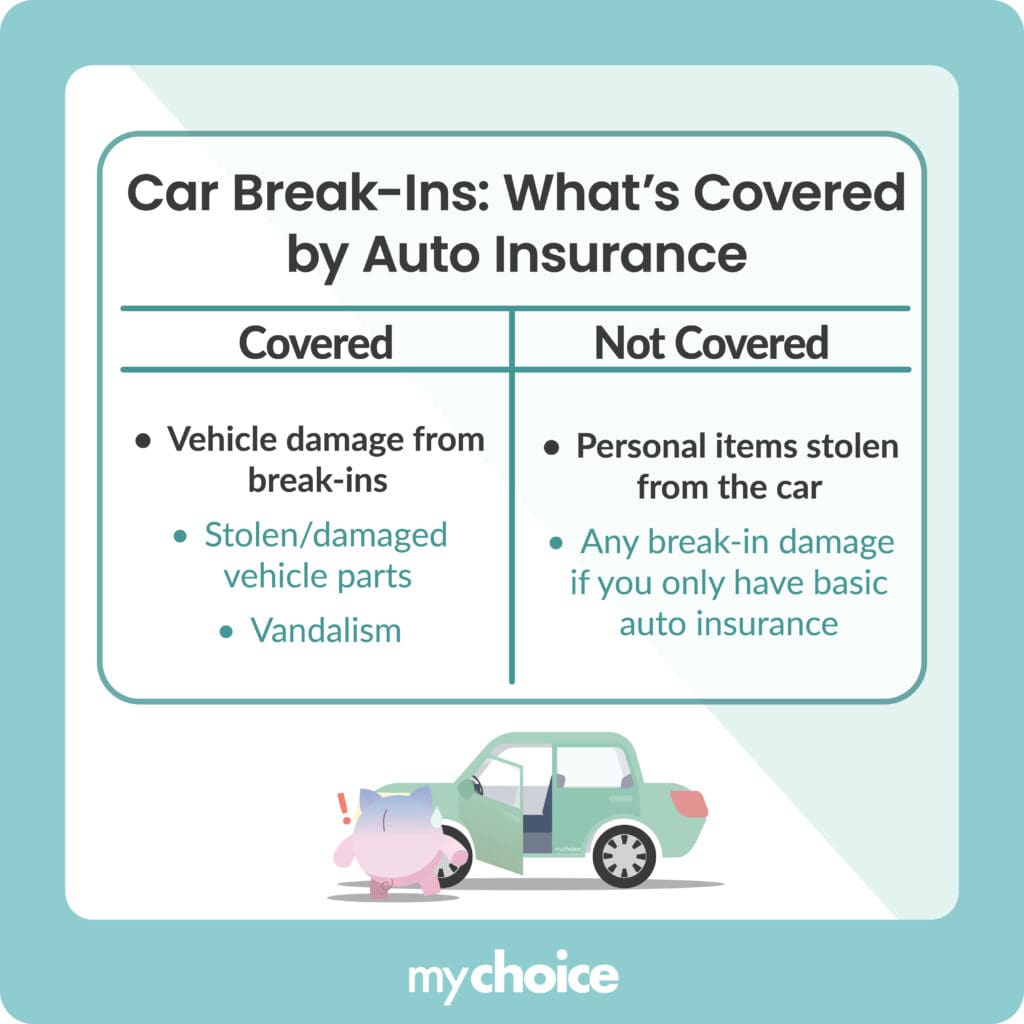
Depending on your policy, Comprehensive, Specified Perils or All Perils coverage may cover damage to the vehicle or certain attached equipment after a break-in. You might need to pay a deductible, and there might be policy exclusions. Examples can include:
- Damage from forced entry, such as broken windows, smashed windshields, or pried-open doors
- Stolen or damaged vehicle parts, such as stereo systems, wheels, rims, or converters
- Vandalism, such as slashed tires or graffiti on the car. Learn how to stay protected from vandalism
- Damage from attempted theft, such as a broken ignition, missing keys, or any physical harm
The coverage that applies can depend on your policy, province and how the damage occurred. Even broken glass won’t be handled under one label.
Read More: See How Comprehensive Car Insurance Works in Ontario
What’s Covered by Your Home Insurance Policy?
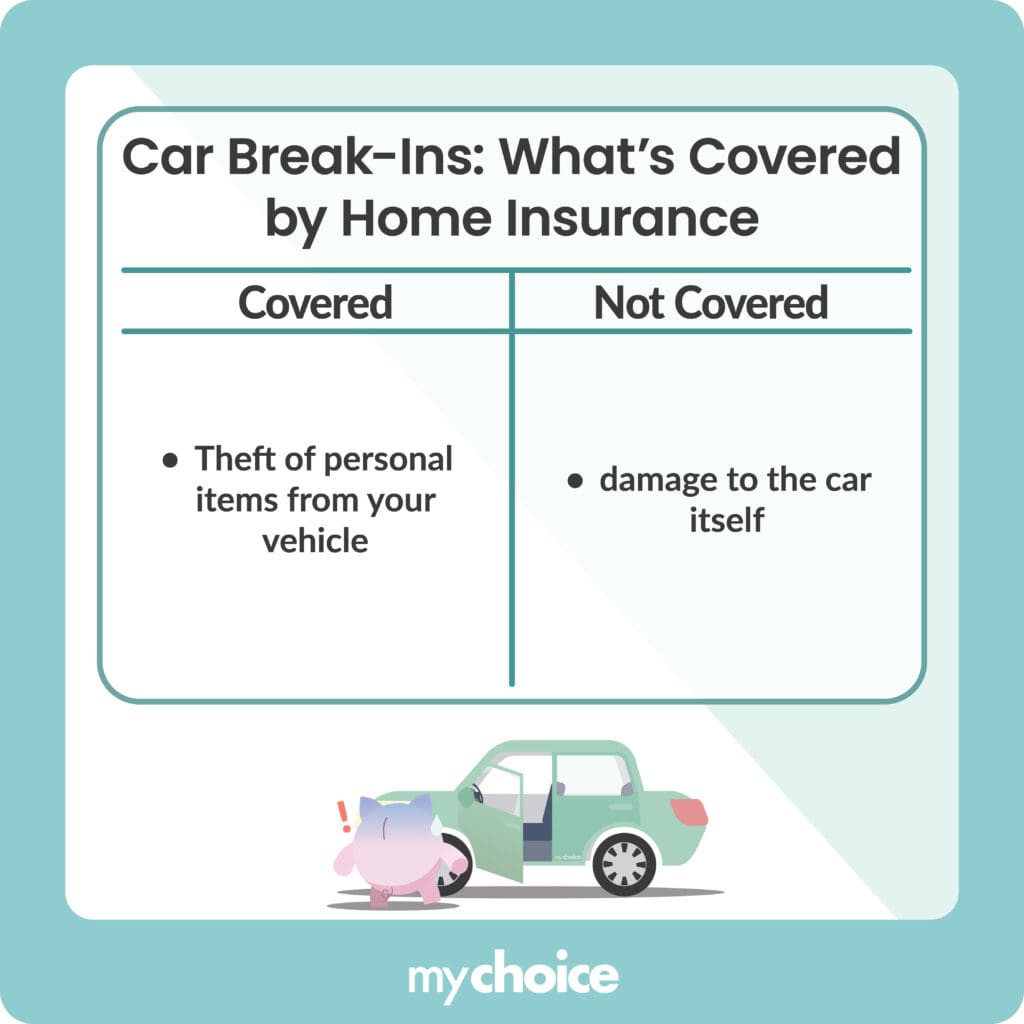
Home, condo or tenant insurance may cover belongings stolen from your vehicle, even when the theft happens away from home. Your deductible, coverage limits and policy terms still apply.
However, claims for these items are subject to specific conditions, such as:
- Your deductible: If the stolen goods aren’t worth much more than your deductible, you may get little to nothing from a claim.
- Coverage limits and exclusions: Jewelry, business property, cash and someone else’s belongings might have limitations.
- Proof of loss: As with any insurance claim, you must present documentation of the stolen items through receipts, photos, and serial numbers.
Home, condo or tenant insurance generally doesn’t cover damage to the vehicle itself.
Quick Coverage Map
Use this map to separate the evidence and policy route for each part of the loss.
- Vehicle damage: Photograph it safely, preserve the scene, obtain the police occurrence number and ask the auto insurer which optional coverage and deductible apply before non-emergency repairs.
- Personal belongings: Store the receipts, serial numbers and photos, then check the property policy’s off-premises limit and deductible before filing separately.
- Attached or modified equipment: Gather purchase and installation records and confirm whether the equipment was declared and subject to a special limit.
- High-value and restricted property: Check exclusions and sublimits, notify the owner of business property, and preserve separate proof of value.
What to Do Immediately After a Break-In
Always put your safety first and avoid disturbing the vehicle until you know it’s safe to document the damage. Then work through these steps:
- Step 1: If anyone is in danger or the break-in is in progress, call 911. Otherwise, move to a safe place and follow the local police service’s non-emergency reporting instructions.
- Step 2: Avoid touching or cleaning the vehicle until you’ve followed the local police service’s reporting instructions. Photograph the damage and surroundings only when it is safe, and note the time and location.
- Step 3: List missing items, approximate values, serial numbers and proof of ownership. Cancel stolen payment cards and report missing identity documents to the issuing authorities.
- Step 4: Notify the auto insurer about vehicle damage and the home, condominium or tenant insurer about belongings that may be covered. Provide the police occurrence number and any documentation each insurer requests. Ask before making non-emergency repairs.
Tips for Filing a Claim After a Break-In
A break-in may involve an auto claim for vehicle damage and a property claim for belongings. The following steps help keep the evidence and two coverage decisions organized.
Notify Both Insurers
You may need separate auto and property claims for the same break-in. Even if both policies are issued by the same insurer, ask each claims department how the losses will be handled before authorizing non-emergency repairs.
Prepare Documentation
Provide the police occurrence number, photos of damage and proof of ownership such as receipts, serial numbers or account records. Keep originals and a dated list of everything submitted.
Be Detailed and Honest
When submitting your claim, list all the stolen items and damage, no matter how minor. Don’t exaggerate the loss, and make sure the information you provide is consistent with your documentation.
Alternative Compensation Options You Might Not Know
Before making another claim, compare the value of the stolen item with your property-insurance deductible and coverage limits. Any credit card insurance, employer or separate policy has its own certificate and coordination rules.
For a recent purchase, check whether your credit card offers purchase protection. Then review the reporting deadline, required documents, coverage limits and whether other insurance must be used first.
When a Claim May Not Be Economical
Compare the value of the loss with your deductible and ask how a claim could affect your future coverage or premium. Cost isn’t the only consideration. Your policy may require you to report the loss within a certain period, and vehicle damage can get worse if it isn’t repaired. Ask for the reporting deadline and coverage position in writing.
For employer-owned or business property, notify the owner and both relevant insurers. Coverage depends on who owns the item and the terms of the policies involved. Don’t make multiple claims for the same loss.
How to Prevent Future Break-Ins
These steps can help reduce the risk of another break-in:
- Locking your doors and windows every time you park
- Keeping items out of view or removing them from the car entirely, especially those listing personal information
- Park in secure, well-lit areas with high visibility
- Use a vehicle- and threat-appropriate deterrent or recovery system. Before choosing a device, check how it works, whether it requires professional installation or a subscription, and what happens if the signal is blocked or the vehicle is stolen.
- Keep spare keys or garage openers on your person, not in your car