









OPCF 47R, Optional accident benefits coverage & priority of payment, is an endorsement for your Ontario automobile insurance policy that outlines the various optional coverages you have chosen to include or decline. In this article, we’ll explain how to read OPCF 47R to ensure you understand it thoroughly when your insurer sends it for your review.
Read More: How Car Insurance Works in Ontario
OPCF 47R, Section by Section
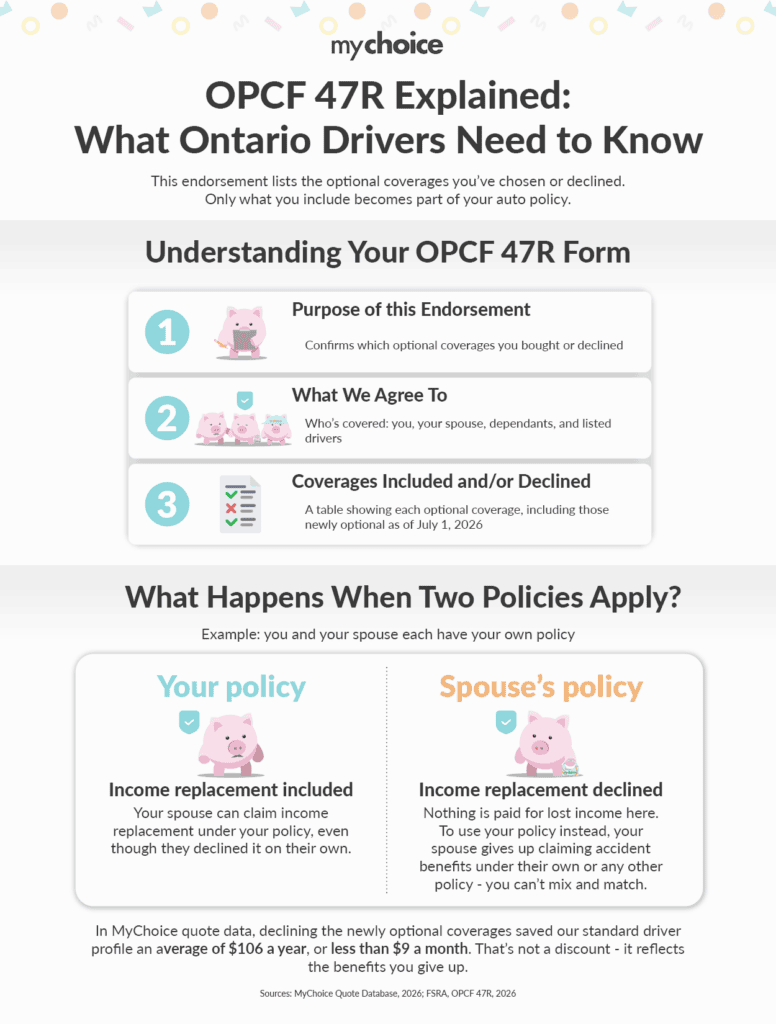
The OPCF 47R form has three sections that are summarized below. This is intended only as a guide. Contact your insurance agent or broker for advice on your specific situation.
Section 1: Purpose of this Endorsement
This statement explains that the form outlines which optional insurance coverages you have purchased or declined and that only the purchased benefits become part of your auto insurance policy.
Section 2: What We Agree To
This section outlines who is covered by the optional benefits purchased: the policyholder, their spouse, dependents of the policyholder and/or their spouse, and anyone else specified in the policy as a driver of the car(s) being insured.
Section 3: Coverages Included and/or Declined
The table in this section indicates which of the available optional coverages you have purchased or declined. Some of these benefits are newly optional due to the changes to Ontario auto insurance that came into effect on July 1, 2026. For any coverage listed on the form as declined, no benefit will be paid out as part of an auto insurance claim under your policy.
Which Boxes Should Be Checked on the OPCF 47R Form?
Each coverage type on the OPCF 47R form has two checkboxes: “Coverage included in the policy,” and “Coverage declined by the policyholder.” For each coverage type you want access to when filing an auto insurance claim, the “included” box should be checked. For any coverage you have opted to turn down, the “declined” box should be checked.
The decision of which coverages to select or decline on the OPCF 47R form depends on your specific circumstances. MyChoice.ca has compiled a detailed rundown of each of the benefits listed on the OPCF 47R form and how to decide how much coverage you’ll require if you need to make a claim.
How Does OPCF 47R Work When Two Policies Apply?
OPCF 47R requires the insurer not to rely on the normal priority of payment rules set out in Ontario’s Insurance Act and obligates the insurer to provide the selected optional benefits to the listed eligible claimants (as outlined in Section 2 above) regardless of any other policy involved.
For example, you select the income replacement benefit for your auto insurance policy and your spouse declines it for theirs. Your spouse is involved in a motor vehicle crash in their own vehicle and is unable to work during recovery. In this case, your spouse would be able to proceed with the claim under your policy and receive this benefit, provided they forego the right to submit a claim under their own or any other policy.
Note this means policies cannot be mixed and matched. If one policy has income replacement coverage and another covers damage to personal items but not vice versa, the claimant must choose one policy for the claim and therefore would not be able to receive both benefits.
Does OPCF 47R Reduce Your Insurance Premium?
Choosing to decline the optional coverages listed on OPCF 47R may lower your insurance premium depending on your circumstances. However, it’s important to weigh lower premiums against losing access to benefits during a claim. MyChoice.ca’s internal data shows that declining the newly optional coverages saved the MyChoice standard driver profile an average of $106 per year or less than $9 per month. It’s therefore important to view this lower premium not as a discount but as savings that correlate directly with a reduction in the benefits available to you.
Does OPCF 47R replace OPCF 47?
Yes. OPCF 47R is the new version of OPCF 47. It adds the coverages that became newly optional following changes to Ontario auto insurance effective July 1, 2026.
Do I have to sign or accept OPCF 47R?
OPCF 47R does not require a signature. The insurer issues this endorsement when optional accident benefits are included in your policy.
When can I change my optional auto insurance benefits in Ontario?
You can add or remove optional benefits from your auto insurance policy any time, including between renewals, provided you and your insurer agree to this in writing. If your policy renews on or after July 1, 2026, the benefits that were formerly mandatory will continue as optional benefits unless you agree in writing to make changes.
Does OPCF 47R apply separately to each vehicle?
OPCF 47R is a policy-level endorsement, although insurers may include vehicle-specific information. Check your Certificate of Automobile Insurance to confirm how the coverage applies.