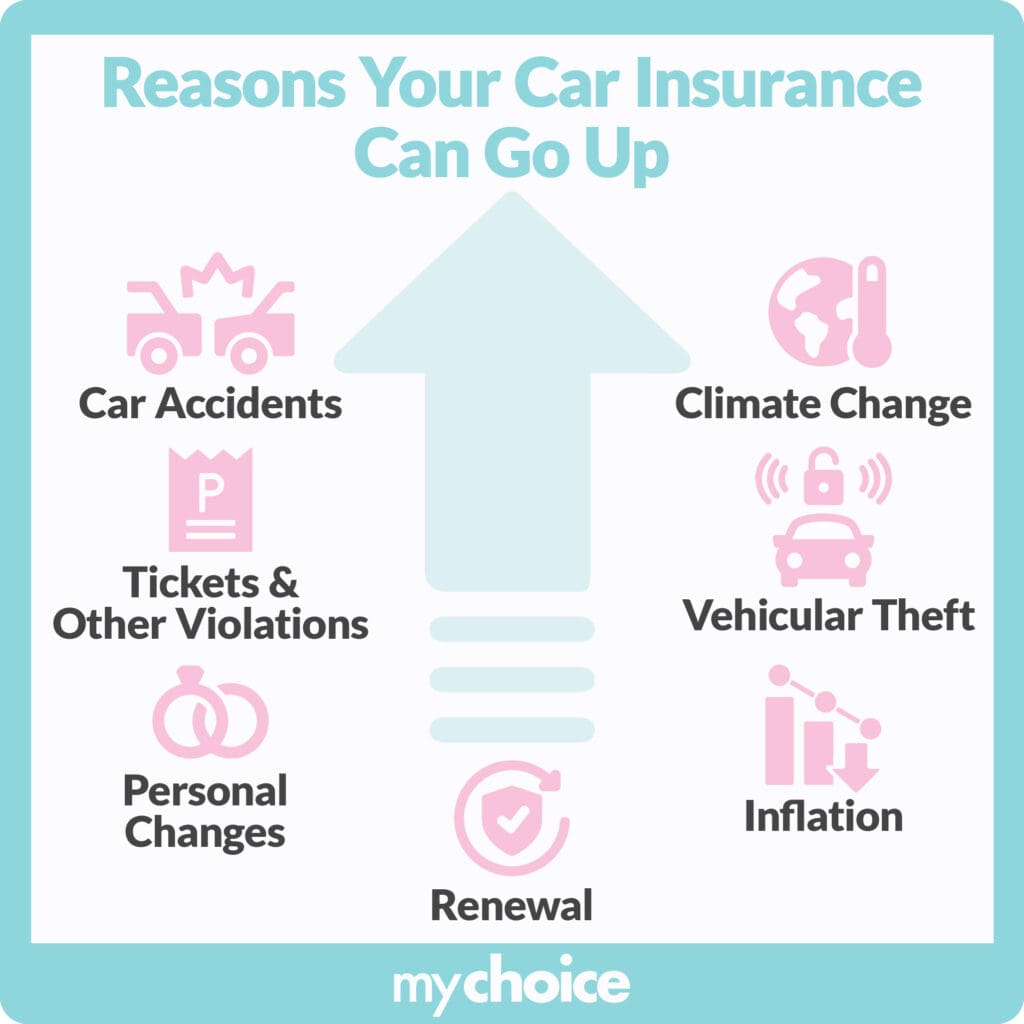








Did your car insurance increase at renewal even though you had no accidents or tickets? Your rate can still increase because of insurer-wide rate changes, rising claims costs, or changes to the information used to calculate your premium.
For this article, we reviewed FSRAβs guides to Ontario rating factors, market conditions and rate approvals, Ontarioβs credit-information rule and FSRAβs consumer savings guidance.
Keep reading to identify what changed, compare your old and new policy correctly, and decide what to do before renewal.
Can Car Insurance Go Up Without an Accident?
Your premium should not rise without a reason, but that reason may have nothing to do with a new accident or ticket. Your renewal premium can increase because of an insurer-wide rate change, higher claims costs, changes in how your location is rated or updated information on your policy.
Ontario insurers must get FSRA approval before changing the rates used to calculate premiums. An approved rate change may affect many customers or only certain groups, but an approval doesnβt affect every customer by the same amount. It really depends on your own circumstances, such as receiving a conviction, moving, or replacing a vehicle.
Read More: Benchmark Your Ontario Premium
Reasons Your Car Insurance Rate Can Increase
Tickets & Other Violations
A recent driving conviction can affect your premium because it appears on your driving record and may be considered when your insurer calculates your rate. Demerit points are a separate licensing consequence, so ask your insurer whether the rating change came from the conviction itself and how long the insurer will consider it.
Personal Changes
Moving can change your premium because insurers consider claims and insurance costs in your location when setting rates. Collision, theft and weather losses can differ by location, but a move does not always guarantee an increase. If your premium changed after a move, confirm that your new address and postal code are correct and ask how the location affected your rate.
Household and driver changes can also matter, but the effect doesnβt always offer you a discount. Adding or removing a driver, changing principal-driver status, gaining experience or changing licence class all affect your premium. Ask your insurer which change affected your rate.
Read More: Learn How an Address Change Can Affect Your Policy
Climate Change
Severe weather can affect insurance rates when storms, floods, hail or wildfires increase the number or cost of claims in an area. The effect is based on the claims insurers expect to pay, not a separate βclimate changeβ fee on an individual policy. FSRA explains how regional weather losses can affect pricing.
Vehicle Theft
Vehicle theft is strongly related to your insurance premiums, even though thefts have declined from their recent national peak. ΓquitΓ© Association reported more than 57,000 passenger-vehicle thefts in Canada in 2024, while FSRA says theft risk and claims costs can affect Ontario pricing.
Before buying, request a quote for the exact year, make and model, and ask whether an approved theft surcharge or anti-theft discount applies.
Inflation
Higher parts, labour, technology and replacement-vehicle costs can raise the expected cost of future claims. Those market costs can eventually contribute to higher insurance rates, even if your driving record hasnβt changed.
Renewal
Renewal itself isnβt a surcharge. At renewal, your insurer calculates your premium using its current rates along with your latest policy information and discounts. Compare your old and new policy documents line by line before concluding that nothing changed.
Read More: How to Effectively Manage Car Insurance Renewal
What You Can Do to Keep Your Car Insurance Rates Lower
While many factors that cause car insurance rates to rise are often out of your control, there are things you can try to keep your premium costs manageable.
Take a Driving Course
A recognized driver-training course may help a new driver qualify for an insurer-specific discount, but it does not guarantee a lower renewal for every driver. Ask whether the course is eligible and compare the quoted premium before paying for it solely for insurance savings.
Check Which Discounts or Policy Details Changed
In Ontario, check which discounts applied last term, which still apply and whether the insurer changed any address, vehicle-use, driver or annual-kilometre information. Ontario auto insurers cannot use credit information to set an auto premium. Rules differ elsewhere in Canada, so confirm the permitted factors with your provincial regulator.
Buy the Right Car
Insurance cost varies by the vehicle. Price, theft history, safety features, parts availability and repair complexity can all matter, so compare quotes before choosing between a gasoline, hybrid or electric model.
If youβre in the market for a new vehicle, consider the cheapest cars to insure.
Bundle Your Insurance Policies
Bundling home and auto policies or insuring more than one vehicle may qualify for a discount and simplify billing. Compare the combined total and coverage with separate policies. Just make sure that a bundle isnβt always the lowest-cost option.
Pay Premiums Up Front
Paying annually may avoid installment or financing charges, but there is no fixed saving. Ask for the exact total under monthly and annual payment options before choosing.
Compare Insurance Quotes
Compare renewal quotes using the same drivers, vehicle use, coverage limits, endorsements and deductibles. If one price is lower, check whether the protection or payment plan also changed before deciding.
If annual distance or vehicle use fell, update the estimated kilometres and commute details accurately and ask about low-mileage or usage-based options. Eligibility, data collection and pricing differ by insurer and province.
Pick the Best Policy
Start with the mandatory coverages in your province, then assess optional collision, comprehensive, endorsements, limits and deductibles separately. But make sure that removing collision or comprehensive coverage can leave you paying more of your own repair or replacement costs after a loss. Compare the premium you saved and the loss you can actually afford.
Read More: Review Ways to Save on Car Insurance in Ontario
A Five-Step Renewal Diagnostic
Use the lists below to separate a broad rate change from a change to your own policy and decide what to question before renewal.
- Compare the expiring and renewal declaration pages: premium by coverage, limits, deductibles, vehicle, drivers, address, use, annual kilometres and discounts.
- Ask the insurer, agent or broker to identify every changed rating input and whether an insurer-wide rate approval also applied. In Ontario, you can also check FSRAβs rate-approval database to see whether your insurer received approval for a rate change.
- Correct factual errors before renewal and request a revised premium. Keep written confirmation of address, use, drivers, kilometres, vehicle details and discounts.
- Compare quotes using the same drivers, coverage, limits and deductibles. A cheaper quote isn’t a fair comparison if it provides less protection.
- If the issue isn’t resolved, follow the insurer’s complaint process and contact your provincial regulator or ombudsman if needed.
Read More: See How Often to Check Auto Insurance Rates