









Replacing worn-out brake pads is generally considered a maintenance cost, so it isn’t normally covered by auto insurance. Coverage may apply only when your brake damage is related to a covered event like an accident.
For this guide, we reviewed FSRA’s Ontario auto-insurance exclusions, the current Ontario Automobile Policy, Ontario’s vehicle-maintenance guidance, and Transport Canada’s vehicle recall guidance.
Keep reading to learn when brake pad replacement is your responsibility, when an insurance claim may apply, which warning signs need prompt inspection and what to include in a useful repair quote.
Is Brake Pad Replacement Covered by Insurance?
Usually no. Replacing brake pads that wear down through normal driving is maintenance, not an insured loss. Insurance may cover brake-related repairs if a collision or other insured peril directly damages the braking system.
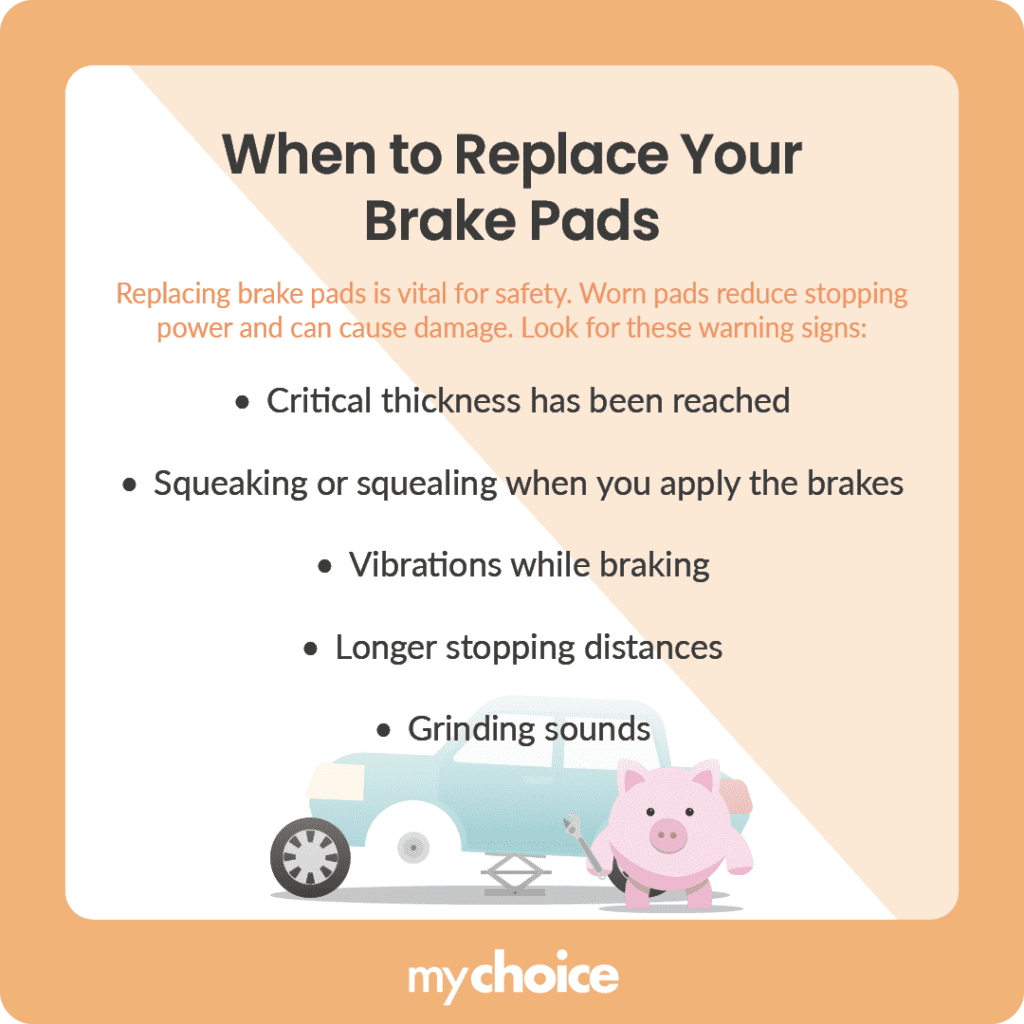
Even if insurance doesn’t cover the replacement, certain warning signs below mean your brakes should be inspected by a qualified technician as soon as possible.
Critical thickness has been reached:
Brake-pad thickness requirements can vary by vehicle, so don’t rely on a pad-thickness number or online diagnosis. Instead, follow the vehicle manufacturer’s specifications and get a qualified inspection.
Squeaking or squealing when you apply the brakes:
Some brake pads use a metal wear indicator that can produce a squeal, but brake noise has several possible causes. Do not diagnose pad wear from the sound alone. Arrange an inspection if the noise is new, persistent or accompanied by a change in braking.
Vibrations while braking:
If you feel vibrations in your brake pedal while using it, that can indicate issues like uneven brake pad wear or warped rotors. Uneven contact can make it hard to brake safely.
Longer stopping distances:
If it takes longer to stop your car than it used to, this may be a sign that your pads’ friction material has worn down. Inspect the braking system if you notice a change in stopping performance.
Grinding sounds:
Grinding sounds can be caused by your metal backing plate making contact with your brake rotor. Continuing to drive this way can damage other brake components, including the rotors and callipers.
Brake warning lights:
A brake warning light may signal low brake fluid, a parking-brake issue or another braking-system fault. Some vehicles have a separate pad-wear warning. Check the owner’s manual and arrange an inspection instead of assuming the pads are the cause.
When to Stop Driving and Get Help
If braking performance changes, a warning light appears or the pedal feels unusual, stop driving when it is safe to do so and arrange professional inspection or towing.
Brake repairs are critical to your own safety, and the correct procedure and tools vary by vehicle. Follow the manufacturer’s service information and find a qualified technician if you are not trained and equipped for the repair.
When an Insurance Claim May Apply
Start with the cause of the brake damage. Normal wear remains a maintenance expense. However, brake damage caused directly by a covered collision, fire, vandalism or another covered event may be covered by your auto insurance.
When an Insurance Claim May Be Relevant
- A collision damages the brake assembly, wheel or suspension and the policy includes the applicable physical-damage coverage.
- Fire, vandalism or another covered peril damages brake components under comprehensive, specified-perils or all-perils coverage.
- In case a covered repair requires replacing an already worn component, the insurer may apply betterment or ask you to pay the maintenance portion.
When Insurance Is Not the Payer
A manufacturer recall, parts warranty or repair-shop warranty is separate from auto insurance. Search the vehicle identification number in Transport Canada’s recall database, then check the manufacturer and repair invoice. A warranty may pay for a defect, but it normally does not pay for ordinary pad wear.
Read More: Learn When to File an Insurance Claim or Pay Out of Pocket
How to Get a Useful Brake Service Quote
Budgeting for Brake Service
A detailed quote should identify the vehicle, axle, pad material, rotor condition, hardware, labour, taxes and any calibration. Ask whether the quoted price is per wheel or per axle and whether the rotors were measured or automatically included.
Brake pads are not interchangeable between makes and models. Brake parts for luxury and high-performance vehicles may also cost more than those for many standard vehicles.