









Alberta’s auto insurance system will change to the Care-First model on January 1, 2027. This model increases injury benefits and changes the way that many injury claims are dealt with, though fault will continue to have an impact for some lawsuits and insurance rates.
Our team reviewed Alberta’s automobile-insurance reform overview, its detailed Care-First comparison, the province’s explanation of the enacted framework, and the Superintendent’s draft form amendments.
This article explains how Care-First changes injury benefits, when fault still matters, how disputes may be handled and what to review during the transition.
Read More: See What Is Putting Pressure on Canada’s Auto Insurance System
How Alberta’S Care-First No-Fault System Will Work
In Alberta, DCPD claims for damage to a vehicle or other property will still be affected by fault. Effective January 1, 2027, Alberta’s Care-First system will provide scheduled first-party benefits to an injured person without regard to the fault of other motorists. Many lawsuits for bodily injury will be prohibited or limited. Specific amounts and eligibility will be determined by regulation and insurance policies.
The province is predicting fewer lawsuits under the Care-First model, with injured people having fewer situations in which they can sue, but receiving scheduled first-party benefits. But it’s not appropriate to predict the success, in terms of speed or cost-effectiveness, of Alberta’s Care-First model based on Ontario’s auto insurance system, which is a combination of first-party benefits and a tort system.
What Is Still Developing
As of August 26, 2026, Alberta has published the standard-form amendments in draft form only, not yet approved. Alberta anticipates the forms will be completed and available in early fall 2026. Check your renewal documents for instructions regarding the deadlines and how to file a dispute, as well as which forms are approved.
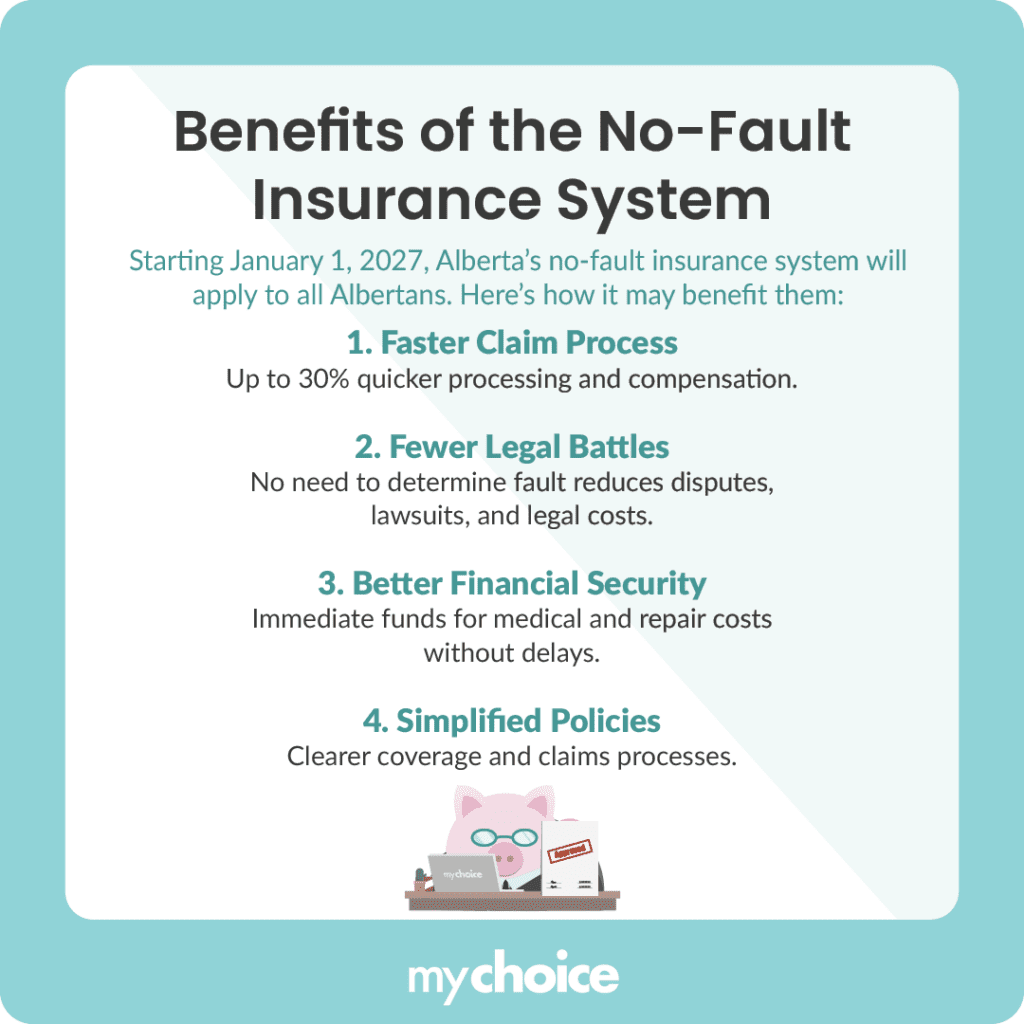
What Are The Benefits Of The No-Fault Insurance System?
The Care-First system is intended to provide several benefits, although many Albertans remain concerned about the change.
Faster Claim Processing
Medical and rehabilitation costs which qualify can be paid for the injured person's lifetime. The costs must provide a measurable benefit. Income replacement benefits, up to a maximum of 90% of net income subject to a gross income maximum which is indexed, may be paid until the age of 65 subject to continued eligibility.
Reduced Legal Battles
Cost reductions are not a certainty but are instead an expected benefit of Care-First. Although fault plays a diminished role for people seeking injury benefits, fault is still a component of the system. In addition, disputes about eligibility, the extent of impairment, appropriate treatment, income replacement benefits and the return-to-work process can continue.
Enhanced Financial Security
Other benefits under the framework include compensation for permanent impairment or death, eligible expenses and caregiver support. The types of proof and amounts of benefits vary by coverage. Please consult the final policy for details regarding the type of proof and amounts of benefits.
Clear Policy Guidelines
Also of interest are the final regulations and forms, which will indicate what documents a claimant must provide and within what timeframes. The larger picture includes the framework for dispute resolution, including insurer internal review and the Alberta Automobile Care-First Tribunal.
How Will No-Fault Insurance Impact Albertans?
The Care-First model will change the way that Alberta drivers receive benefits for injuries, resolve legal disputes and see fault reflected in their auto insurance.
Issues of eligibility, treatment, income support and other topics can lead to disputes and/or lawsuits.
Importantly, “Care-First” does not mean that fault does not matter, and drivers responsible for accidents can be held accountable through increased premiums.
These savings do not guarantee your resulting premium. You should review your renewal and approved coverage.
Read More: Learn How to Insure a New Car in Alberta
Insurance Claim Process In The New System
More detail about the documents and proof you’ll need for claims, including deadlines, transition rules and how they apply to you, will come from the 2027 policy forms once they’re approved. The core benefit and dispute framework is published.
What Is Confirmed And What Still Depends On Final Forms
- The following are eligible injury benefits: medical and rehabilitation care, income replacement benefits, death benefits, permanent-impairment benefits, certain expenses and caregiver supports.
- Keep a copy of all decisions and important deadlines. You may ask for an internal review of decisions. You may use the Alberta Automobile Care-First Tribunal.
- Regarding lawsuits, Care-First prevents you from suing in many situations involving injury. The province provides exceptions for certain types of serious driving-related convictions, as well as in situations where damages exceed policy benefits. Seek legal advice if you have significant injuries or believe an exception applies.
- Specific requirements, such as how to apply, what evidence will be needed and how to deal with transitional cases, plus the prescribed forms and other procedural information are still under development.
Forthcoming regulations and final forms will determine filing deadlines, computation of benefits and rights to review for collisions that occur on or after the transition date.
Please note that there is no guarantee that a claim made under the Care-First benefits process for collisions on or after the transition date will not experience delays or be the subject of a dispute.
The framework includes an internal review process and creates the Alberta Automobile Care-First Tribunal. More information about what the tribunal can review and deadlines for making applications will be spelled out in the final rules.
Disputes may still arise; administrative review changes how they are handled. To request a review, keep copies of decisions, medical records, wage and income documents, and important dates.
Which Rules Apply To A Collision?
To determine which rules apply, check the date of collision, policy effective date, type of claim, and the final transition rules.
- For collisions that occur before January 1, 2027, use the law and insurance policy in effect on the date of loss.
- Subject to final legislation, regulation, and policy wording, Care-First rules are intended to apply to collisions occurring on or after January 1, 2027.
- If a policy is renewed for a period that includes a transition, ask for the effective endorsement and a written explanation of how the transition affects the policy.
How To Prepare For The Transition
Drivers can prepare for Care-First by following the steps below.
Review Your Current Policy
Contact your auto insurer because some coverage may be affected by the transition. Get details from your insurer and check your auto insurance policy to see if or how your coverage would be affected during the transition.
Stay Informed
It’s a good idea to subscribe to the Government of Alberta’s official insurance webpage and check with trusted sources of insurance information for important changes in process and timelines.
Budget For Transition Costs
Evaluate the policyholder-specific renewal: optional benefits, deductibles, and the final transition endorsement.
Consult With Insurance Experts
Changes to an insurance policy should be discussed with a licensed Alberta representative, but if you have an active claim or have questions about your rights relating to an injury, you should seek legal advice from a qualified legal professional.
Read More: Learn About Car Insurance in Alberta