









Claims-free is a factor that could help lower your car insurance premium, but there isn’t an actual standard discount that applies across Ontario. Each insurer has its own criteria and approved rating rules for full risk. To research this topic, we reviewed FSRA guidance on auto insurance rates and rating rules, Ontario Regulation 664, and FSRA’s consumer guidance on saving on auto insurance.
Keep reading on how the no-claims bonus system works, what considerations affect your premiums, and the strategies that could lower your auto insurance rates.
What Is a No-Claims Bonus?
“No-claims bonus” is not a single standardized Ontario product. An insurer may offer a claims-free or accident-free discount under its approved rules, while claims history can also affect the base rating separately.
Ask your insurer to identify the exact discount, qualifying claims, look-back period, step changes, maximum and treatment after an accident. Below are a couple of main points you should inquire about.
- Year accumulation: The insurer records relevant claims and applies its own approved eligibility rules. There is no universal Canadian “NCB points” system.
- Transferability: A new insurer may review prior claims history, but it does not have to transfer another insurer’s discount schedule. Obtain the new quote and ask what proof of history is required.
- Discounts: Any step-up period or cap is insurer-specific. Confirm the percentage shown on the quote and the year in which it changes.
How Much Can My Car Insurance Go Down After 1 Year of No Claims?
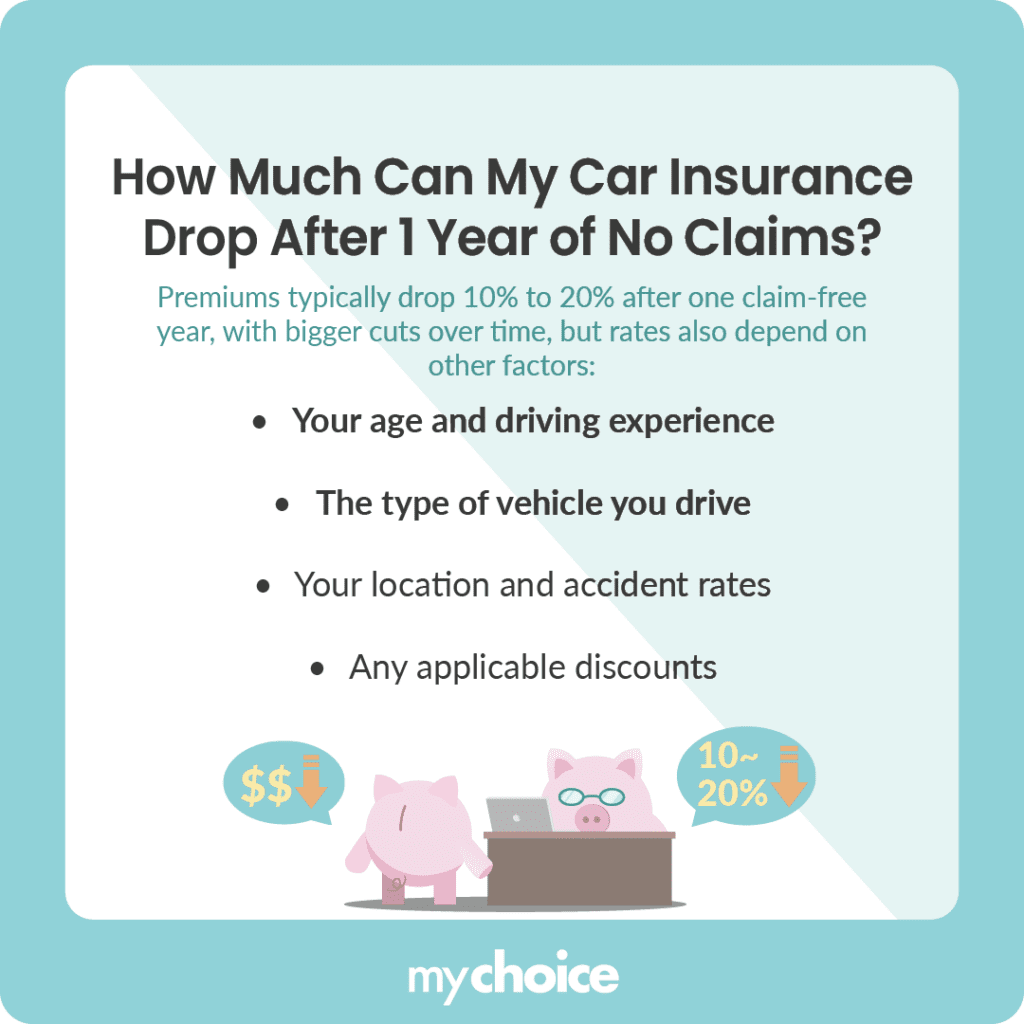
Car insurance rarely decreases after one year of no claims. However, keeping a clean driving record prevents your rates from increasing further. Speak to your insurer to find out if they offer a claim-free discount, but generally the maximum you can hope for is 5-10%, which can be easily offset by premium inflation, so your rates may stay the same.
You can also try comparing car insurance rates at renewal to see what might have changed to your pricing.
Read More: How to Manage a Car Insurance Renewal
Will My Car Insurance Premiums Go Down Every Year?
Your premium won’t suddenly decrease on your birthday. Approved age, length of experience, claim histories, convictions, vehicle, location, coverage, and base-rate changes can all affect renewal.
- Market conditions: Insurance rates can change depending on market conditions, such as the cost of auto repairs, phasing out certain vehicle types, or the frequency of accidents in your area.
- Driver’s personal circumstances: Changes in your personal circumstances, such as moving to a higher-risk area or changes in credit score, can also affect your premiums negatively.
- Company policies: Each insurer has different policies regarding how they calculate premiums and apply discounts. Some may offer immediate reductions upon renewal after a claim-free year, while others might take longer or require multiple years of no claims for significant reductions.
While maintaining a clean driving record typically leads to lower rates over time, this alone doesn’t guarantee that you’ll have cheaper car insurance when it’s time to renew.
What Can I Do to Lower My Car Insurance Premiums?
Safe driving and fewer at-fault losses can help over time, but do not avoid required reporting or withhold a legitimate claim solely to preserve a discount. Follow policy and legal notice duties first.
Read More: 10 Tips to Lower Car Insurance in Ontario