









Moving abroad can affect your Ontario driver’s licence and insurance history, especially if either expires while you’re away. Keeping the right records can make it easier to restore your licence, prove your driving experience, and even look for new car insurance when you return.
For this article, our team reviewed Ontario’s instructions for renewing a licence from outside Ontario, renewing an expired licence and exchanging an out-of-province licence, Ontario Regulation 664, and Global Affairs Canada’s International Driving Permit guidance.
Keep reading to learn what records to keep before leaving, how an expired licence may be renewed, how foreign driving experience may be recognized and what to confirm before buying or insuring a vehicle after your return.
Does Living Abroad Affect Car Insurance Rates?
Living abroad can affect your quote if you can’t provide enough proof of your licence, claims history or driving experience. However, having a permitted insurance gap in Ontario doesn’t automatically make you get a higher premium. Preserve licence, abstract, claims and insurer records, and confirm renewal or testing requirements before buying or insuring a vehicle on return.
Returning-driver premiums vary widely. Get quotes before buying or registering a vehicle and compare quotes using the same information for vehicle, drivers, coverage and deductibles.
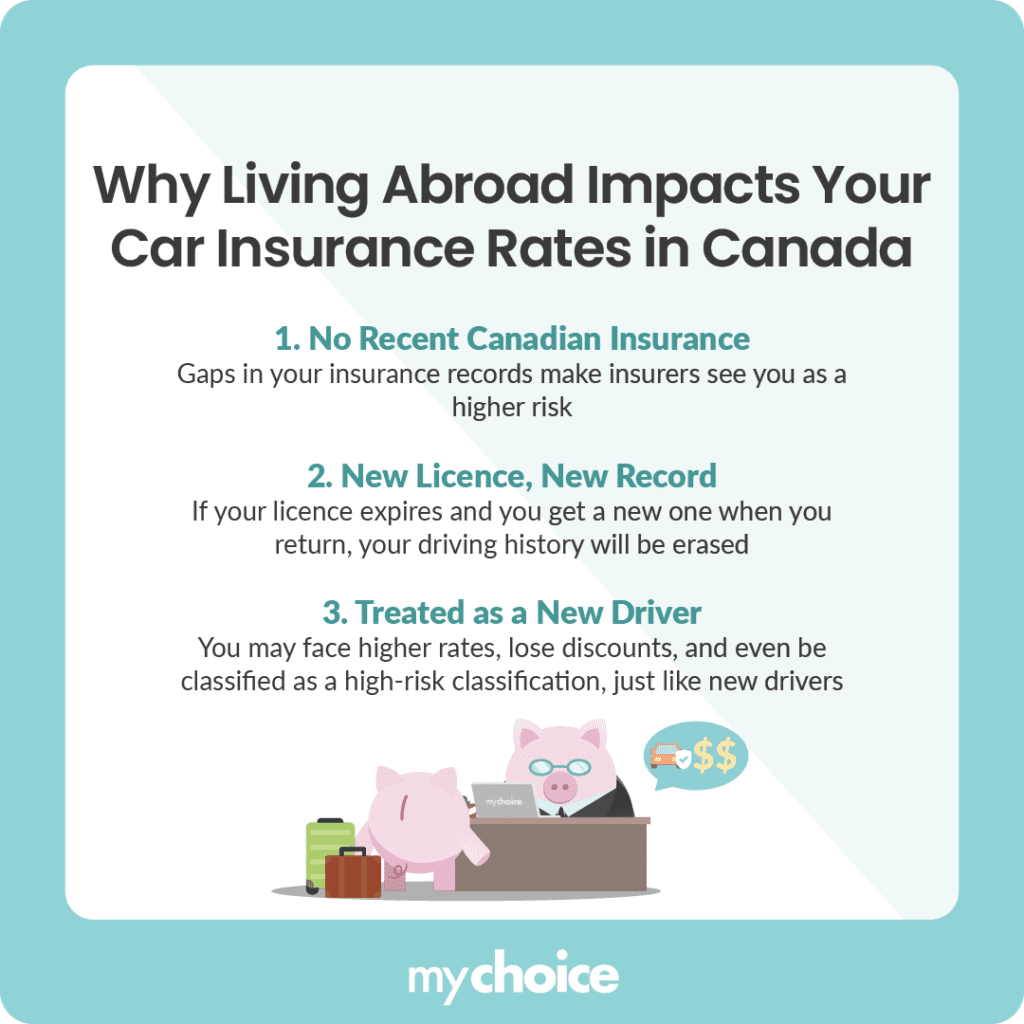
Lack of Recent Insurance History in Canada
Ask in writing which foreign licence, abstract, claims-free or letter-of-experience documents will be recognized. In Ontario, a permitted lapse in coverage generally can’t be used by itself to increase your Ontario premium, although non-payment or cancellation circumstances can be different.
Read More: Consequences of Lapses in Your Car Insurance History
New Driver’s Licence Number Upon Return
An expired Ontario licence may require renewal, vision, knowledge or road testing, depending on how long it has been expired. Preserve abstracts and prior licence details because a new card does not by itself erase the government record.
Perception as a “New Driver”
If you can’t provide enough accepted documentation, the insurer may recognize fewer years of driving experience than how long you actually drove. Ask for the licence date the insurer is using and how the quote was calculated in writing before assuming prior history was lost.
Read More: Insurance Tips For New and Young Drivers
Rules Depend on the Province You Return to
Licensing, proof-of-experience requirements and insurance systems differ by province. Start with the licensing authority and insurance regulator for the province where you will live.
In Ontario, you can check Ontario’s current expired-licence page to see which renewal or testing requirements apply based on how long the licence has been expired. Contact the Ministry of Transportation before return if documentation is uncertain.
How to Preserve Your Driving and Insurance Records While Abroad
Before departure, contact the licensing authority and insurer, keep records if you sell, export or store your vehicle, and retain licence, abstract and claims records. Before returning, confirm renewal, exchange and testing requirements, then request written quotes before buying a vehicle. Ask each insurer how much of your foreign driving experience it recognizes and why.
Maintain a Valid Canadian Driver’s Licence
Before departure, ask the issuing authority whether you remain eligible to keep or renew the licence while resident abroad and what renewal or identity-verification options are available while you’re abroad.
Renew through the issuing authority’s renewal process and licence term allowed by your province. There isn’t any Canada-wide maximum that applies to every licence.
Decide Whether to Keep Canadian Vehicle Coverage
If the vehicle is sold, exported or not used, ask the insurer about cancellation or storage coverage. A full road policy is unnecessary when it does not match the actual usage of your vehicle.
Ask whether specified perils/comprehensive or suspended road coverage is appropriate for a stored vehicle, and restore required coverage before any use.
Keep Records of Your International Driving Experience
Collect original or authenticated licence history, driving abstract, claims history and insurer letter of experience. You may need to get a certified translation if requested.
Understand What an International Driving Permit Does
You can apply for an International Driving Permit only if you hold a provincial or territorial driver’s licence, and it lets you drive only the same vehicle class. It does not prove continuous licensing or insurance, so keep your actual licensing, insurance and claims records.