









If you work from home, use public transportation, or only drive on weekends, you're probably interested in low-mileage car insurance options.
For this article, our team reviewed FSRA’s Ontario rating-factor guidance, its auto-insurance savings guidance, and its usage-based insurance update.
There’s no set standard for low-mileage car insurance across Canada, but annual kilometres and commuting distance are common rating factors for Ontario insurance companies.
How Low-Mileage Drivers Can Pay Less For Car Insurance
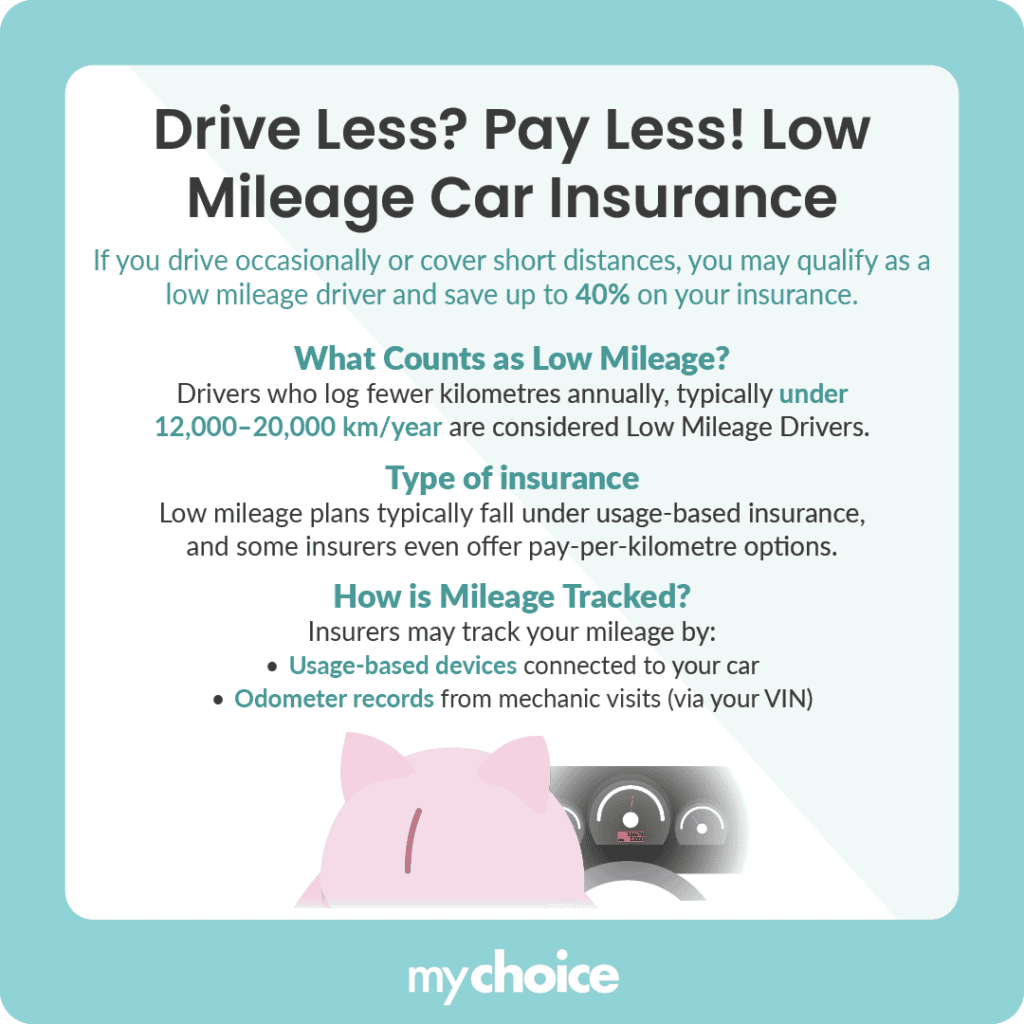
Calculate the number of kilometres you drive on average each year, and have evidence ready in case the company asks for it, such as photos of your car's odometer with a visible date or car maintenance records.
Shop around for low-mileage car insurance and compare the full annual cost for similar types of coverage, making sure deductibles and other details are comparable. Ask about low-mileage options, including pay-per-kilometre, usage-based insurance and standard options that may be priced differently depending on how often you drive.
Check the fine print for any maximum number of kilometres you can drive, what happens if the app or device doesn't work, privacy policies, and other terms and conditions.
If you're unsure about your annual kilometres, go with the closest estimate. If you begin driving more, contact your insurer as soon as possible.
Read More: Tips to Save on Car Insurance in Ontario
How Many Kilometres Is Considered Low Mileage?
Since there isn’t a specific standard for low mileage, ask each insurer how annual kilometres affect the insurance rate. What counts as low mileage varies by insurer.
Get the full annual price for any separate pay-per-kilometre or telematics program.
Does This Fall Under Usage-Based Insurance?
If you know you don't drive a lot, you may be interested in low-mileage car insurance. There are different ways of determining how much you drive:
- By providing an estimate on your car insurance application and, if required, supporting it with dated odometer photos.
- By enrolling in a pay-per-kilometre style of car insurance, where the premium usually includes a base rate plus a portion determined by the number of kilometres driven.
- By enrolling in a usage-based program, which gathers information about your driving and may save you money based on your habits.
- Some insurers may not offer usage-based insurance but may still have rates that account for how much you drive without requiring you to enrol in a program.
How Do Car Insurance Companies Measure The Mileage On Your Vehicle?
Distance may be estimated on the application, verified by odometer evidence or measured through an insurer-approved app or device. Ask what data is collected, how often, for how long and what happens if data is missing.
Read More: How Often Should I Check Auto Insurance Rates?
What Canadian Car Insurance Companies Offer This Type Of Insurance?
Ask a licensed representative which approved low-kilometre, telematics, or pay-per-kilometre options are currently available in your province. Compare the complete contract instead of relying on an old provider list.
For example, CAA Insurance offers CAA MyPace, which is specifically designed for lower-mileage drivers and bases part of the premium on kilometres driven.
Intact Insurance and Desjardins Insurance also offer usage-based programs that use driving data to help determine potential savings.