









Damage from rodents and other pests is generally not covered under home insurance in Canada. That means extermination costs, preventing further infestation, and any repairs may be on you.
We dug into the Insurance Bureau of Canada’s guide to home coverage to learn more. Our editorial team used Health Canada’s rats-and-mice guidance to research rodent control, Health Canada’s pesticide-safety guidance to learn more about extermination, and the Canadian Wood Council’s termite guidance for control.
We’ll explain how to confirm your problem is pest damage and not damage from an insured event, why it’s important to document everything before cutting into walls or removing drywall, and steps to take if you’re an owner, condo resident or renter.
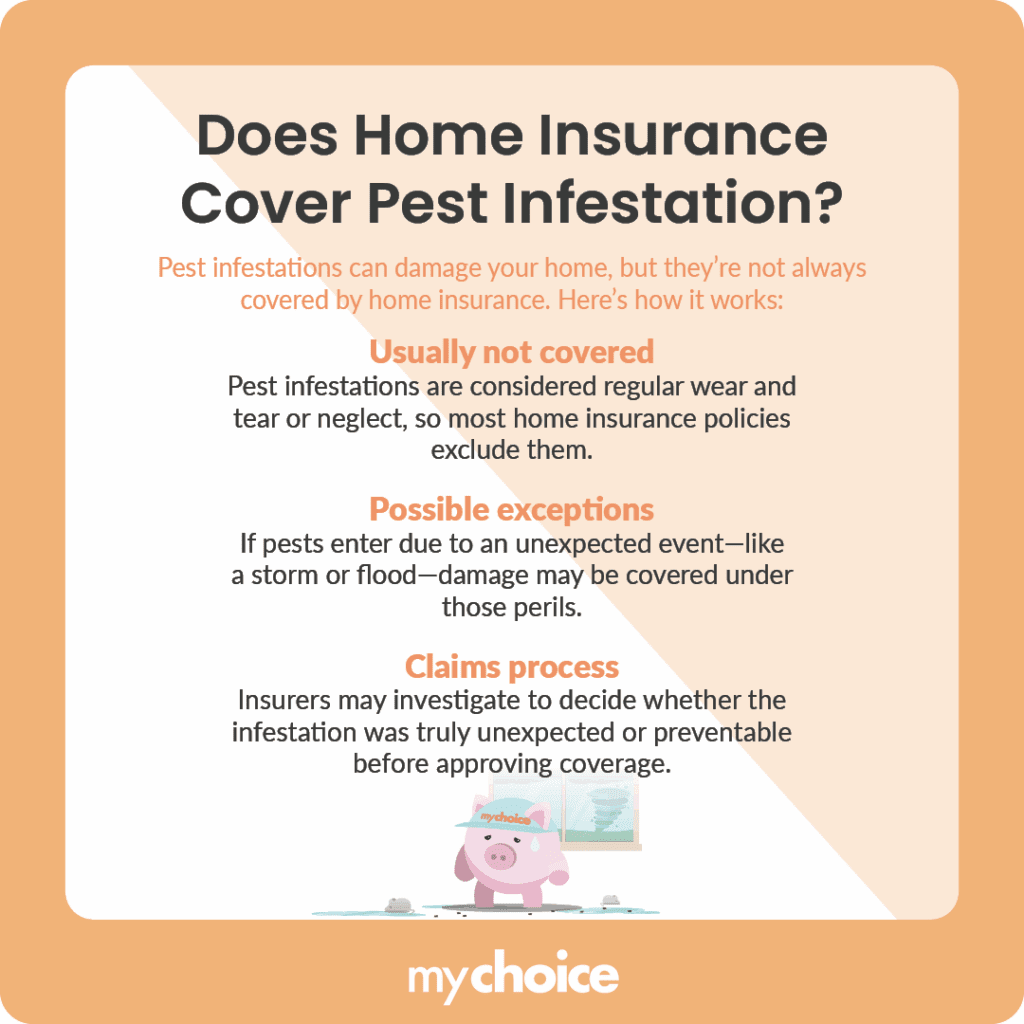
Does Home Insurance Cover Pest Infestation?
The IBC states that most home policies exclude damage caused by rodents and insects, with a possible exception for damage to building glass. Pest removal is typically considered maintenance.
Consider your policy, the type of pests and property, and the sequence of events. A storm, water, fire or other covered damage that occurs alongside pest damage will not make pests insurable.
Match the Damage to the Cause
| Loss | Usual starting point | Question for the insurer |
|---|---|---|
| Extermination, traps, sealing and cleanup | Maintenance or pest-control cost, commonly excluded | Does any endorsement pay a limited pest-removal expense? |
| Chewed wiring, insulation, wood or belongings | Direct insect or rodent damage, commonly excluded | How does the form define insect, rodent, vermin and animal damage? |
| Wind opens the roof and pests later enter | The wind opening and the infestation are separate causes | Is the sudden wind damage covered, and what later damage remains excluded? |
| Chewed wire is followed by a fire | The exclusion and the later fire wording must both be read | Does the form preserve coverage for a separately caused fire, and what proof is needed? |
| Water enters and pests appear later | Water coverage does not automatically become pest coverage | Which water loss is covered, and is any pest-related work excluded? |
| Animal breaks building glass | IBC notes some forms may make a glass exception | Does your policy contain that exception, and which animals qualify? |
Coverage, limits and deductibles vary by policy.
Read More: Compare Broad and Comprehensive Home Insurance
Common Pest Threats to Canadian Homes
| Pest | Signs and damage | Useful response |
|---|---|---|
| Termites | Mud shelter tubes, damaged wood and hidden structural activity | Use a qualified inspection in known termite areas; address moisture and wood-to-soil contact |
| Carpenter ants | Sawdust-like debris, galleries in damp or damaged wood and activity near moisture | Find and repair the moisture source, then use species-specific control |
| Rats and mice | Droppings, urine, gnawing, damaged food, holes and sounds in walls | Seal entry points, remove food and water sources, place suitable traps and clean droppings safely |
| Bedbugs or cockroaches | Bites, staining, insects, eggs or activity around sleeping and food areas | Confirm the species and coordinate building-wide treatment where units share walls |
| Raccoons, squirrels or birds | Roof, soffit or vent entry, nesting and contamination | Check the policy’s animal definition and use lawful wildlife removal and repairs |
Canadian Wood Council reports show a significant presence of termites in some cities in southern Ontario and some areas of BC.
That does not mean all areas of Canada are equally threatened. Local conditions, including construction and confirmed termite species, should be considered.
How to Deal With Rats and Mice
- Follow Health Canada’s instructions when removing feces. Do not sweep or vacuum them; dampen them first, then wipe them up.
- Use a trap suited to the target pest.
- Seal small holes that pests use to gain access. Remove accessible food and water sources and secure garbage.
- If you use a pesticide or rodenticide, the product should have a Pest Control Products registration number from Health Canada. Follow the directions on the label and keep baits and treated areas away from children and pets.
What to Do If You Discover a Pest Problem
- If you’re unsure of the species or extent of contamination or damage, engage a qualified or licensed pest professional.
- Take photos of signs, entry points and property damage before cleaning up or removing affected items.
- Call your insurer or broker before opening walls if another, possibly sudden, event may have taken place.
- Ask what evidence and estimates may be required. Retain pest-control reports, invoices, moisture assessments, repair quotes and a chronology of when you noticed the damage.
- Contact an electrician, utility company, contractor or public health official to address damaged electrical or gas lines, unsound wood or extensive contamination.
- Once the pests and damaged items have been removed, repair entry points and remove sources of moisture to prevent another infestation.
Read More: Use the Canadian Home Maintenance Checklist
Who Handles the Problem in a Condo or Rental?
Responsibilities vary. In a condominium, the declaration, bylaws and condo corporation policies outline what counts as common elements and what falls within the unit. Similarly, the lease and provincial legislation outline a tenant’s responsibilities. Tenant insurance may cover the tenant’s possessions and liability, but it generally doesn’t cover the building or a pest-control agreement.
If you believe the infestation may be travelling through common elements, such as the roof, walls, pipe chase or garbage area, notify your condo manager or landlord immediately. Save copies of your notification and any responses.
Read More: Compare Landlord Insurance and Home Insurance
Tips to Prevent Pest Infestations
Keep garbage and compost containers closed and properly managed. Seal cracks in the foundation and entry points around utilities, vents, doors and windows. Store wood off the ground and away from the building. Keep human and animal food in tightly closed containers.
Fix dripping pipes, condensation and drainage problems.
Use registered pesticides according to the label. Call a professional if you’re unsure of the pest or the proper procedure.
Check the crawl space, basement and attic after severe weather. Check the roofline and attic after contractor work.