









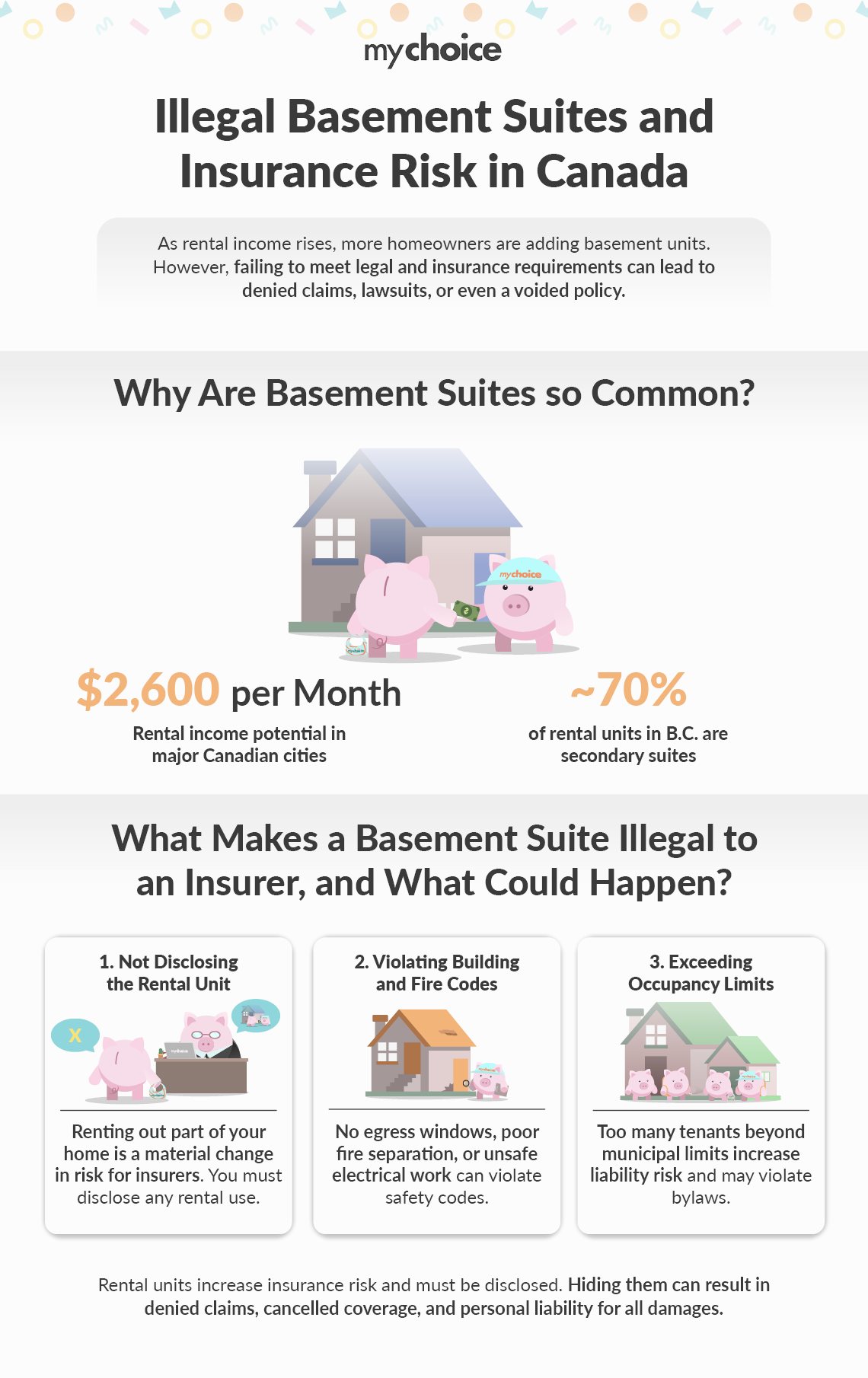
Many basement units are illegal because they do not meet local building, fire, or zoning regulations.
Common issues include missing escape windows, not enough fire barriers, unsafe electrical work, or too many tenants.
If a basement suite is not disclosed or does not meet applicable standards, coverage consequences may vary with the policy and circumstances. Disclose the rental use and obtain the insurer’s decision in writing.
Homeowners could face serious consequences if a tenant is hurt or property is damaged in an illegal or undisclosed unit.
How Basement Suites Impact Your Home Insurance
Adding a basement suite can be an attractive way to generate extra income. With rents for a basement unit in some of Canada’s biggest cities soaring to a high of $2600 a month in prime locations, it can be a very effective strategy in paying off a mortgage. And it’s why in provinces such as B.C., which has some of the steepest home prices in the country, 70 per cent of rentals are secondary suites.
While many homeowners assume their insurance automatically covers rental use, insurers treat this as a material change in risk that must be disclosed.
But not all basement units are the same – and many aren’t legal. They need to comply with the provincial building and fire codes, regulations that take into account the number of windows, the number of exits, ceiling height and other factors.
If your basement suite doesn’t meet these criteria, it may be considered illegal or non-compliant under local regulations. Plus, if you rent it out and fail to disclose this to your home insurer, what insurers refer to as a material change in risk, it could mean claim denials, limited coverage, higher liability exposure, or even policy cancellation.
Here’s how to stay onside with your insurer and ensure your basement suite is up to code.
What Insurers Mean by a Material Change in Risk
A material change in risk is a significant and ongoing change to a property within a policyholder’s control that increases the insurer’s chance of a loss and influences their decision to cover the risk.
Risks to Tenants in an Illegal Basement Suite
A tenant who decides to rent your illegal basement suite faces a number of risks.
These can include:
- Safety issues: These might be too few egress windows or a sole emergency exit in another part of the property. Basement suites must have at least one compliant means of emergency egress, and in some cases, additional exits depending on layout and code requirements.
- Not enough fire protection. Fire-separation and alarm requirements vary by jurisdiction and building type; confirm the applicable rules with the local building and fire authorities.
- Ventilation issues. If there are too few windows, a damp basement or low ceilings, tenants could be exposed to poor air circulation and air quality, as well as mould issues.
- Lack of a separate entrance. If a tenant has to exit through the main house, their risk during a fire increases. In many municipalities, a basement apartment must have a separate entrance.
If something happens to the tenant while renting your illegal basement suite, insurers may deny liability coverage, leaving you to face a costly lawsuit, medical expenses, or regulatory penalties.
How to Ensure Your Basement Unit is Legal
Taking steps to ensure your basement suite is legal comes down to building codes and fire safety regulations.
- Begin by ensuring that secondary basement suites are, in fact, allowed in your home’s zoning district.
- When renovating your basement suite, ensure you get building, electrical and plumbing permits.
- Hire certified contractors to perform the work on your basement suite.
- Install egress windows and a separate entrance to allow for an emergency escape.
- Ensure that fire-rated drywall is installed on the ceiling and on the separating walls of the basement unit.
- If your basement suite is too low, according to provincial guidelines, you may have to lower it.
- Have the suite inspected by a registered building inspector.
- Disclose your basement suite to your insurer when you are ready to rent it.
Renting a basement suite can be a great way to earn extra income. But given the insurance and financial risks it can pose if legal requirements aren’t met, and your insurer isn’t informed, ensure you’re compliant with building regulations and occupancy rules. Read our digest on why occupancy rules are important for your home insurance.
Bottom Line
- Always let your insurance company know if you are renting out any part of your home. Even short-term or occasional rentals can affect your coverage.
- Make sure your basement suite is legal and meets all fire, building, and zoning rules before you rent it out.
- Get the right permits and inspections when you build or renovate a basement unit. This is important for both safety and insurance.
- Consider raising your liability coverage to protect yourself against risks associated with having tenants. If you’re planning to have multiple tenants, you may need to get commercial landlord insurance in addition to your current home insurance policy.