









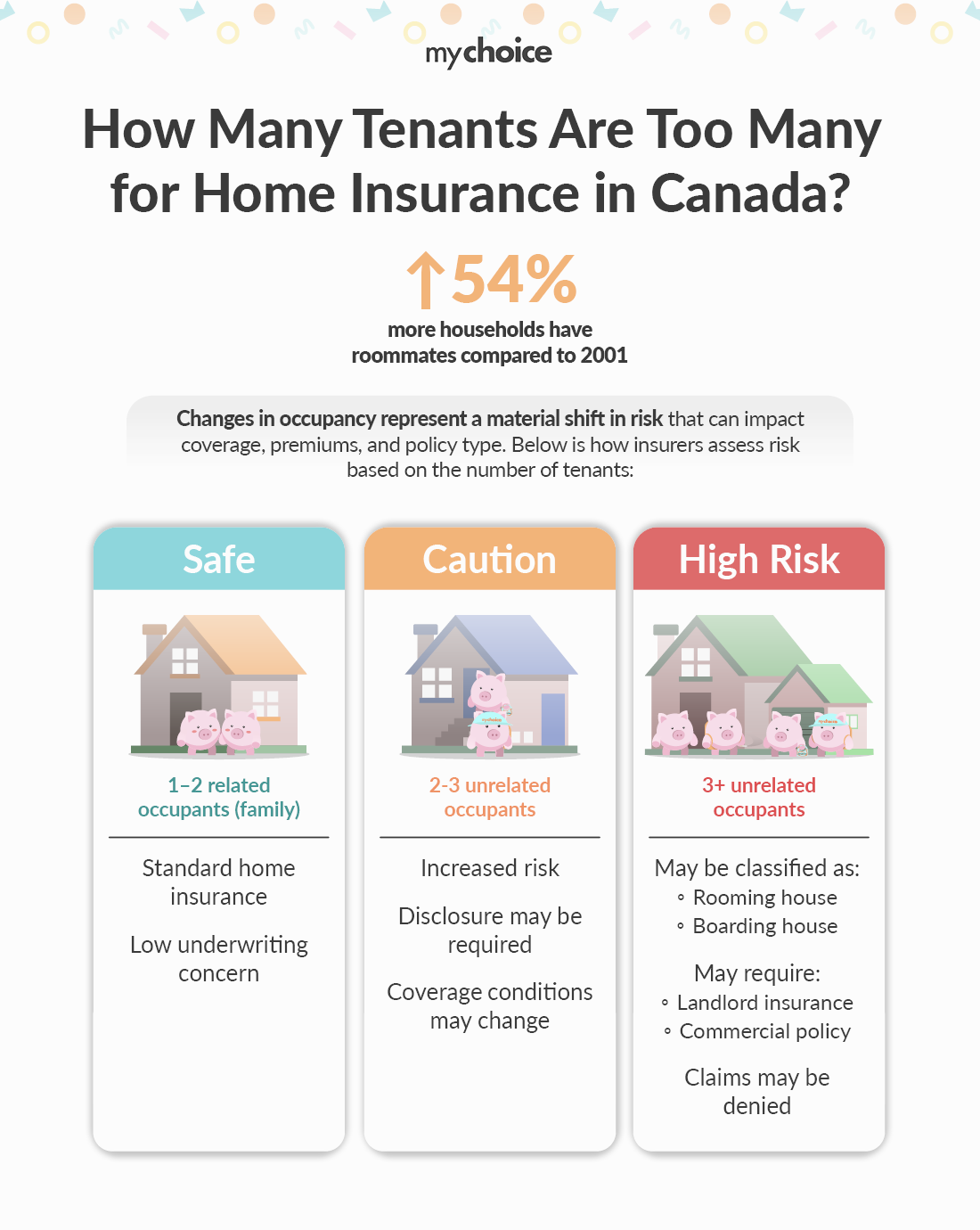
Adding tenants can change the type of insurance a residential property should have. But how many tenants are too many for home insurance? No set number of tenants in Canada will automatically cancel your home insurance. The nature of a living arrangement can matter as much as the number of tenants.
We’ve gone through the federal home-insurance guide, Toronto’s current multi-tenant-house definition and Toronto’s operator and licensing requirements to learn more.
How Many Tenants Are Too Many for Home Insurance?
There is no universal rule. If several unrelated tenants live in the home, it may be classified as a rooming or boarding house, which typically requires a different type of insurance policy.
This is where the distinction between home insurance and landlord insurance becomes important. A standard home insurance policy is designed for owner-occupied properties. Once you begin renting out rooms or bringing in tenants, the risk profile changes, and you may need landlord insurance depending on your living arrangement.
Read More: Compare Landlord Insurance and Home Insurance
Why Is Occupancy Important for Home Insurance?
The occupancy details of your home play a key role in how insurers assess risk and calculate your premium. Changes to who lives in your home and why they are living there can constitute a material change in risk.
For example, a home where one family lives may be seen as less risky to insure than a place with several unrelated tenants. If the number or type of tenants living in your home changes, your insurer might review your policy, which could affect your coverage, price or the kind of insurance you need.
Municipal Approval and Insurance Acceptance Are Different
Toronto defines a multi-tenant house as premises containing four or more rooms rented to separate people who do not live together as a single housekeeping unit. Toronto also requires operators of multi-tenant houses to follow a licensing process.
This is a room-based definition, not a rule that every home with four occupants is a rooming house. Other municipalities have different definitions.
A home can conform to municipal bylaws but not to an insurer’s rules. Likewise, a home may be insurable but not comply with municipal requirements because it needs licensing, permits or fire-safety upgrades. Check with your insurer and municipality.
How Does It Differ for Condos?
A condo corporation may set occupancy standards in its bylaws. Owners should check the corporation’s declaration, bylaws and rules as well as municipal requirements and insurance conditions.
Read More: Read About Ontario Occupancy Rules and Insurance
What Happens If You Cross the Occupancy Limit?
If your insurer determines that your property no longer fits the original risk profile, your policy may no longer apply as intended. In some cases, claims can be denied due to misrepresentation or undisclosed material changes.
Questions to Ask Your Insurer
- How does my insurer classify my property, and which policy form is being quoted?
- Who is considered insured under my policy? Are there limits or exclusions regarding the possessions of tenants, roomers or boarders living with me?
- Are there conditions or limitations regarding the number of occupants, unrelated occupants, leases, units, rooms or length of stay?
- Do occupancy or property-use changes during the policy term require notification? How should I document them?
- Does the property require a municipal licence, zoning approval, building permit, fire-safety plan or condo-board permission?