









In many parts of the country, Canadians have lots of options when it comes to keeping their homes nice and warm this winter—but from an insurance risk perspective, not all heating systems are viewed equally.
We analyzed recent MyChoice quote data to get a sense of how your heating equipment or fuel source might affect the cost of your home insurance in Ontario. While premiums may differ for homes heated with gas, electric, propane, oil, heat pump or hot water systems, it’s important to keep in mind that your home’s heating source is only one component that goes into determining your insurance rate.
How Much Does Heating Type Affect Home Insurance?
Insurers consider a whole host of factors when assessing your risk and setting your home insurance premium. A few that weigh considerably on your insurability and rate include the age of your home, its size/rebuilding cost, any risks associated with your location and individual characteristics—such as the type of electrical system, plumbing and the age of your roof.
Along with the type of wiring you have or whether you’ve upgraded your pipes, heating systems and the type of fuel they use can also have a significant impact on your home insurance premium or even coverage level.
While central gas furnaces are a common option for many Canadian homes, other choices include electric heating like baseboards, propane furnaces, hot water/steam, oil furnaces and heat pumps.
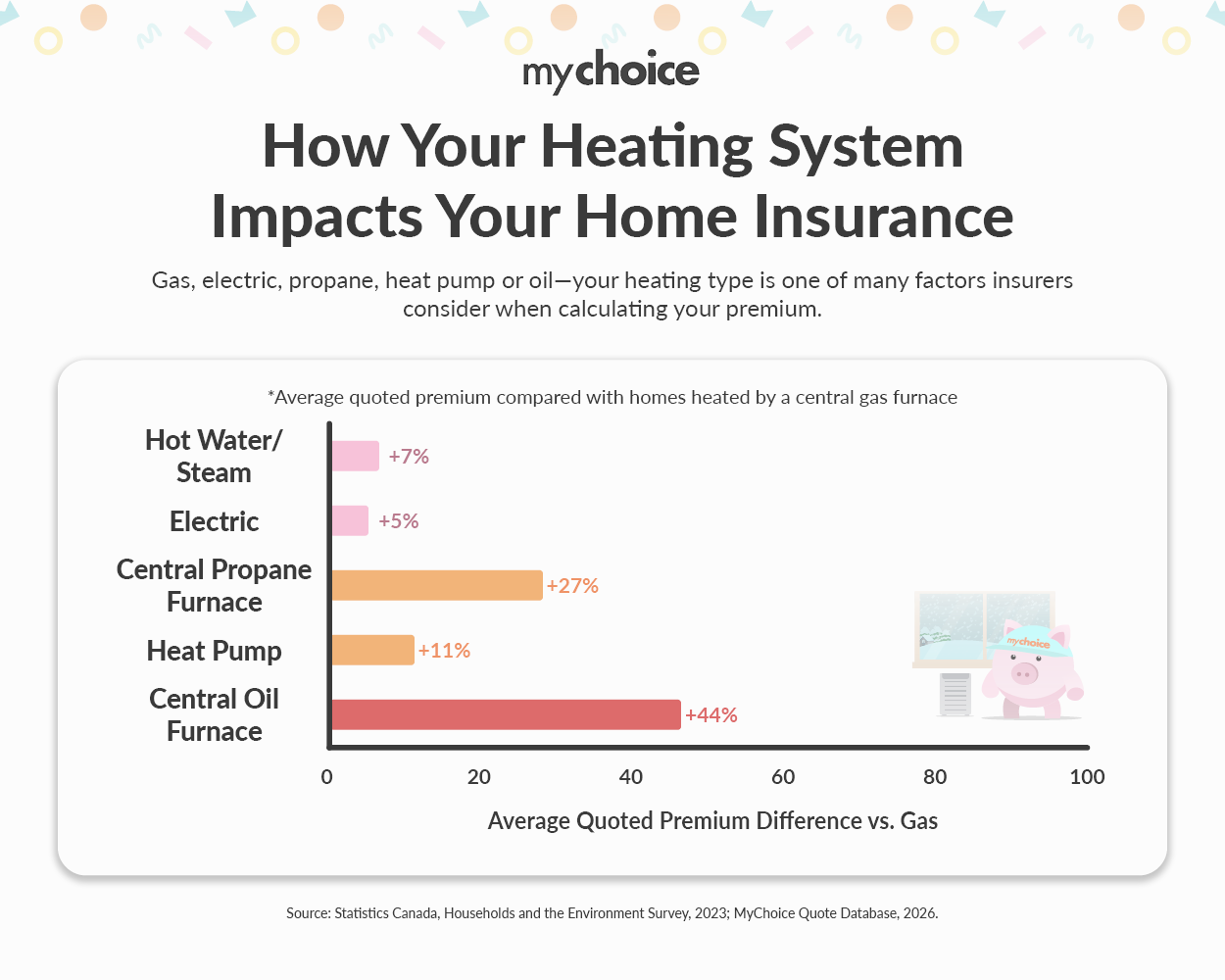
Using MyChoice’s Ontario 2026 quote database, we took a look at premiums for homes using different heating types and found that homes using heating systems other than a gas furnace tended to receive higher premium quotes. The premiums have been adjusted for home age, size, rebuilding value, and location. However, we did not account for factors such as the condition and age of the heating system, which also play an important role in determining home insurance premiums.
| Primary heating type | Average quoted premium compared with gas |
|---|---|
| Central furnace—gas | Baseline |
| Central furnace—oil | 44% higher |
| Electric | 5% higher |
| Central furnace—propane | 27% higher |
| Heat pump | 11% higher |
| Hot water/steam | 7% higher |
Oil and hot-water/steam results are based on fewer quotes and should be treated as directional.
Why Do Insurers Ask About Heating Type?
While some insurers may have different underwriting rules, when they ask about heating type and the details of the system you use, they’re evaluating the risk of using that source and the likelihood of claims.
For example, they’re considering factors like environmental hazards associated with certain legacy fuel types, fire risk, replacement cost, along with age, condition and maintenance of equipment and whether you have an auxiliary heating method in place.
Does Natural Gas or Propane Heating Increase Insurance Costs?
Natural gas generally does not, although propane-heated homes in our data received higher quotes. Premiums and coverage can depend on gas and propane furnace equipment age and condition as well as proper installation, regular inspection and maintenance.
Natural gas furnaces are a standard home heating choice in many parts of Canada. According to 2021 Statistics Canada energy-use data, most of the energy Canadian households consume comes directly from natural gas (51.5%).
Propane furnaces are often the preferred choice in rural or remote locations, which may also affect premiums.
Some 46% of households in Canada had a forced-air furnace as their primary heating system, according to the latest findings from the Households and the Environment Survey.
What About Electric Heating?
Electricity accounts for another 45.8% of household energy consumption. Electric heating systems, such as baseboards, used by 23% of Canadians as a primary heating system, may not increase premiums as much as heating with fuel oil, as they do not carry the same fuel-storage and spill risks, as long as your equipment is maintained and your home has an adequate electrical service.
Do Heat Pump Homes Have Higher Premiums?
Heat pumps or mini-split systems may be considered more economical and environmentally efficient for home heating than oil or natural gas options. They already make up 9% of primary heating systems and this number is growing, according to StatsCan. Recently, new rebates were also announced for homeowners replacing older heating systems with heat pumps.
But from a home insurance perspective, installing one won’t necessarily reduce your premium.
When we analyzed recent MyChoice quote data, we found that premiums were 11% higher for homes heated with heat pumps compared with natural gas-heated homes. Again, it is important to note that a higher quote can reflect several other factors.
As the Insurance Bureau of Canada (IBC) explains, in extreme cold conditions, some heat pumps may not be sufficient to warm a home on their own. In these situations, homes will require a backup source of heat, whether baseboard heaters or a furnace, to ensure the home and the pipes stay warm enough. But as IBC told CBC News, while this is a common requirement in colder parts of the country, it depends on the individual insurer and varies between providers.
Heat pumps are powered by electricity, so in some cases, you may also be required to upgrade your electrical panel or service.
Why Are Oil-Heated Homes More Expensive to Insure?
Oil heating systems are rare. Our MyChoice analysis of thousands of home insurance quotes collected since the beginning of 2026 shows that they appear in fewer than 1% of quotes. Canada-wide, heating oil accounts for 2.7% of household energy consumption.
Oil heating systems are considered riskier to insure because of the threat of environmental damage and the cost of cleanup. In Ontario, underground oil tanks that have not been used in two years are required to be removed. Homes with active oil tanks in place may be subject to regular inspections.
As such, if you do have one, you may face higher premiums and even special conditions of coverage, including limits on liability or cleanup, increased deductibles or exclusions.
Should You Tell Your Insurer Before Changing Heating Systems?
Yes. Changing from oil heating to a heat pump, for example, may represent a material change in your risk profile from the insurer’s perspective.
If you’re changing or upgrading your heating system, get in touch with your insurer to let them know the details of the replacement and the installation of the new equipment, including whether it has any energy-efficient, safety or smart features that may affect your risk profile or premium.